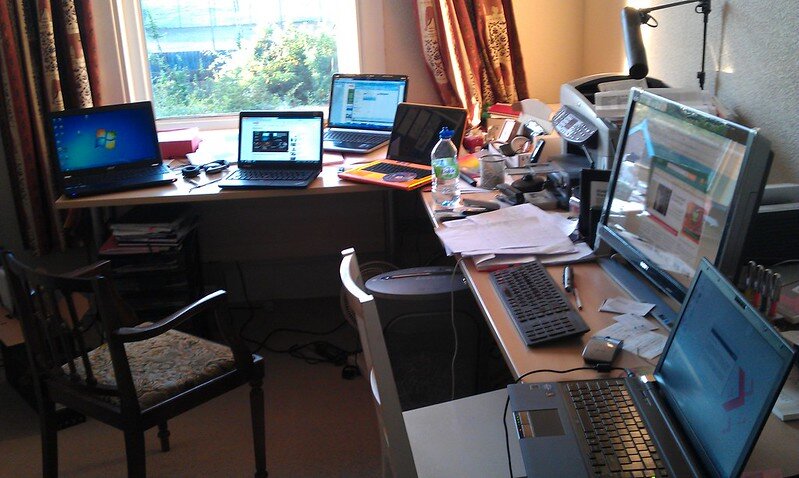
One positive outcome of coronavirus and lockdown is that we can attend Bett, or part of it, this year without moving from the comfort of our own homes. No more being crammed on the Dockland Light Rail along with hundreds of others, no more spending the day breathing lots of stale air, and no more aching feet!
Read MoreAs an education technology leader you need to have a vision, you need to have goals. But once you have established the vision and goals, it’s a good idea to forget about them.
Read MoreThese days, students can find out things like the rate of interest in real time without even leaving their seats. That doesn't make the question ["What's the interest rate?"] itself any better.
Read MoreWhen I was reading about Ada Lovelace I found it quite appalling that in her days men thought women were too mentally fragile to cope with mathematics or science.
Read MoreIt’s difficult to predict the future, so please regard this article as a reflection of what may happen and probably should happen in the area of marketing in the coming year.
Read MoreIf you are willing and able to engage your class in discussions about the ed tech issues of the day, recent events in the USA provide rich pickings.
Read MoreIn the last two days I’ve received two books for review. One is almost hot off the press — Online Learning for Dummies was published in December 2020 — the other one is slightly warm — published in September 2020.
Read MoreI think that this guidance is useful in making the idea of online teaching sound doable, but there are too few details or links to details that would make it truly useful.
Read MoreBefore considering any ideas, we ought, perhaps, to consider the question: why bother? After all, the situation is so fluid that any strategy you prepare now could be rendered out of date by next week. If one thing has proven to be certain about the pandemic, it’s that nothing is certain. It’s almost like trying to build a house on sand.
Read MoreThis is an example of why hype can, in own way, be dangerous. It detracts time, energy and financial resources away from interventions that may be less exciting to look at but which actually work better.
Read MoreLearning a programming language, especially a text-based one like Python, can be hard going. Unlike a graphical programming language, which you can start to use straight away without knowing any technical terminology at all, Python demands such knowledge from the outset.
Read MoreBack in those heady pre-pandemic days many of us were forever trying to cajole our colleagues to use computers in their lessons. Well, I suppose the positive aspect of Covid is that the virus has done quite a large part of our job for us.
Read MoreThere are a couple of interesting things in the newsletter below. One is the findings from a study at Reading University about the most effective approach to training teachers. I’d be very surprised if a study carried out today didn’t yield similar results.
Read MoreLau provides a useful article that contains much information, based on research, that not everyone will have been aware of.
Read MoreIn the following archived issue of my newsletter, you might find the following articles in particular interesting:
Why do it? (This reports the results of a survey enquiring into why some teachers shy away from using technology).
Responses to a problem posed in the form of a scenario, about teachers using technology as a reward or a time-filler rather than for serious work.
Read MoreBut do they offer any constructive suggestions? Of course not…
Read MoreIt's often said that pupils learn the most from what their teachers do, rather than what they say. Here are some good practices you need to adopt if you want your kids to lean good habits rather than bad ones.
Read MoreWhy do so many "edubloggers" think that the concept of blogrolls, which are lists of blogs that subscribers to a blog subscribe to, and similar devices (such as, in effect, shared favourites) are so wonderful?
Read MoreI wrote this article , in which I discuss the importance of students having 24/7 access to technology, in 2005. And in 2020 we’re still talking about it.
Read More