Making Good Progress?: The future of Assessment for Learning
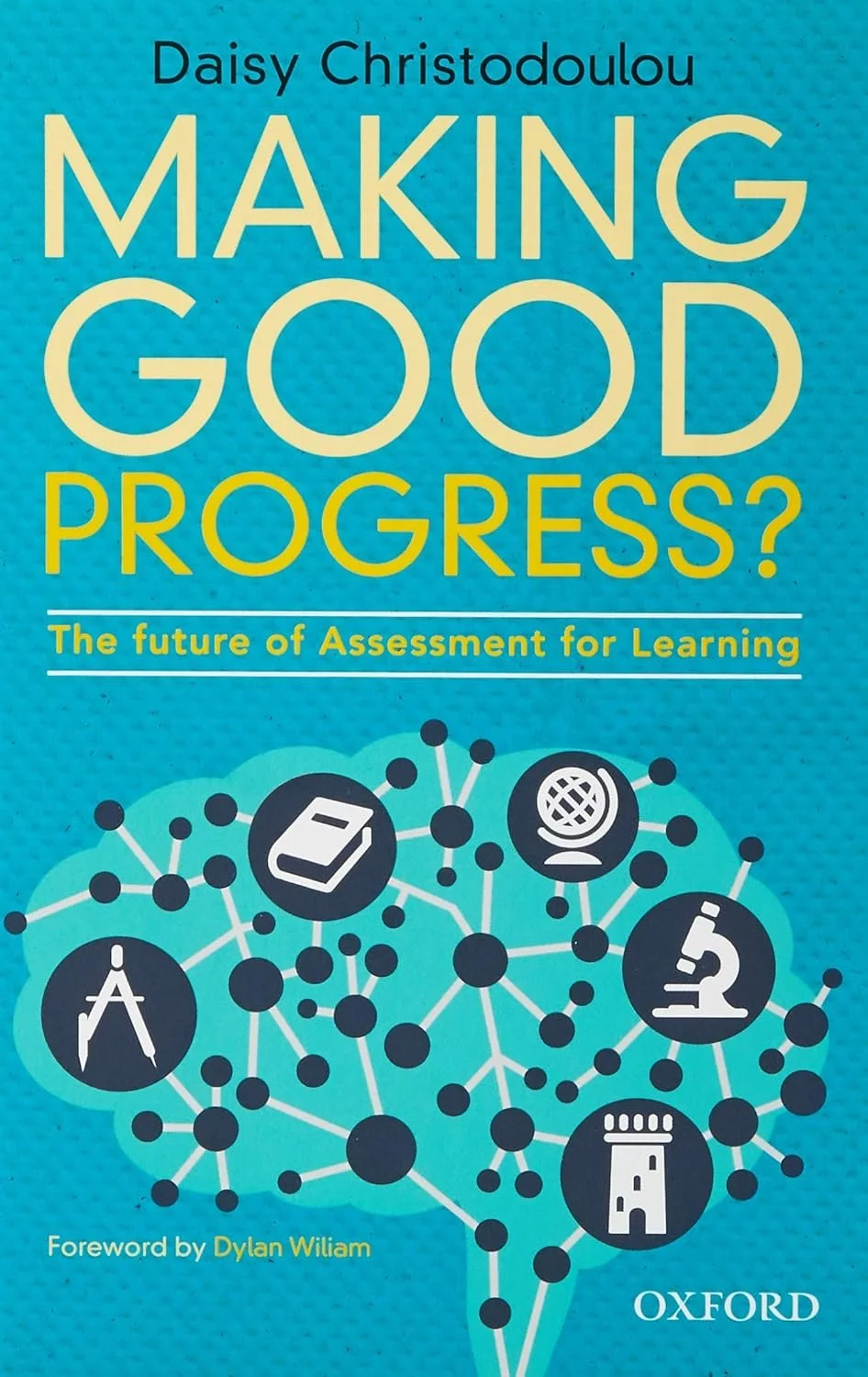
Click the pic to see this book on Amazon (affiliate link)
If only assessment were as easy as just setting a quick end-of-term test! The author, Daisy Christodoulou, carefully picks apart the pitfalls of various kinds of assessment, drawing on different subject areas to do so. Many of the points she makes are extremely valid, such as the existence of Goodhart’s Law, which is that “When a measure becomes a target, it ceases to be a good measure.”
We can see this by noting that many school pupils are in effect drilled for success in the end-of-year or key stage measure rather than being educated as such. Indeed, as Christodoulou points out:
“Excessive exam preparation is not the same as teaching a based curriculum; in fact, it is almost the opposite. Exams complex skills and tasks, but these complex skills depend body of knowledge. Focussing solely on exam tasks means this hidden knowledge stays hidden, and pupils can only ever develop skills in a superficial and limited way.”
There is also an interesting section on descriptive assessment criteria. I remember, when I worked in the Quaklifications and Curriculum Authority, having interesting discussions with colleagues and other professionals about what the criteria in the ICT Programme of Study actually meant, and how to distinguish between them. Ultimately it depended on a probablistic approach based on evidence. That is to say, if a student demonstrates an ability to do or understand X, Y and Z, she is probably a Level 5. I, along with my colleagues, tried to be as robust as possible with our guidance, but you couldn’t apply that sort opf approach in other areas. (Imagine discovering that the person you’ve contracted to rewire your house is probably adequately qualified!)
I like the end-of-chapter summary diagrams. I’m not sure what the point of the photographs is, except maybe to make the book look pretty. There are good reference sections too, and a sound basis in research.
A good and easy-to-read introduction to assessment.