This article contains two versioons of my review. The first is the one that was published in Teach Secondary magazine. The second is the one I actually submitted.
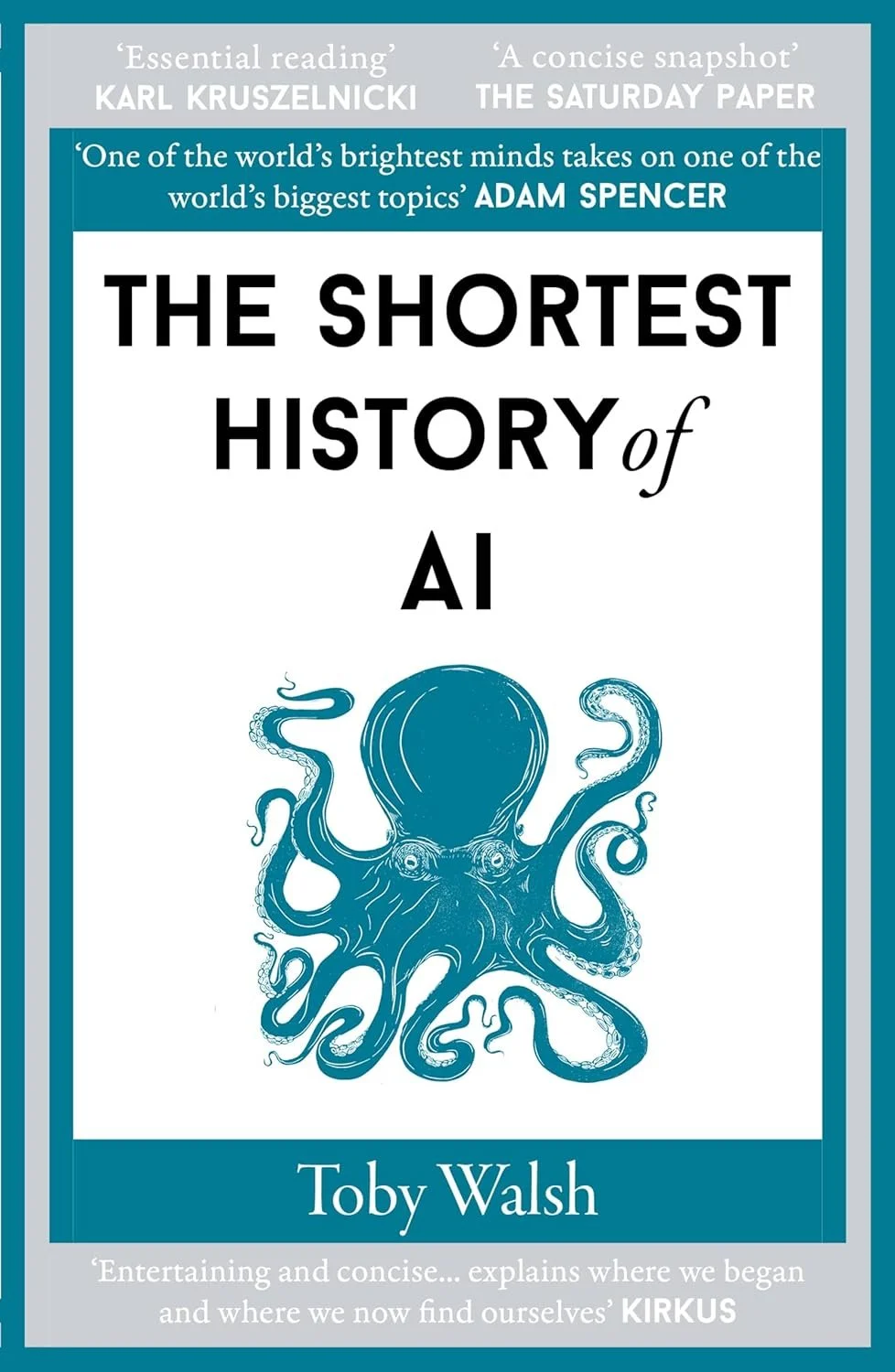
Click the cover to see this book on Amazon (affiliate link)
The Shortest History of Al
(Toby Walsh, Old Street £9.99)
How is it that ChatGPT, Claude and other Al models appear to perform so well at certain complex tasks that some people become convinced that they're sentient — only for them to then promptly fail at simple tasks that even a child could handle?
And what's with their tendency to fabricate 'facts' if they don't 'know' the answer to a query? This very readable account of Al's recent history covers these questions and more, taking us on a journey from the first stirrings of Al technology over 70 years ago to the powerful models of the present day, filling in readers with information about the major players involved along the way, including Turing, Boole and others.
For teachers of computing, it's a valuable guide to how Al-derived approaches to problem solving have evolved over time.
This review first appeared in Teach Secondary magazine.
In case you’re interested, here is my original review, before the editor amended it.
How do ChatGPT, Claude and other AI programs perform so well on complex tasks that some people have even come to believe they are sentient? And yet why do they tend to fail to cope with simple tasks that even a child could handle? And why do they tend to make stuff up if they don’t “know” the answer?
These questions and more are covered in this very readable account which takes us from the first inklings of artificial intelligence over seventy years ago to the powerful programs of the present day. As well as providing information about the people involved, such as Turing, Boole and others, Walsh explains how the approach to thinking about AI and problem-solving changed over time.
Teachers of Computing will find this to be a valuable source of information about how framing the problem to be solved is bound to affect the success of the program concerned.