Two books on the Nazi era.
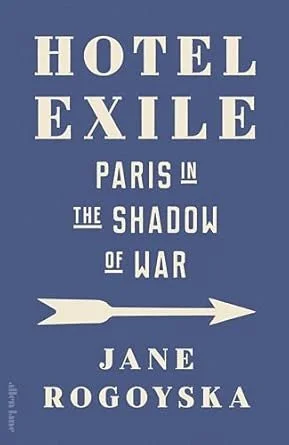
Hotel Exile: Paris in the shadow of war
(Rogoyska, Allen Lane, £25)
You settle down to read, and the subject of this particular vignette could be you: a teacher, a student, a mother, a brother. So you are drawn in, almost against your will, into a situation you hope you will never experience, but which you now start to understand on a visceral level. This is, perhaps, Rogoyska’s greatest achievement here: to make you forget you are reading about something that happened before you were born to people you didn’t know.
In describing the rise and aftermath of Nazism she has chosen as her vantage point the Hotel Lutetia, where James Joyce lived and where Picasso was a regular guest. We learn about the stateless people who arrived between 1933 and 1939, how it became a home for the German intelligence service during the war, and then a hospital of sorts for those returning from concentration camps. This book brings history alive.
Reviewed by Terry Freedman
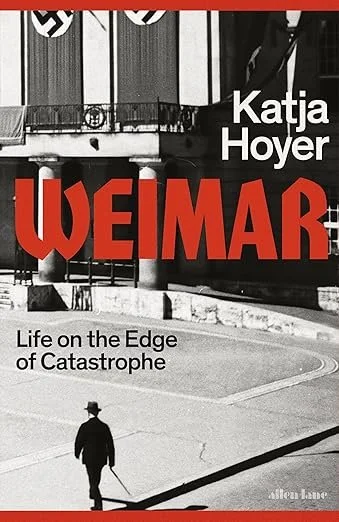
Weimar: Life on the edge of catastrophe
(Hoyer, Allen Lane, £30)
Weimar was the birthplace of the optimistic, yet short-lived republic of the same name, and the place that Goethe, Liszt and Nietzsche called 'home', situated a mere 8km from Buchenwald. Weimar starts at the end, with an American soldier forcing the local populace to witness the acts that were being perpetrated in their name.
Hoyer then proceeds to tell the story of Weimar through the lives of individuals like Carl Weirich, who kept a diary spanning decades. By focusing on the quotidian concerns of ordinary people, Hoyer helps us appreciate that while individuals might lack the power to affect the sweeping societal changes happening around them, they're not entirely free of responsibility for them. Thus, we learn that Weimar was already inclined towards antisemitism and far-right 'solutions' before Hitler was even born - and that efforts at making accommodations with extremists are always ultimately doomed to failure.
Reviewed by Terry Freedman
These reviews were first published in Teach Secondary magazine. To comment on it, and to read an alternative version, please read this: Compare and Contrast #9