
If only all terms and conditions were presented like this!
Read MoreSolving the driverless car problem Part 3
The problem referred to in the title may be summarised as: who ya gonna kill? The car is hurtling along the road when a child steps out in front of it. The car is faced with a dilemma: kill the child, or the pedestrian waiting to cross the road, who would be in the car's path should it swerve to avoid the child. Terry Freedman explains why this whole thing is a red herring.
Read MoreSolving the driverless car problem part 2
The problem referred to in the title may be summarised as: who ya gonna kill? The car is hurtling along the road when a child steps out in front of it. The car is faced with a dilemma: kill the child, or the pedestrian waiting to cross the road, who would be in the car's path should it swerve to avoid the child. Terry Freedman explains why Lance Sharpe’s analysis was wrong.
Read MoreSolving the driverless car problem Part 1
The problem referred to in the title may be summarised as: who ya gonna kill? The car is hurtling along the road when a child steps out in front of it. The car is faced with a dilemma: kill the child, or the pedestrian waiting to cross the road, who would be in the car's path should it swerve to avoid the child. Guest contributor Lance Sharpe considers the problem from an Economist’s perspective.
Read More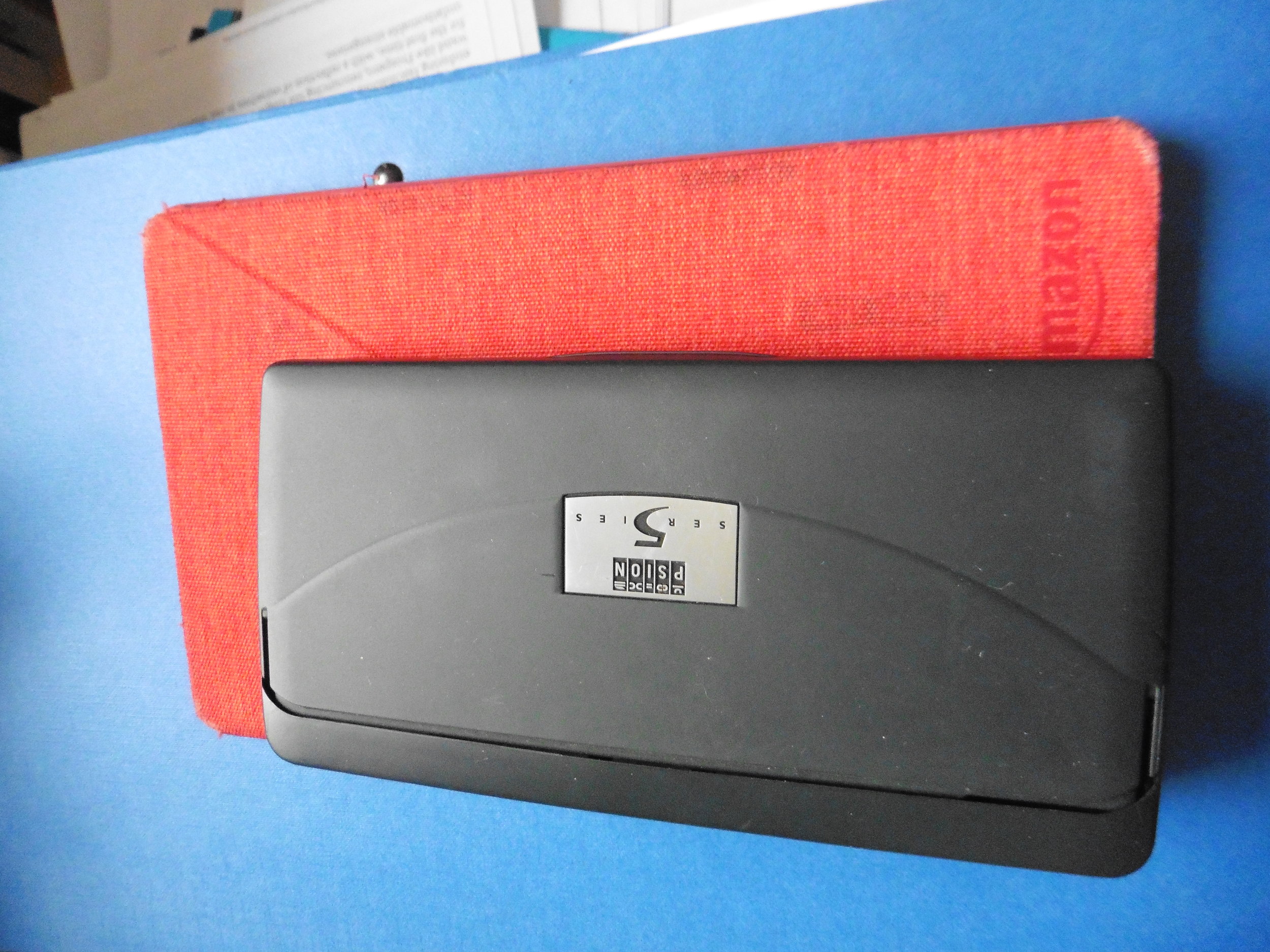
Psion 5 and KIndle Fire, by Terry Freedman
Note-taking then and now
It’s 20 years since I last used my Psion 5 Organizer. How does it stack up now?
Read More
If you’re looking for a course in computing or a related area, and you live in England, look no further! This ebook contains over 200 entries all in one place.
Computing and related qualifications: new e-directory
If you’re looking for a course in computing or a related area, and you live in England, look no further! This ebook contains over 200 entries all in one place.
Read More24 must-have features of computer labs UPDATED
If you still have, or are planning to have, a computer lab, then these 24 things are essential to include.
Read More
Harmonicas by Terry Freedman
7 Ways of Making the ICT and Computing facilities More attractive to use
How can you encourage other teachers to use the ed tech facilities? You may not know this, but there is not a lot of difference between a Lee Oskar diatonic harmonica (the type used by blues and folk musicians) and a Hohner Blues Band harmonica. The Lee Oskar is said to have been engineered to give a “sharper” edge to the tone, which suits the blues sound, whereas the Marine Band, being slightly “softer”, works well for folk music too. Unless you’re a purist, there is probably not much in it. As someone once said:
Read More“A difference is only a difference if it makes a difference.”

Trust Me, I’m Lying
Quick look: Trust Me, I'm Lying
This book lifts the lid on the practices that various media use to promulgate fake news even while appearing to be squeaky clean.
Read More
Forward 10 places!
8 Ways to make physical computing work in the classroom
If you insist on getting the kids to make or use physical computing kits/robots in the classroom, here arte 8 suggestions for making sure it’s all useful.
Read More
Wait! By Terry Freedman
Virtual reality: a solution desperately seeking a problem
A lot of Virtual Reality ‘solutions’ I’ve seen are just a massive waste of time and resources.
Read More
Be aware! By Terry Freedman
Is robotics a waste of time?
I’d rather teach pupils to program without going through the intermediary process of building a robot or anything else. Despite all the hype, I regard it as a massive waste of time.
Read More
Spreadsheet manual by Terry Freedman
Writing technology manuals for school: why, what and how
Do you really need software and hardware manuals in school? (Spoiler alert: yes.)
Read More
Fake news, by Terry Freedman
Fake news: a role for the Department for Education?
Here is a very brief report of a conference about fake news, and an article about what the Department for Education could do to help tackle it.
Read More8 podcasts for primary school teachers
The headline is a bit of a misnomer: in fact, there are 7 podcasts for teachers and one for kids. But that would have made for a pretty awkward title!
Read More
Filming in progress, by Terry Freedman
10 video channels for Computing teachers
UPDATED Here are ten video channels of potential interest to teachers of Computing.
Read More10 podcasts for Computing teachers
UPDATED Here are ten podcasts that will help you understand more about computing or give you some ideas of things you can discuss in your lessons
Read MorePodcasts and videos for Computing teachers: introduction
UPDATED This article introduces two further articles: 10 podcasts for Computing teachers, and 10 video channels for Computing teachers.
Read More
Partners. This illustration is from www.pixabay.com and has a CC0 licence.
Can the International Society of Technology in Education's Standards in Computing be adapted for use in the UK?
This article details the steps that a few of us in ISTE, ITTE, TPEA and others have taken to investigate whether the ISTE Standards for Computer Science teachers, and their list of Computational Thinking Competencies, could be adapted for use in the UK. There’s also an opportunity for you to give us your opinions if you wish to.
Read MoreBook review: How to think like a coder
This book aims to teach you how to think like a coder, rather then merely learning how to code. How far does it succeed?
Read More