The layout of articles on some websites may be beautiful on screen, but make it a nightmarish experience to print the articles out. Print Friendly is a good solution to this problem.
Read MorePrint Friendly. Screenshot by Terry Freedman


Print Friendly. Screenshot by Terry Freedman
The layout of articles on some websites may be beautiful on screen, but make it a nightmarish experience to print the articles out. Print Friendly is a good solution to this problem.
Read MoreWhat is the Marketing to Schools Summit, and what was good, and not so good, about it?
Read MoreIn TMIL, Holiday demonstrates how easy it is to manipulate the news. A must-read for teachers of media or digital literacy.
Read More
newsguard toolbar shield, screenshot by Terry Freedman
Newsguard is a service that rates websites for honesty, transparency and trustworthiness. It evaluates websites against several criteria, such as whether information is gathered and presented responsibly. A browser extension will enable you to see at a glance whether or a not a site they have evaluated is trustworthy.
Read More
Click the cover to go to the book on Amazon (affiliate link)
Hello World, by Hannah Fry, offers an interesting perspective on some of the problems besetting artificial intelligence algorithms.
Read More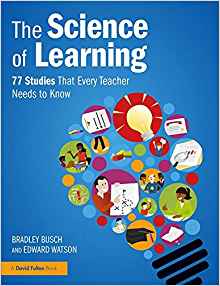
The Science of Learning: click on the cover to view the book on Amazon (affiliate link)
This book aims to solve the difficulties teachers face in accessing educational research through the approach of presenting each research study as a double-page spread.
Read More
Imaginary Cityscape, photographed by Terry Freedman
The Imaginary Cities exhibition at the British Library is an interesting merger of art and programming. Here are my thoughts on it.
Read More
Click the pic to go to the book on Amazon (affiliate link)
This is a very interesting, thought-provoking and readable book. I’ve only read 25% so far, but it’s looking good so far.
Read More
Why do many people seem to be addicted to their smartphones? This book explains how we get drawn in to constantly checking for updates, and suggests what we might do about it.
Read MoreThe headline is a bit of a misnomer: in fact, there are 7 podcasts for teachers and one for kids. But that would have made for a pretty awkward title!
Read More
Filming in progress, by Terry Freedman
UPDATED Here are ten video channels of potential interest to teachers of Computing.
Read MoreUPDATED Here are ten podcasts that will help you understand more about computing or give you some ideas of things you can discuss in your lessons
Read MoreI recently received this massive tome, the Excel 2019 Bible. Here’s what I thought of it.
Read MoreI recently received this hefty volume, the Access 2019 Bible. Here’s what I thought of it.
Read MoreThis book aims to teach you how to think like a coder, rather then merely learning how to code. How far does it succeed?
Read More
Research, by Terry Freedman
A new guide on engaging with evidence has appeared. Here is a quick evaluation of it.
Read More
Computing books received, by Terry Freedman
These books, which I received recently, look interesting, and I’m looking forward to reading and reviewing them. All book links are Amazon affiliate links.
How to think like a coder was shortlisted for an educational writers’ award, which you can read about here: The 2018 Educational Writers Award. I didn’t receive this in March, but have only now started to look at it in depth. I’ve already penned a few notes about it here: Books in Brief: How to think like a coder.
Monitored, which I’ve just started reading, is an examination of big data and surveillance from a Marxist perspective. I haven’t looked at any Marxist literature for a very long time — not since I tried to read Das Kapital when I was 17 (I got as far as page 23, which was 8 pages further than one of my teachers!) — so it’s a completely new perspective for me, which makes this an interesting, if difficult, read.
It covers similar ground to other books on the same subject matter that I have to review — indeed it references some of them — but with a clearly different take on the whole thing. I have to say that from the little I’ve read so far I remain unconvinced, and happily so.
Mission Python has been sent to me by Teach Secondary magazine. As the title suggests, it’s a book that teaches you how to program in Python. All I can say about it so far is that it looks colourful, and that I’m looking forward to reading it.
How do you turn a school around quickly without “gaming” the system? Rob Carpenter has done it, and shares his recipe for success.
Read MoreThis is a book that dispels a few myths about how we learn, and explains why our intuition is not always our best friend.
Read MoreTo what extent is bias in reviews unavoidable? And does it matter anyway?
Read More(c) Terry Freedman All Rights Reserved
