
Sometimes I am not quite sure whether a statement is obvious or not obvious at all. In such cases I try to take the view that if it was that obvious, I wouldn’t need to comment at all. Take the statement “Coding is not debugging”. Of course it isn’t. But to read what some people have written you could be forgiven for thinking that an ability to write good code automatically confers the ability to be good at debugging. Well, like the old Porgy and Bess song has it, it ain’t necessarily so.
Read MoreThe trials and tribulations of blogging as a SWOT analysis
There are people like myself, Steve Wheeler and others who think that blogging is a good thing to do for a number of reasons. I won’t rehearse theme here because you can read them in the articles referenced at the end of this one. However, blogging is not necessarily easy. Even if writing itself is not a problem, there are several other factors that need to be taken into account.
Read More5 principles of assessing computing and ICT
 There are lots of assessment grids and approaches being developed for the new Computing curriculum, which is wonderful. But how do you know which one is right for you? In this article I provide a few principles of assessment which I hope will provide some food for thought. These come partly from a course I’ve been teaching on the subject.
These are general principles which I have applied to the context of computing and ICT.
5 Assessment for Learning techniques for ICT or Computing
 Here are 5 assessment for learning techniques you may wish to try out. They are generic, but I think they are especially useful in the context of Computing and ICT. As well as my own work and experience, I have drawn on
Dylan Wiliam’s book, Embedded Formative Assessment, Black and Wiliam’s Inside the Black Box.
Here are 5 assessment for learning techniques you may wish to try out. They are generic, but I think they are especially useful in the context of Computing and ICT. As well as my own work and experience, I have drawn on
Dylan Wiliam’s book, Embedded Formative Assessment, Black and Wiliam’s Inside the Black Box.10 ways to prepare for the new Computing curriculum
 With the new Computing Programme of Study looming on the horizon, schools do not have an enormous amount of time left in which to get ready for it. What practical steps can you take in order to be up and running in September?
Computational thinking? Algorithms? Why all the jargon?
 The new Computing Programme of Study has been criticised not only for its content, but also for the terminology it uses. In particular, it speaks about “computational thinking”, “algorithms” and “decomposition”. “Surely”, the argument goes, “they could have used ordinary everyday language?”
Had “they” decided to do that, there would no doubt have had so many people panicking about it all. So, it’s a compelling suggestion. It just happens to be wrong.
The Internet of Things - The Inevitable Future?
 Zaneta Stepien explains what the Internet of Things is, and why we should be excited about it.
Technology never fails to bring us exciting developments and always promises to make our lives better. In recent years, there has been an explosion of technological creativity and innovation, with bold projects being undertaken in all corners of the Earth: from wireless power, 3D printing, gamification, autonomous vehicles and Automatic Content Recognition, to mobile robots and -- the topic of this post -- The Internet of Things, or, as some call it, The Internet of Everything. Sounds grand? Well, it's probably because it is. The promise of this enterprise is nothing short of game-changing,
The new Computing curriculum and its assessment is a great opportunity
(For the benefit of readers who don’t live in England, in September there will be a new Computing Programme of Study (ie the specification laid down in the National Curriculum), and schools no longer have to use “Levels” to assess pupils’ work.)
I was involved in a conference about preparing for the new computing curriculum recently (see Planning for the new Computing curriculum), and one of the delegates asked me:
“But what are we supposed to do about assessment now?”
“Well”, I replied. “Regard it as an opportunity.”
Cue guffaws of laughter.
Technology and learning grow together at Yew Tree School
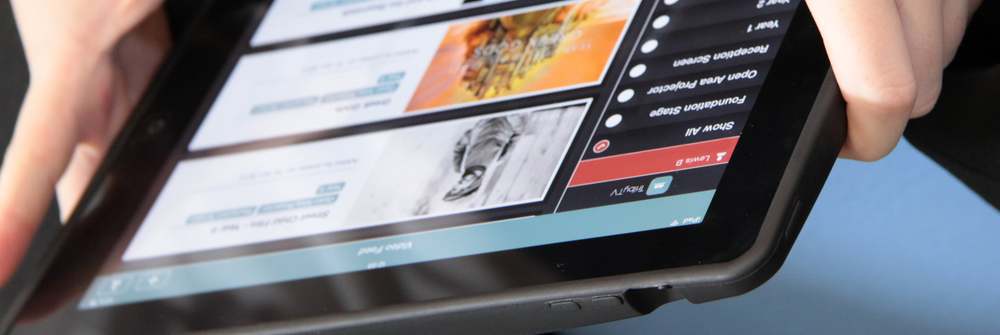 Yew Tree Primary School in Sandwell is always on the lookout for opportunities to help improve the learning environments of its pupils. As an Apple Regional Training Centre, the school is very keen on utilising technology to enhance the curriculum with all its KS2 pupils having their own iPad 24/7 365 days a year.
Planning for the new Computing curriculum
 At first sight, it seems bizarre that despite the fact that many teachers urgently need professional development, and time, in order to be ready to teach Computing in September, headteachers are not always allowing them to attend courses during school time. A business planning approach by ICT leaders in school could help.
You may think that a business plan is not relevant to you because you’re not running a business. But actually, many of the things that a business has to do, like marketing and budgeting – and planning – are what you do have to do in one form or another. All a business plan is is a statement of where you would like to be at a certain point in the future, and what steps you need to take in order to get there.
9 Computing course providers to explore
There are many courses being offered to help you plan for, and implement, the new Computing Programme of Study. Here is a short selection of providers to get you started.
Read MoreThe Amazing Computing Education Projects Book
Lots of people are preparing for teaching Computing in the next school year. I thought it would be interesting and useful to collate some ideas, concerns and resources into a free ebook. Read on to find out how you can get involved — and why you should.
Read MoreHour of Code Competitions
Here are three competitions in which you may be interested. I have not added any of my own comments or editorial, in the interests of posting this information as quickly as possible.
There are some exciting opportunities here: don’t miss them!
Direct merger means even better prices and service for schools
 This is a sponsored article.
Education technology specialist ICT Direct is merging with sister company 1st Technologies to enable it to offer keener pricing and a wider product range to schools throughout the UK.
Useful ICT and Computing Conferences coming up
 With the new Computing Programme of Study looming on the horizon, there are a number of conferences and other events coming up in the near future. Here’s a list of some of them. The Education Show isn’t specifically about ICT or Computing, but there are seminars in those areas so it’s definitely worth looking at.
Creating a game – a positive impact on learning?
By David Luke.
Read More I have had an interest in programming and creating games since I purchased a BBC Model A in the 80’s (the good old days!). However, it was only recently that I have actively promoted the introduction of games making into the ICT curriculum.
Two factors prompted my decision. Firstly, the introduction of the renewed ICT framework in spring 2008, which introduced learning objectives around ‘sequencing instructions’ and opened up options other than control. Secondly, the availability of easy to use games making software, which had the capacity to build games with a very professional feel.
My grim and distant techie past: the uni years, part 1
 It’s amazing how technology has changed over the years. I was thinking about this recently, in relation to my mother. She lived for 91 years, and during that time she witnessed cars becoming ubiquitous, the invention and expansion of television, the development of video and home video recording, cheap flights, fast trains… The list goes on and on.
I am not old enough to experienced quite as many dramatic changes as that, but as far as the world of education is concerned, there have been quite a few. I thought it might be interesting to try and document them from a personal point of view. Do feel free to join in by leaving a comment, or posting a response on your own blog.
Oh, and just for the record, I am not writing these “technobiographical” articles in a spirit of nostalgia. As I have said before, as far as I’m concerned, the best thing about the past is that it’s the past. The technology we have today is wonderful; who would want to return to an earlier era?
Coming soon: another great article
Well, I think it’s great, cos I’m writing it! But while you’re waiting for my latest work to be bashed out crafted, why not read the articles penned by recent contributors to Digital Education. Here they are:
Read MoreT is for … Tablets
 I think all sweeping generalisations are bad, including the one I am about to make. But you know what? I think I’ll make it anyway, and here it is:
A school that says they are implementing a tablet programme is doomed to failure.
You can substitute “ipad”, “Bring your own device” or some other similar kind of term for “tablet”, the result is the same.
R is for … Reviewing
 For a long time I have tried to refrain from writing negative reviews. My thinking has been that it’s nicer to be nice than to be nasty. I don’t like to hurt anyone’s feelings, and rather than send some poor author or software developer into a tailspin of depression, I’ve often decided to simply not give the product any publicity.