
Independent consultant and self-confessed “controversialist” Crispin Weston offers a personal view of the current educational technology landscape, and what needs to be done to transform it.Modern research still confirms the vital importance of students receiving timely, actionable feedback, the essence of “dialogic” teaching. But the amount of such personalised feedback in most schools and colleges is extremely limited.
Read More15 reasons to read the latest issue of Digital Education. I really like #13 myself!
 Subscribe to Digital Education, and get this sort of wonderful content without hassle! Here’s what is contained in the current issue.
It ain't heavy, it's my Brother
It is now almost 2 decades ago that I landed my first post as Head of Department in a secondary (high) school. The grand title of the newly-created job was Head of Business Studies and Information Technology. So how has the job changed in the last 20 years?
Read MoreBook review: Two girls, one on each knee (7)
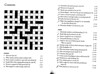 You could argue that crossword solving is a very good example of computational thinking. That is certainly what the security services thought during WW2 when they asked The Times to send them the names of anyone who could solve a cryptic crossword they’d supplied in 12 minutes or less. Those that did were invited to work at Bletchley Park, cracking codes for the war effort.
Safer Internet Day: Time to turn to pawnography?
Today I sent out my newsletter, Digital Education, and because today is Safer Internet Day the word “pornography” appeared. And guess what? The newsletter was blocked by a Local Authority’s filtering system. I’m not sure whether or not this is worse than the time I was told my website was blocked – because it featured an article about social networking.
Read MoreDigital Education: Safer Internet Day edition out now!
Updated! Discounts, competitions, news of events coming up, commentary, and advice about internet safety! And it's completely free!
Here’s what this issue contains:
The hidden messages behind the launch of the Year of Code
 I had the pleasure of attending a summit at the Royal Society of Arts last week. Entitled Skills for the 21st Century Summit, the event was designed to launch the “Year of Code” with as much razzmatazz as could be mustered.
And it worked. There was a great buzz throughout the day, and I came away buzzing and full of enthusiasm – though I suspect not for reasons that the organisers had in mind.
Coding: the numbers just don’t compute
This article was written by Derek Blunt, for his new regular column in Digital Education, To put it Bluntly.
Read More I have a problem: the numbers don’t stack up. According to Lottie Dexter, Director of the Year of Code, teachers can learn how to code in a day.
What are your top tips for ebook cover design?
I'm in the process of collating top tips and resources about this topic. I've compiled a list of useful links (see below), which I'm adding to continually, but if you have any advice based on experience it would be interesting to hear about it.
Read MoreComputer Programming Explained
By Woody Zuill
Read More Computer programming is the process of designing and writing computer programs. That is pretty straightforward, isn't it?
e-Safety in Digital Education
 I talked to members of the Lewisham Youth Parliament about sexting and they talked to me about the selfie, they described a selfie as a demonstration of confidence and self-esteem: ‘I look good and in sharing this you will know I look good too’.
Mr Gove at Bett 2014
Once again, Mr Gove, Secretary of State for Education in England, gave the opening keynote at the start of Bett 2014. This was significant for two reasons.
Read MoreImprove student behaviour and attainment
 Sponsored article
 Seating charts make a real difference to the classroom learning environment in terms of teacher effectiveness and student attainment. Through using a seating chart, the teacher is imposing their authority before the lesson has even begun and making it clear to the students that the classroom is the teacher’s territory and they are in control of it. By using their knowledge of students and putting careful thought into the design of the seating chart the teacher can minimise negative interactions between students and take advantage of peer-to-peer learning strategies.
Let's think about eBook Cover design
I’m involved in a great 5 week course (free!) for teachers called "Crafting your own ebook". I’ll be leading a session soon on the subject of designing a book cover, and although I’ve found some great resources, I thought I’d turn to the community to find out what tips and/or websites others might suggest.
Read MoreBett 2014 Review
 Is it really a week since I came trudging home from Bett 2014? I'm still in catch-up mode, which is why I haven't yet published my thoughts about the experience yet. But, I'd love to hear yours.
Please take just a few minutes to complete the Google Form below. My intention is to collate and share the findings.
Review of the Google Chromebook
 I’ve been looking at the Google Chromebook, and I have to say I am seriously impressed. There’s a lot of talk about tablets these days. I myself have promoted the idea of Bring Your Own Technology, which usually means a phone or a tablet. But the Google Chromebook is worthy of consideration, whether for yourself, or whether you’re considering taking your school into the mobile future.
In order to thoroughly evaluate the Chromebook from a school perspective, I not only used the device myself, but interviewed Bruno Reddy, Head of Maths at the King Solomon Academy in London, and Jaime Casap, Global Education Evangelist at Google.
Making the Most of ICT – what the research tells us
Steve Moss looks at what the educational research says about how to maximise the impact of ICT on learning.
Read More In 1981 the then Conservative government announced that the Department of Trade and Industry would provide funding for one microcomputer in every school. Throughout the ensuing three decades there has hardly ever been a year when there has not been some earmarked or ring-fenced funding for ICT in schools in England. But in 2014 we are in new territory. The Harnessing Technology Grant, which for several years was the main source of devolved funding to support ICT in schools, is no more and many schools will have to make do with the ICT equipment they already have rather than spending on the latest technology. Yet teachers should still aim to make the very best use of the resources available to them and aspire to excellent teaching with ICT.
Being strategic after the Bett show
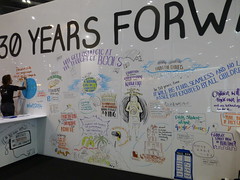 If you look at the list of suggestions in my “Getting the Best out of Bett” guide, some of which I reproduced in 5 Things to do after attending Bett, nothing leaps out as being “strategic”. But there are a couple of things, as I’ll explain in a moment. And that is tremendously important.
It would be very easy indeed to spend a day or two after an event, especially a long one like Bett, just dealing with the backlog of emails and work, but not actually doing anything that will help future growth. I suppose it’s a bit like clearing a financial debt: very important to do, but it’s putting some money into an interest-bearing account that will reap benefits in the longer term.
5 Things to do after attending Bett
 There is always a danger that no matter how good an event is, it will turn out to have very little impact in the longer term, as you forget what you saw and more pressing concerns vie for your attention. Here are 5 suggestions for preventing that from happening. There are more suggestions in the free guide, Getting the Best out of Bett.