“It’s not about the technology” sounds logical, but in my experience it is certainly not the whole story.
Read MorePresentation on a mobile phone, by Terry Freedman


Presentation on a mobile phone, by Terry Freedman
“It’s not about the technology” sounds logical, but in my experience it is certainly not the whole story.
Read MoreI submitted my review of this book to Teach Secondary magazine, an educational magazine in the UK. The first review is what the magazine published. The second one is what I actually wrote! In substantive terms there is little difference between the two, but you may find it interesting to see what the editor altered.
Read More
metadata mug, photo by Terry Freedman
My mother lived for 91 years, and during that time she witnessed cars becoming ubiquitous, the invention and expansion of television, the development of video and home video recording, cheap flights, fast trains…
Read MoreAn interesting look at how differently societies across the globe view and use technlogogy.
Read MoreThe written word has endured for millennia, and herein you'll discover why.
Read MoreBack in the 1930s, radio was the cutting edge technology in the home.
Read More
Sometimes you need to convince colleagues to think about using educational technology in their lessons, or to identify where in their scheme of work they could incorporate it.
Read MoreJust a couple of cogitations – hopefully worthy -- about technology and our relationship with it.
Read MoreDid Samuel Pepys carry a quill and an inkwell around with him?
Read MoreTo the adage "Never work with children or animals", I would add, "or technology" -- which is somewhat worrying given that I have been involved in educational technology for over 20 years.
Read More
Presentation on a mobile phone, by Terry Freedman
“It’s not about the technology” sounds logical, but in my experience it is certainly not the whole story.
Read MoreA great sideways glance at modern life, including our relationships with technnology.
Read More
Maybe you should have checked the tech first! Photo from pixabay.com CC0
What do trainee teachers or colleagues who are new to education technology need to know?
Read MoreSome people are adamant that educational practice, or pedagogy, must be the first consideration, before technology is even mentioned. But is this actually right?
Read MoreI’m reading a short story by Ian Creasey called “The Edge of the Map”. In the world depicted by Creasey, automated cameras called “nanocams” take photos and newspapers (and other media, presumably) source their illustrations from the pool created by them. In other words, there is no need for specialist photographers.
This raises a number of interesting questions.
 It’s amazing how technology has changed over the years. I was thinking about this recently, in relation to my mother. She lived for 91 years, and during that time she witnessed cars becoming ubiquitous, the invention and expansion of television, the development of video and home video recording, cheap flights, fast trains… The list goes on and on.
I am not old enough to experienced quite as many dramatic changes as that, but as far as the world of education is concerned, there have been quite a few. I thought it might be interesting to try and document them from a personal point of view. Do feel free to join in by leaving a comment, or posting a response on your own blog.
Oh, and just for the record, I am not writing these “technobiographical” articles in a spirit of nostalgia. As I have said before, as far as I’m concerned, the best thing about the past is that it’s the past. The technology we have today is wonderful; who would want to return to an earlier era?
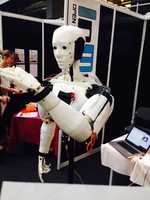
Hi, Richard Smith here from Igloo in Education. I am delighted to have been asked by Terry to do a guest blog post on the 3D print show that took place in London from 7-9th November.
The venue of the event, the Business Design Centre in Islington, sent out a clear message out to visitors: 3D printing should be about innovative design and the encouragement of original business ideas. Of
 New words are always interesting, I think, and not just the ones that have been inspired by technology. But before I say any more about that, I feel the need to get something off my chest. Don’t worry, I won’t make this a long post: the last thing I want is people tweeting me to say TL;DR (too long; didn’t read).
 Here is a competition which is aimed at secondary school students. I quite like the idea of this: both the topic and the nature of what has to be submitted by entrants: a video of not more than 90 seconds answering the question:
In the future, how will technology help an ageing population?
This is an opportunity to get some really interesting discussions going. Perhaps you could get other colleagues involved, such the RE department.
 Kevin Hodgson has written a make-believe article about technology taking over from humans. The theme is a well-known one in science fiction circles, of course, but what I especially like about Kevin’s article is that he has written in the form of a newspaper article. To do so he has used a fake headline generator, for which he provides a link in the story.
(c) Terry Freedman All Rights Reserved