
If you're told you'll be teaching Computing from now on, but don't feel competent to do so, what practical steps can you take in order to get up and running? Here are 12 suggestions.
Read More
Keep going. Photo from Stencil. Licence: CC0
10 ways to prepare for teaching Computing
If you're told you'll be teaching Computing from now on, but don't feel competent to do so, what practical steps can you take in order to get up and running?
Read MorePlanning for the Computing curriculum
At first sight, it seems bizarre that despite the fact that many teachers urgently need professional development, and time, in order to be ready to teach Computing, headteachers are not always allowing them to attend courses during school time. A business planning approach by ICT leaders in school could help.
Read More6 Ideas for teaching the Computing curriculum
 I thought these posts from the archives might be interesting: 6 ideas for teaching the Computing curriculum. Unfortunately, being mathematically challenged, I originally inadvertently designated two of them as “#2”. That’s why I never became a maths teacher. However, I have since renumbered them, so they start at zero, which is, computationally speaking, a pretty good thing to do. Anyway, although the series refers to the “forthcoming Computing curriculum”, the ideas themselves are still useful I believe. I hope you agree.
Project-based learning in the Computing curriculum
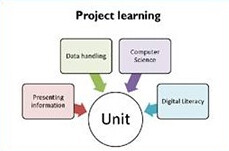 John Partridge, Assistant Head for eLearning, explains how Computing is taught through a project-based learning approach at his school.
I remember clearly looking at the first draft of the new curriculum and just being totally shocked by the degree of change. It had been clearly signalled that the new draft would be a step-change, but I didn’t appreciate the shift which was about to take place. Almost nothing remained from the previous programme, save a few references to digital resources and, in a later draft, safe use of technology. So it was clear that some serious work was going to be needed to make sure our school adapted.
Preparing to teach the new Computing curriculum
 I've been giving talks on preparing for the new Computing curriculum, and as well as waxing lyrical that also involves listening to others' concerns. It also means hearing about some innovative approaches that colleagues have adopted.
At the same time, I have been conducting a survey of what people have been doing to prepare for the new curriculum. I'll be publishing the results in due course. In fact, some of the resources mentioned in the collection of coding resources in the early July 2014 edition of Digital Education came to my attention from that survey.
So, given that at the time of writing there's about 2 or 3 days to go till the end of term, what can you realistically do at this stage to prepare for September?
Digital Education latest edition!
For the final edition of this free newsletter, we have a great line-up of experts and articles:
Read MoreComputer Education Projects Book Update
 How are teachers preparing for the new Computing curriculum, which is due to start being taught in September 2014? Some time ago I created an online survey in order to ascertain the answer to this question. Although there have been fewer respondents than I’d hoped for (though probably more than I’d expected), the results are quite interesting. Here is a very brief summary.
10 ways to prepare for the new Computing curriculum
 With the new Computing Programme of Study looming on the horizon, schools do not have an enormous amount of time left in which to get ready for it. What practical steps can you take in order to be up and running in September?
Planning for the new Computing curriculum
 At first sight, it seems bizarre that despite the fact that many teachers urgently need professional development, and time, in order to be ready to teach Computing in September, headteachers are not always allowing them to attend courses during school time. A business planning approach by ICT leaders in school could help.
You may think that a business plan is not relevant to you because you’re not running a business. But actually, many of the things that a business has to do, like marketing and budgeting – and planning – are what you do have to do in one form or another. All a business plan is is a statement of where you would like to be at a certain point in the future, and what steps you need to take in order to get there.
Preparing for the new Computing curriculum: what if #4
The new Computing curriculum is little more than a checklist. But what it lacks in detail, especially regarding progression, it more than makes up for in terms of the freedom it affords schools to interpret the new Programme of Study in a way that suits them.
Read MoreWith that in mind, have you ever researched your own area
How to collaborate with other schools when you're not allowed to
The preference of some Academies for not collaborating with other schools is not only annoying, it is, ultimately, self-defeating. Whether it stems from hubris, aggressively defensive commercialism, or a combination of the two, this practice seems to assume that one school cannot learn from another. Or, at least, that it will learn less than it "gives away".
Read More11 Reasons to collaborate with other schools in implementing the new Computing Programme of Study
 John Donne wrote that no man is an island; he might have said the same thing about schools. Many schools have a mindset perhaps best described as “splendid isolation” – except that there is nothing splendid about it. In fact, in many cases it is just plain daft. Here are my reasons for saying so.
5 reasons schools need computing teachers with expertise in the subject
Some Principals and Headteachers think that a good way around the problem of teaching computing is to not worry about whether teachers have subject knowledge at all. “All we need are facilitators”, they say, “while the kids can teach themselves and each other.” This is, as any teacher knows (or should know), easy to say, less easy to do, and not altogether the most desirable thing to do even if you can do it. However, just in case your school happens to be “led” by one of the aforementioned Headteachers, here are some arguments you may want to use. I think that any one of them should suffice, and all of them together make for a cast-iron case.
Read MorePreparing for the new Computing curriculum: what if #3
 Preparing for the new curriculum doesn’t have to be as difficult as it might look. Here’s a suggestion that you may like to consider, although it won’t be appropriate if you teach very young children.
Preparing for the new Computing curriculum: what if #2
 I am a member of Computing At School, and every day someone uploads a new scheme of work for the new programme of study. IT’s fantastic to have so much good stuff to choose from. It’s also a bit overwhelming if you’re not sure where to start in the first place.
Preparing for the new Computing curriculum: what if #1
I believe a lot of people are worried by the forthcoming Computing Programme of Study, judging by the number of people I’ve spoken to who say they have not yet begun to think about it. And that is quite understandable. Although looked at from one point of view it is more of a change in emphasis from the old one, there is also a lot more required in terms of computer programming and related matters. Schemes of work will need to be modified – I don’t think they should need to be completely rewritten if you have been teaching to the old ICT programme of study properly. This is the first in a series of posts that aim to encourage you to think about the new programme of study, perhaps in a new way. It is based around a keynote talk I gave a short while ago.