
Listen to my interview with Vicki Davis about how to get the most out of #iste17 and other conferences -- and grab my book for £0.99/$0.99 or equivalent (plus VAT if applicable) -- a third of its usual price.
Read MoreToday's ed tech to-do list
What's my day looking like so far? Main item on my to-do list: don't die from the heat. My most-looking forward to item? Writing the latest issue of my newsletter.
Read MoreDeciding what ed tech to buy: who ya gonna call?
What does the latest research from Besa tell us about who schools listen to when it comes to ed tech product recommendations?
Read MoreWhere's the ed tech action? Maybe under your nose!
Not everything is a million miles away or up in the cloud, when it comes to education technology.
Read MoreWhy and how to become a teacher researcher

The classroom is a great place to conduct some research. Picture by Jordan Dreyer
In my opinion, every teacher should be a researcher, and I think that especially applies to teachers who have some degree of influence of what education technology is bought and used.
Why?
- It's important to know what's going on in your field. Imagine going to a doctor who last updated his knowledge ten years ago, or even one year ago.
- If you hope to convince the powers-that-be to spend more money on technology, you have to be able to prove that it works, or at least that it's likely to work.
- Research and reflection are good ways to improve one's teaching. The research part helps to avoid the 'echo chamber' situation in which you only know what's going on in your own school.
How?
- Read the research. This is not always accessible, either because of a paywall or because the language is too abstruse and abstract to be acted on quickly. Solutions:
- Check whether or not your status as an alumnus (assuming you have a degree) gives you access to academic journals online.
- Sign up to my newsletter, Digital Education. I often summarise research and review academic books in that, and it's free.
- Join the Association for IT in Education. Disclosure: I'm on their committee. You receive an academic journal called Technology & Pedagogy in Education, and that's worth a lot more than the subscription fee in my opinion.
- Attend conferences. A very accessible one in terms of cost, location, and down-to-earthness is Research Ed.
- Conduct research in your own classroom. You can do this even in a very quick and easy way:
- Know what the problem is you're trying to solve with the technology.
- Keep a note on what went well, what didn't go so well, and why.
- Get the kids' feedback too. I think having kids evaluate the technology is a no-brainer: they're the ones who are going to be using the stuff! I was pleased that John Galloway advocated this in a discussion hosted by the Guardian Teacher Network recently too.
- Read blogs. Some good ones to start with (apart from mine!) are:
- Plan B by Donald Clark
- EdTech Now, by Crispin Weston
- Learning with E's, by Steve Wheeler
Finally, do share your research and findings, whether from your own research or reading, with other people. If you haven't already done so, start a blog. Or share on Twitter or Facebook.
You might like my article, Education Technology research, and how it's reported
In case you became sidetracked earlier, here's the sign-up form for my newsletter, Digital Education:

Photo by Abel Tan Jun Yang CC0
8 conferences in the latest issue of Digital Education -- and a 50% discount!
8 conferences, and a whopping half price offer. What's not to like?
Read More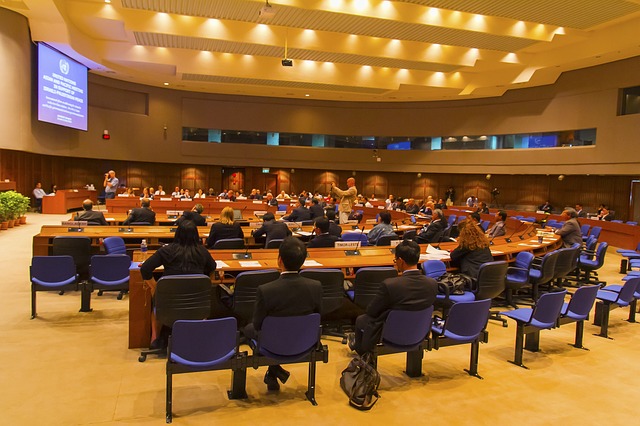
Photo by Keem1201 CC0
EdTechX Europe Conference: special discounts
The EdTechX Europe conference is coming, and I've secured a 35% discount for readers of the ICT & Computing in Education website, and 50% off for subscribers to my newsletter, Digital Education. Read on for more details.
Read MoreEnter a draw to win a book: The Power of Networks
The latest issue of the Digital Education has a load of stuff in it: book reviews, articles and a chance to win a copy of The Power of Networks.
Read on for more details, and a sign-up form.
Read MoreGetting the most out of Education Conferences -- now available on Kobo!
Information about my ebook, Education Conferences, plus where to buy it on Kobo.
Read MoreOur lives in data: London transport
How is your travel data used, and what the trade-offs in terms of private costs and benefits? This is the second post in a series about data and privacy, and artificial intelligence.
Read MoreOur lives in data: privacy
How much data are you prepared to give away, and what are you prepared to allow organisations to do with it? The answers in my case surprised me.
Read MoreChatbots in education
Chatbots that appear to be emotionally intelligent are being developed. Imagine how useful they might be in schools.
Read More
View from the terrace at the House of Lords, by Terry Freedman
Conference: Global Teacher Education Knowledge Mobilisation Summit
Teacher retention is an issue -- and that's an understatement. This conference will look at issues such as teacher motivation, professional development and education as a self-improving profession, to name just three.
It takes place on 4th May 2017.
Read More
Elephant, by Geralt CC0
Institutional memory and education technology
What is institutional memory loss, why is it important, and what can you do about it?
Read More
Writer, by Waldryano. CC0 licence.
What I've been writing: articles around education technology: innovation, parental engagement, teaching programming and digital illiteracy
Here are links to a few articles I've written recently. They cover parental engagement, innovation, how to teach computer programming and, finally, "digitally illiterate and proud of it".
Read More
We should expect people in education be technologically literate.
7 suggestions for how to treat willful digital illiteracy in education
Why does digital illiteracy seem acceptable in education? I think we should have higher expectations, which I have expressed in these seven suggestions.
Read MoreMaking and coding
Is 'making' really an effective -- or cost-effective -- way of learning programming? Guest contributor Derek Blunt has his doubts.
Read MoreI'm not paranoid, but...
There's only so much you can do to prevent things going wrong as far as technology is concerned.
Read More
Don't let this happen to you!
National Backup Day: points for discussion, and 8 potential elements of a Computing project
Some topics to discuss arising from a recent survey, plus a possible Computing project for your kids.
Read More
You could put this up on the doors of your computer labs! Photo by Terry Freedman 2017
11 ways to deter colleagues from using education technology
Why should other teachers get their hands on all that lovely ed tech? You can't tell them not to use it, but here are 11 tried and tested ways to make them not really wish to.
Read More