
The DfE recently announced the winners of its Assessment Innovation Fund. Over the next week or so I will report on the winners and the descriptions of their approach. These descriptions are more like thumbnail sketches at the moment. I have used them to suggest ways in which they might be adapted for use in assessing ICT and Computing. I hope you find these suggestions useful, or at least a good starting point for your own further work. First one: The Skills Passport
Read MoreQ is for … Quiet time
 How do you learn best? The reason I ask this question is that the conventional wisdom these days seems to be that people learn best through collaboration. Hence lessons are planned with as much time for collaboration built in as possible. But is this always useful?
ICT in Primary Education – a new course for teachers and others
 Professor Diana Laurillard has informed me of a new course that is going to be run for teachers and others with an interest in how ICT is being used in primary education in various countries. I think it sounds very interesting. Here’s the official blurb:
This is to announce a new course on ICT in Primary Education, to run as a MOOC (a massive open online course), hosted by the University of London.
The Story of the Story Wall App: an Apps for Good Success Story
 Emma, 14, describes how she and two friends created the Story Wall app.
The Story Wall was created by me and my classmates Teigan and Joe. We originally came up with the idea to help people with writing stories and how people can get stuck when writing a story. The name was created by thinking how walls and stories are everywhere and how a story could be written on a wall, but the name just came to us and sounded right.
37 features of outstanding ICT and Computing lessons
Nearly four years ago I published an article called 25 Features of Outstanding ICT Lessons. I thought it was time to update that for the new Computing curriculum. Perhaps unsurprisingly, the original 25 have only needed minor modification, where they have needed modifying at all. Good teaching is, after all, good teaching.
By ‘outstanding’ I do not mean the Ofsted definition of that word, which I feel is somewhat narrow. Nevertheless, I have included Ofsted’s criteria in the list below, with a few comments of my own.
10 uses for a computer suite
 Lots of schools with computer suites are getting rid of them by turning them into ordinary classrooms. The reason is that with mobile technology such as tablets, and initiatives like Bring Your Own Device (BYOD), there is no longer any need for a computer suite.
But getting rid of a computer suite is just one option: there are several others.
Coding is not debugging
Sometimes I am not quite sure whether a statement is obvious or not obvious at all. In such cases I try to take the view that if it was that obvious, I wouldn’t need to comment at all. Take the statement “Coding is not debugging”. Of course it isn’t. But to read what some people have written you could be forgiven for thinking that an ability to write good code automatically confers the ability to be good at debugging. Well, like the old Porgy and Bess song has it, it ain’t necessarily so.
Read More5 principles of assessing computing and ICT
 There are lots of assessment grids and approaches being developed for the new Computing curriculum, which is wonderful. But how do you know which one is right for you? In this article I provide a few principles of assessment which I hope will provide some food for thought. These come partly from a course I’ve been teaching on the subject.
These are general principles which I have applied to the context of computing and ICT.
5 Assessment for Learning techniques for ICT or Computing
 Here are 5 assessment for learning techniques you may wish to try out. They are generic, but I think they are especially useful in the context of Computing and ICT. As well as my own work and experience, I have drawn on
Dylan Wiliam’s book, Embedded Formative Assessment, Black and Wiliam’s Inside the Black Box.
Here are 5 assessment for learning techniques you may wish to try out. They are generic, but I think they are especially useful in the context of Computing and ICT. As well as my own work and experience, I have drawn on
Dylan Wiliam’s book, Embedded Formative Assessment, Black and Wiliam’s Inside the Black Box.9 Computing course providers to explore
There are many courses being offered to help you plan for, and implement, the new Computing Programme of Study. Here is a short selection of providers to get you started.
Read MoreUseful ICT and Computing Conferences coming up
 With the new Computing Programme of Study looming on the horizon, there are a number of conferences and other events coming up in the near future. Here’s a list of some of them. The Education Show isn’t specifically about ICT or Computing, but there are seminars in those areas so it’s definitely worth looking at.
Creating a game – a positive impact on learning?
By David Luke.
Read More I have had an interest in programming and creating games since I purchased a BBC Model A in the 80’s (the good old days!). However, it was only recently that I have actively promoted the introduction of games making into the ICT curriculum.
Two factors prompted my decision. Firstly, the introduction of the renewed ICT framework in spring 2008, which introduced learning objectives around ‘sequencing instructions’ and opened up options other than control. Secondly, the availability of easy to use games making software, which had the capacity to build games with a very professional feel.
Book review: Two girls, one on each knee (7)
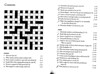 You could argue that crossword solving is a very good example of computational thinking. That is certainly what the security services thought during WW2 when they asked The Times to send them the names of anyone who could solve a cryptic crossword they’d supplied in 12 minutes or less. Those that did were invited to work at Bletchley Park, cracking codes for the war effort.
Digital Education: Safer Internet Day edition out now!
Updated! Discounts, competitions, news of events coming up, commentary, and advice about internet safety! And it's completely free!
Here’s what this issue contains:
Computer Programming Explained
By Woody Zuill
Read More Computer programming is the process of designing and writing computer programs. That is pretty straightforward, isn't it?
Improve student behaviour and attainment
 Sponsored article
 Seating charts make a real difference to the classroom learning environment in terms of teacher effectiveness and student attainment. Through using a seating chart, the teacher is imposing their authority before the lesson has even begun and making it clear to the students that the classroom is the teacher’s territory and they are in control of it. By using their knowledge of students and putting careful thought into the design of the seating chart the teacher can minimise negative interactions between students and take advantage of peer-to-peer learning strategies.
Review of the Google Chromebook
 I’ve been looking at the Google Chromebook, and I have to say I am seriously impressed. There’s a lot of talk about tablets these days. I myself have promoted the idea of Bring Your Own Technology, which usually means a phone or a tablet. But the Google Chromebook is worthy of consideration, whether for yourself, or whether you’re considering taking your school into the mobile future.
In order to thoroughly evaluate the Chromebook from a school perspective, I not only used the device myself, but interviewed Bruno Reddy, Head of Maths at the King Solomon Academy in London, and Jaime Casap, Global Education Evangelist at Google.
Digital Education Issue 1 is out tomorrow!
 Our newsletter Computers in Classrooms has been folded up, put away in a drawer and replaced by another one. Welcome to Digital Education!
Business emails to inspire confidence (not)
 There must be a whole generation of people who know the mechanics of using technology, but have no idea of how to take charge of it. I am thinking in particular of the ridiculous marketing messages I receive, that advertise targeted marketing services. I mention this because, despite all the lambasting of “Office skills”, it is demonstrably clear that people need them. I could even make a case for this being related to digital safety. How? Reputation is important, and marketing messages that have “schoolboy errors” do nothing to enhance one’s credibility. Consider the following examples:
5 Things to consider regarding seminars at Bett
With the vast amount of choice at the forthcoming Bett show (15 different events, hundreds of seminars, loads of exhibitors, plus networking), we need some criteria by which to judge whether or not something is worth going to or not – or worth staying for if you already have gone. Here are my suggestions. And remember: your time is precious, so if it becomes apparent that a seminar you thought would be relevant to your needs turns out not to be so, then get up and leave.
Read More