I submitted my review of this book to Teach Secondary magazine, an educational magazine in the UK. The first review below is what the magazine published. The second one is what I actually wrote! In substantive terms there is little difference between the two, but you may find it interesting to see what the editor altered.
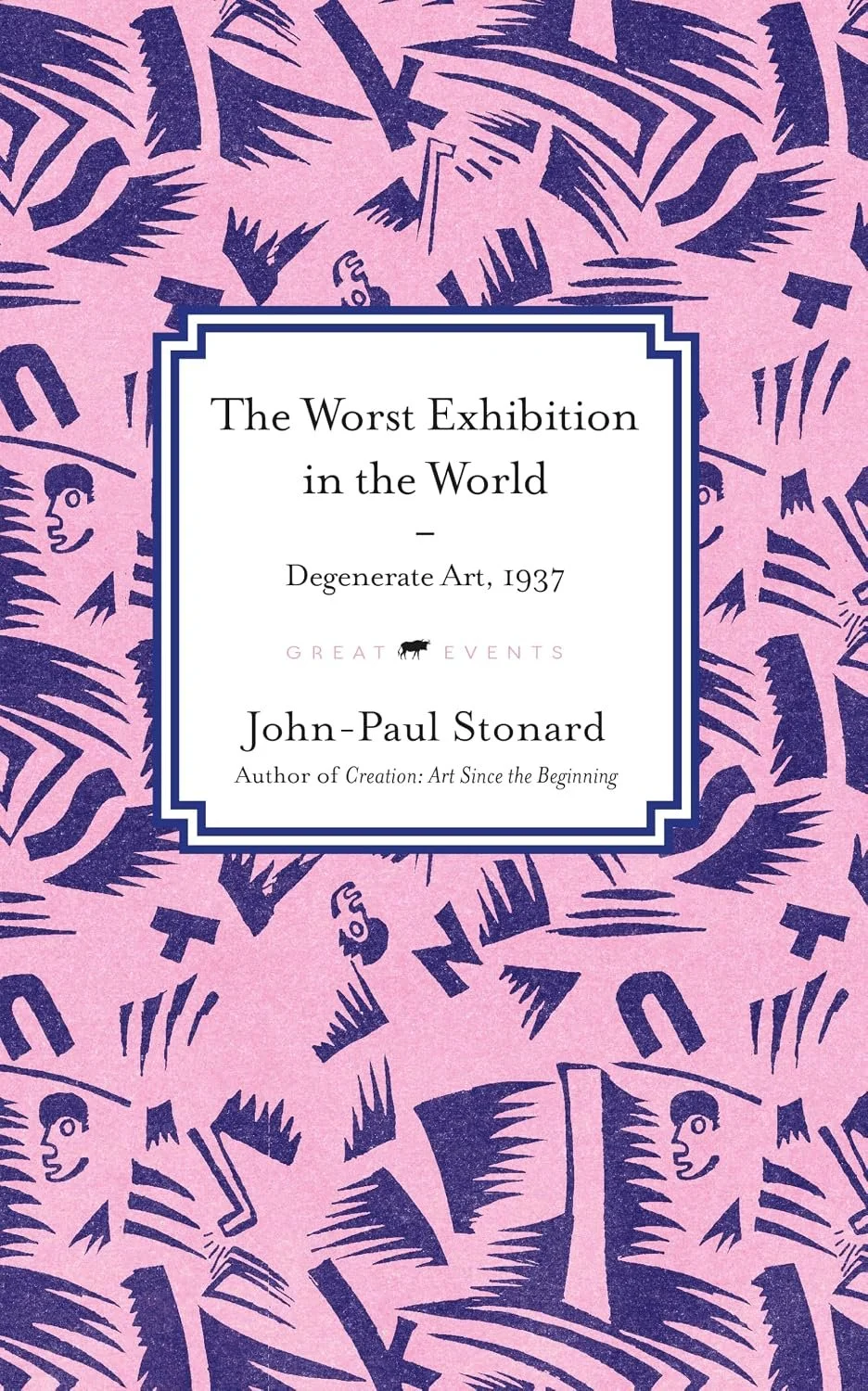
Click the pic to see this book on Amazon (affiliate link)
The published review
The Worst Exhibition in the World: Degenerate Art, 1937
John-Paul Stonard, Old Street, £12.99)
In 1937, the Nazi Party staged an exhibition of art that the party, and Hitler in particular, disapproved of. It encompassed practically every school of painting at the time, with the exception of 'naturalistic' forms. To them, art was supposed to inculcate a 'correct' set of values. Over 2 million people attended - which is probably 2 million more than would have seen these works otherwise, which seems ironic. Stonard walks us through the exhibition's halls, dropping in snippets of conversation to provide atmosphere and factual information to provide context. Some of the exhibited works were destroyed, others were sold and the fate of several remains unknown. At one point, Stonard cites German poet Heinrich Heine's prescient observation in 1821 that "Where they burn books, they will ultimately burn people too." Indeed, the same could be said of artworks. An excellent guide to a relatively minor, yet highly revealing episode of the Nazi era.
Reviewed by Terry Freedman
My original review
The Worst Exhibition in the World: Degenerate Art, 1937
(Stonard, Old Street, £12.99)
In 1937 the Nazis staged an exhibition of art that Hitler in particular disapproved of. This encompassed practically every school of painting apart from "naturalistic" ones. Art was supposed to inculcate the "correct" values. More than two million people attended, probably around two million more than would have seen these works otherwise, which is quite ironic. That was in contrast to a more Germanic exhibition at the same time, which was, apparently, a rather lacklustre affair. Stonard walks us through the exhibition's halls, adding snippets of conversation to provide atmosphere, and factual information to provide context. An excellent spotlight on a relatively minor but very revealing episode of the Nazi era. Some of the works were destroyed, others sold, and the fate of several is still unknown. As Stonard points out, Heinrich Heine observed that when people burn books they soon burn people. The same might be said in relation to art.
Highly Recommended.