Click the here to see this book on Amazon (affiliate link)
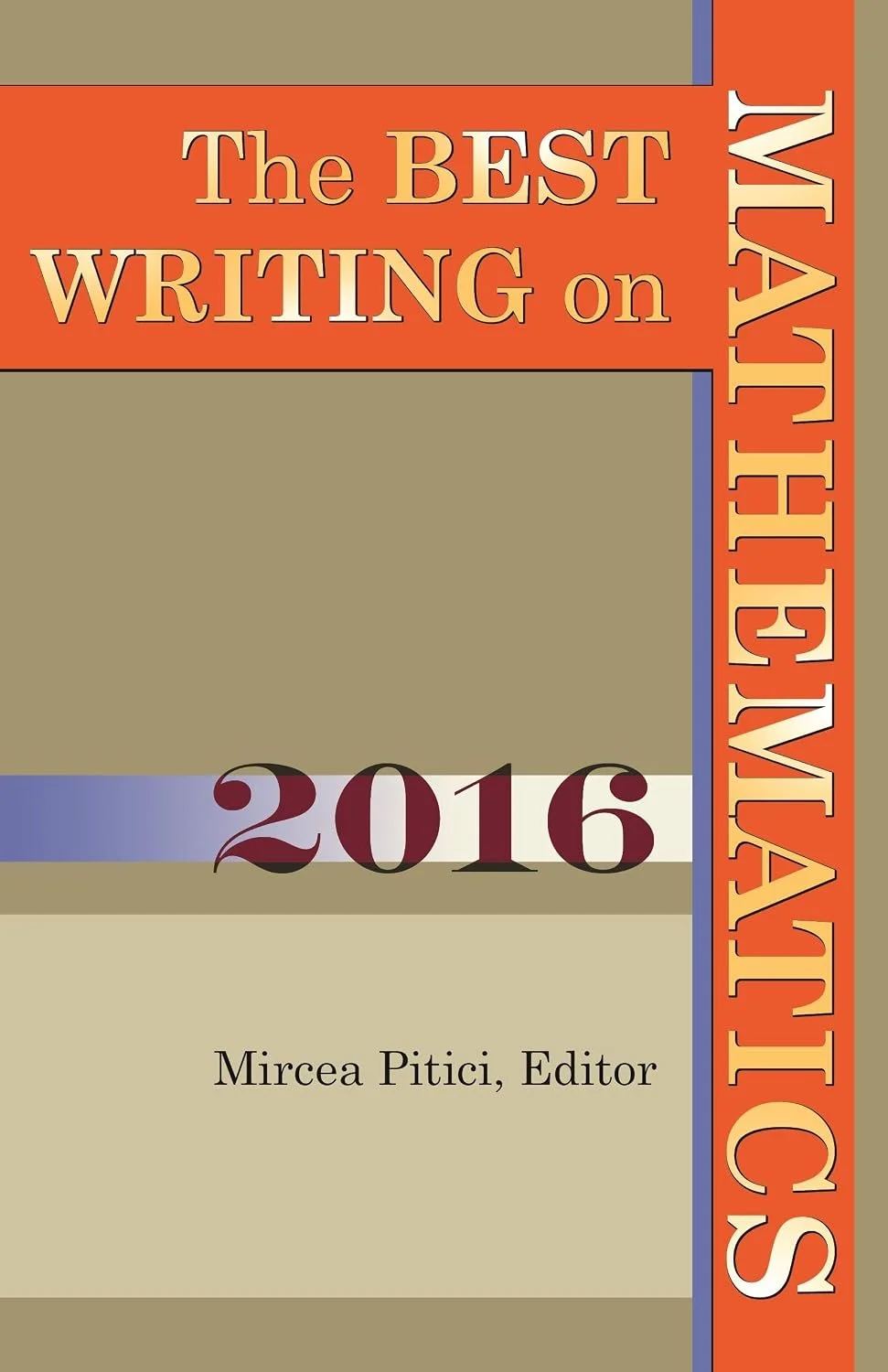
There are other volumes for other years, but this happens to be the one I was sent for review. My understanding from the Introduction is that it follows a template. It contains a wide selection of articles, including one on how to stack wine bottles, one on fractals as photographs and even one on how to write a book on maths for the non-gecialist.
An interesting chapter on making exams or tests more reliable makes the point that a huge increase in the length of an exam (because of an expansion in the number of questions) may result in only a small gain in reliability.
I have to say that reading that makes me feel vindicated in suggesting, as a quick way of assessing students, the visual check approach that I first encountered in the garage take my car ro for a service. As I wrote back in 2014:
This consists of a list of items and 3 columns for tick-boxes: green, amber, red. A tick in the green box means OK, one in the amber box means "keep an eye on this" and one in the red box means "attention needed". These visual checks could easily be electronic, could be adapted to a variety of topics/processes/skills and could be undertaken in 5 or 10 minutes by pupils themselves, at any time they or their teacher felt it to be appropriate. The traffic light system is a very good way of finding out what a pupil knows — or think she knows — on a given topic. Pupils can also use it to check whether they have the skills set they need in order to carry out the next piece of work.
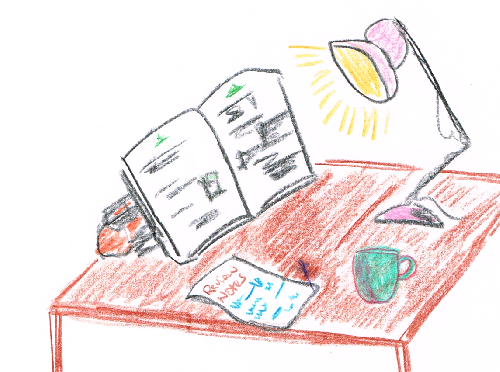
Getting back to this book, I have enjoyed reading the chapters, although I cannot claim to have understood all of them.
As well as a huge bibliography there are lists of useful interviews, articles, book reviews and even a fiction book: Zombies and Calculus, which sounds intriguing.
I think this could be an excellent resource for teachers of mathematics.