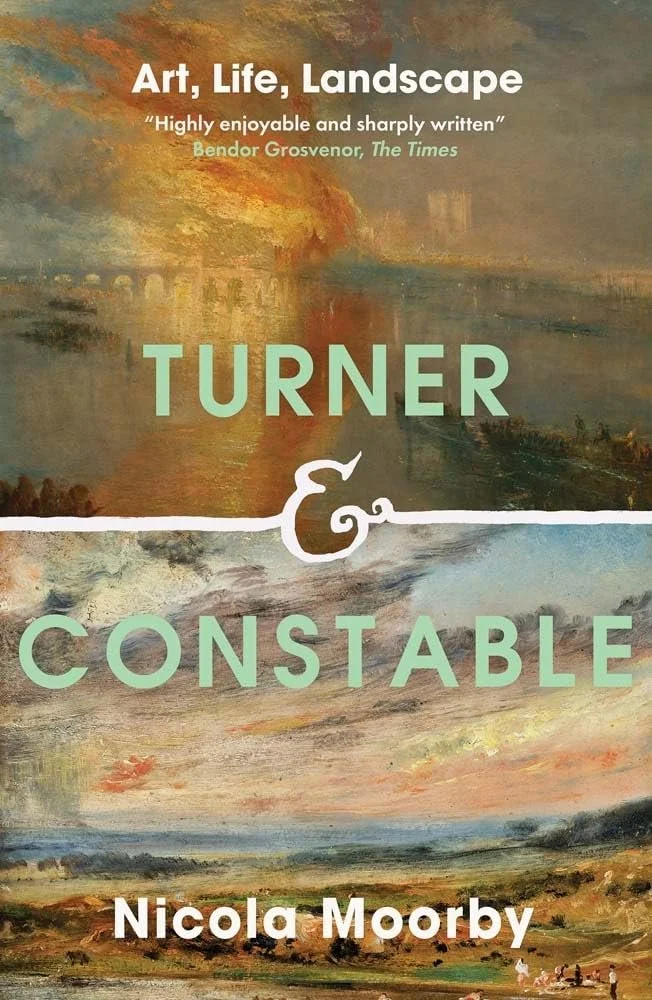
Turner and Constable: Art, Life, Landscape
Click the here to see this book on Amazon (affiliate link)
(Nicola Moorby, Yale University Press, £25)
One for your colleagues, perhaps: art, art history, ploitics with a small ‘p’.
I submitted my review of this book to Teach Secondary magazine, an educational magazine in the UK. The first review below is what the magazine published. The second one is what I actually wrote! In substantive terms there is little difference between the two, but you may find it interesting to see what the editor altered.
The published version
Before reading this book I had little interest in Turner's art, but a great appreciation for Constable's. Reading about both artists placed side-by-side, as they are here, has been a real eye-opener.
Through Moorby's engaging prose we learn about the very different circumstances into which they were born, as well as their very different personalities. Turner was a poor boy who, according to some contemporaries, had ideas above his station - a direct contrast to the much quieter late starter, Constable.
We're also given insights into the politics and rivalries at play within the Royal Academy, and the fierce debates at the time over what counted as 'good art?
A fascinating insight into the art world of the time, and one I suspect will further enhance students' appreciation of both artists' work.
The version I submitted
Before reading this book I had little interest in Turner’s art, unlike Constable’s work. The author writes in a very engaging way, and placing Turner and Constable side by side is an eye-opener. We learn not only about the very different circumstances into which each artist was born, but also about their very different personalities.
Turner, the poor boy with, according to some contemporaries, ideas above his station, contrasts with Constable, a quieter man and, from the viewpoint of fame and fortune, a late starter.
We also learn about the politics and rivalry within the Royal Academy, and what counted as good art. For instance, for a long time watercolour was looked down upon.
A fascinating insight into the art world of the time, and one which I suspect will whet the appetites of students in their appreciation of both artists’ work.