

News of 4 forthcoming events, including one that takes place tomorrow.
Read More
A great way to read classical poetry!
7 articles about ebooks
Here is a short selection of articles I've written about ebooks, self-publishing and related matters.
Read MoreEducation hashtags
Here's a link to a post containing a comprehensive list of Twitter educational chats, compiled by Simon Johnson.
Read MoreHubris in the world of education technology
I believe that there's a fine line between letting people know you're an expert, and displaying too much self-regard. If keeping on the right side of that line proves a bit of a challenge, here are three "rules" that could help.
Read More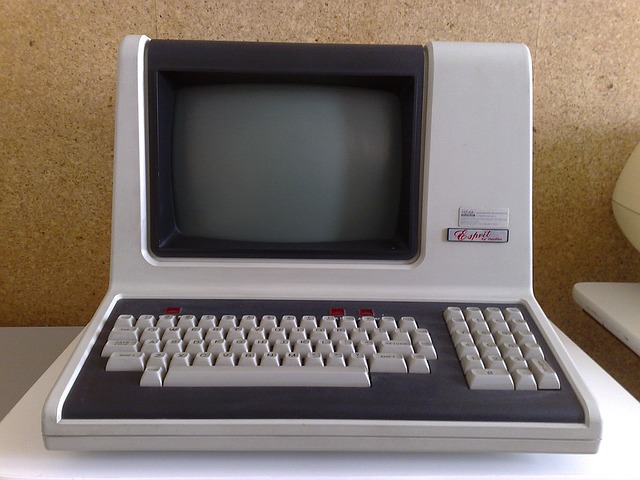
But it might be useful to somebody...
10 things to do with old IT equipment
Just because a laptop, tablet or printer isn't good for general or intensive use any more doesn't mean it cannot serve any purpose at all. Here are a few suggestions you may wish to consider.
Read More
5 types of review for computing and ICT books
When it comes to writing reviews of computing and ICT books for education, I've found that a one-size fits all approach not to be very useful. Here are the 5 types of review I write, ranging from the full length, everything but the kitchen sink version, to zero words except to say "This book exists"!
Read More4 reasons your PDF report can't be read on a small device
Having waxed lyrical about the joys of reading PDF documents on my Kindle instead of having to lug around a load of paper (see 5 reasons that educators should use a Kindle), I had a rude awakening today. I downloaded a PDF research report and fired it off to my Kindle, with the intention of reading it on the train. Unfortunately, it proved to be unreadable on my Kindle, and trying to read it on my phone was not exactly an unequivocal success either.

Think mobile
Here are the reasons, which I suggest ought to be addressed by anyone who decides to create a PDF. Google penalises websites that are not mobile-friendly. PDFs that are not mobile friendly will be penalised simply by virtue of the fact that people won't read them or pass them on to others. So thinking mobile is important if you want your stuff to be read.
Font is too small
One of the drawbacks of reading a PDF on the kindle is that you can't alter the font size. So if the font is too small to start with, that's a big disadvantage. On a phone you can expand the text, but at the cost of having to scroll horizontally as well as vertically. It's not a great experience.
Poorly contrasting colours
Trying to read orange text on a white background is challenging at the best of times. Trying to do so on a Kindle that displays only in black and white is next to impossible.
White text on a black background
It might look good, but it's much harder to read than black text on a white background.
All capitals
IT'S PRETTY HARD TO READ TEXT THAT IS ALL UPPER CASE (ESPECIALLY IF THE TEXT IS SMALL, AND EVEN MORE SO WHEN THE COLOUR SCHEME IS POOR). WHY DO YOU THINK ROAD SIGNS TEND TO BE IN LOWER CASE? LOWER CASE AIDS READING BECAUSE BY SEEING THE SHAPES OF THE WORDS YOU CAN READ THEM MORE QUICKLY, AND IT'S LESS STRAIN ON THE EYES.
Conclusion
These days, a huge number of people access web-based content on a mobile device. According to a recent report, by 2017 mobile devices will generate 68% of internet traffic.
Unreadable PDFs, in which form is considered more important than function, really ought to be relegated to the dustbin of digital history.
Review of Amazon Prime
I thought I'd review Amazon Prime today because there are quite a few substantial discounts for members for today only. For example, something I've been cogitating on for a while has nearly 20% off today. I've only talked about the UK site in this article.
Read MoreTeaching computing, assessing computing, and a lot more
I'm on the final proof-reading stages of the latest issue of Digital Education. It's a free newsletter for people with a professional interest in ICT and Computing in education, ed tech, digital skills etc. This issue includes an article by William Lau on the 5 mistakes he made when teaching Computing, and an article by Sam Hunter on the ladders approach to assessing Computing.
For more information on what the new issue contains, read on.
Read MoreHow I deal with spam comments
How should one handle spam comments -- and what are spam comments in the first place?
Read MoreMessy problems and ed tech
Do we spoonfeed students too much? Or ask them the wrong kind of questions? Here's an interesting discussion between Kevin Hogan of Technology & Learning and Alan November.
Read MoreICT & Computing Qualifications List Update
News about the updated ICT & Computing (etc) qualifications list, and how you can get it.
Read More
Do algorithms have a secret bias?
Computing discussion topic 2016-05-23
A topic to discuss with your students perhaps: the hidden bias in algorithms.
Read More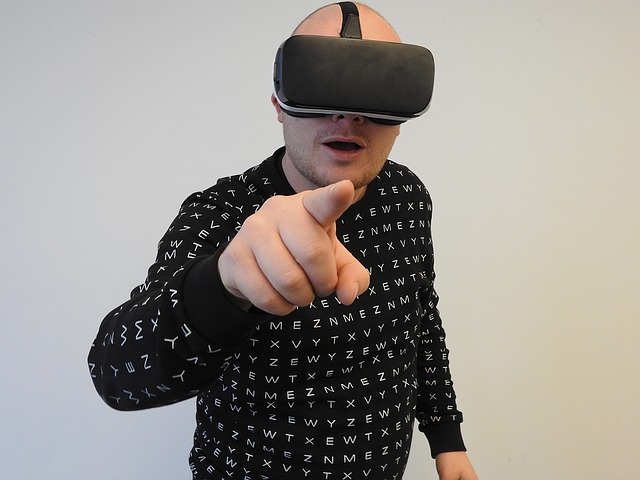
Will he dictate even more of what you see?
Immersive journalism: a VR nightmare?
VR technology has come of age (more or less) and suggests some exciting possibilities. But how will reportage be affected, and is it wholly a good thing?
Read More
Teachers and writers
Teachers and writers have a lot in common, as I pointed out in this article from 2008 -- most of which is still relevant!
Read More
Digital Education Newsletter Preview
What is coming up in the next issue of Digital Education? Plenty of good stuff, as usual (he says modestly!). Read on for more details.
Read More
7 must-attend conferences for ed tech teachers
UPDATED! Here are 7 conferences that will appeal to any ed tech teacher wishing to improve their practice and broaden their horizons.
Read More
Kay's survey of over 300 teachers has yielded some interesting results.
ICT and Computing
The DfE has summarily dismissed the ICT GCSE qualification. Kay Sawbridge carried out a survey to find out the possible consequences of this.
Read More
Oh joy! The next issue of Digital Education is out today!
Coming soon: Digital Education!
Another bumper edition of the Digital Education newsletter! Due out later today.
Read More
Robot editor up against a deadline -- by Terry Freedman
AI: Could a bot write your next book?
What's the role of artificial intelligence in the writing of books, games and apps?
Read More