 Here are three short observations on data, which may provide a basis for discussion with pupils.
1. What we can learn from the Ice Age
A few weeks ago I went to the Ice Age art exhibition at the British Museum.
 Here are three short observations on data, which may provide a basis for discussion with pupils.
A few weeks ago I went to the Ice Age art exhibition at the British Museum.
 Here is a competition which is aimed at secondary school students. I quite like the idea of this: both the topic and the nature of what has to be submitted by entrants: a video of not more than 90 seconds answering the question:
In the future, how will technology help an ageing population?
This is an opportunity to get some really interesting discussions going. Perhaps you could get other colleagues involved, such the RE department.
 Whatever you think of the current debate over news that the US Government may have been monitoring the online activity of not only its own citizens but those of other countries too, you have to admit one thing. It provides a great opportunity for ICT teachers everywhere to bring some real-world issues into their lessons, in a very newsy (ie current) way.
 When I last visited Cambridge, England, I thought the street signs were pretty good. Rather than display how far away things are, they tell you how long it will take to walk to them: far more useful.
But a new idea, called Points, goes way beyond that.
 Cloud Education ICT Design (CEID), which is run by the South-west Grid for Learning Trust, has published a very useful White Paper on Cloud Computing. At only four pages long it explains what cloud computing is, and what the benefits and risks are from an education establishment’s point of view. CEID intends to expand on the list of risks and benefits once it has analysed the survey results.
Mullah Nasrudin was in a village he was visiting for the first time. He rushed into a shop, and demanded of the shopkeeper:
“Have you ever seen me before?”
“No!” answered the owner.
“Well then,” asked Nasrudun. “How do you know it’s me then?”
You might think that an ancient Persian folk hero would have little to say a 21st century citizen, but I think you’d be wrong.
 There was an interesting article in the UK’s Daily Telegraph about the film The Bling Ring. Entitled “Is the Facebook generation anti-social?”, the article presents what I think is a fairly balanced view of how teens seem obsessed with recording every moment of their lives. Well, balanced in the sense that the writer, Tim Stanley, attempts to present it as something we have always done. He cites the example of people in years gone by insisting on showing their (boring) holiday snaps to their friends and family. Now they upload them to Facebook instead (thank goodness!).
 Here are a couple of conferences coming up which look pretty good, and which are taking place in England in the near future.
 In case you’re unfamiliar with the term, a tip jar is a device whereby people can contribute a donation to a website – a bit like the jars in cafes in which customers can drop a few coins by way of a tip to staff. Indeed, the websites I’ve come across that have tip jars tend to ask visitors to help them buy their next coffee in Starbucks.
Before we can go any further, is this an educational issue? I believe it is, or could be, for the following reasons
 I was discussing with a colleague the fact that some of us were trying years ago to introduce mobile technology into education. I can’t speak for others, but certainly for me it was an insight into how Sisyphus must have felt. He, as you may know, was the hapless guy who was condemned to push a huge rock to the top of a hill, only to see it roll all the way down again within inches of reaching the top. Doing that once would have been bad enough, but he was sentenced to do it forever.
 Stephen King, in his book ‘On Writing’, makes a very interesting point. Going against just about all the advice proffered in books and magazine articles, he says:
Plot is, I think, the good writer’s last resort and the dullard’s first choice.
You might be inclined to dismiss that as hogwash, but given King’s phenomenal success as a writer I’d suggest that would be unwise.
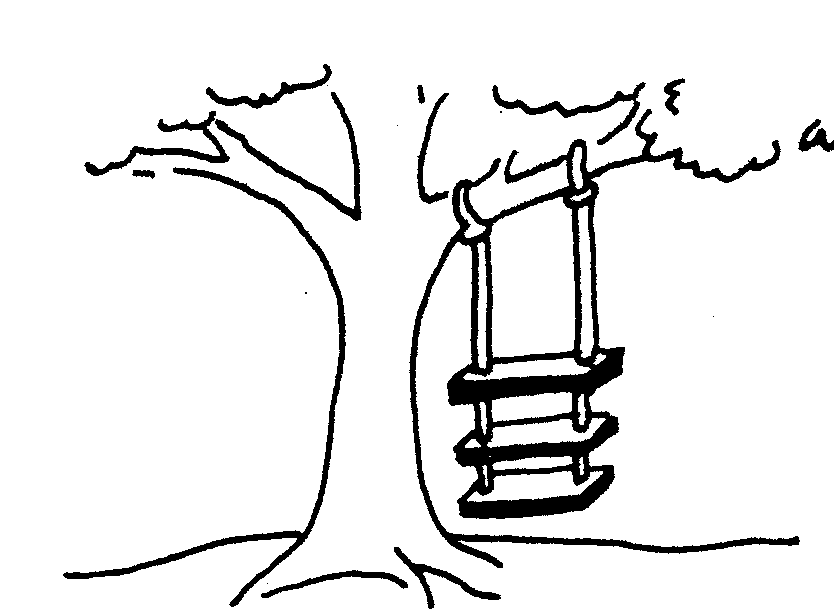 I thought this graphical representation of a curriculum applies really well to the proposed Computing Programme of Study. (See My response to the ICT/Computing consultation for more information about that.)
Here is the comment I made near the end of the online form. I decided to take the opportunity to speak my mind about the whole process of consultation, right from the beginning. Unfortunately, I referred to the Royal Society of Engineers by mistake rather than the Royal Academy of Engineering. It was a simple mistake which I hope won’t undermine the legitimacy of my statement.
I also took the opportunity to say what I think about the constant messages from ‘on high’ about ICT being ‘boring’. I think it undermines teachers, and from that point of view is unforgivable.
 When did ICT teachers stop becoming teachers and become ‘facilitators’ instead? I’ve largely managed to ignore this sort of nonsense but now it’s getting out of hand. The other day someone said on Twitter or Facebook that he is an ‘active facilitator’, while someone else shared a sign which read “I am not a teacher; I am an activator.”
 Christina Preston was one of two people given the Lifetime Achievement Award at the 2013 Conference of Naace, the subject association for ICT. I interviewed her to find out about her and her work.
 Penny Patterson is on Twitter, but prefers to listen rather than talk, unless she has something of value to add to the conversation. She is active in ICT circles, though doesn’t have her own blog. And if you visit a conference she’s speaking at, you’re likely to chat to her while she serves the tea. She prefers, to use her own words, to be “one of the backroom team”.
Indirect evidence of this was seen in this year’s Naace ICT Impact Awards. When Penny was selected as one of the two people to be given a Lifetime Achievement Award, the look on her face was one of surprise, bordering on shock, and tinged with bewilderment. Typically, she told me that “other people deserve this award far more than I do.”
(c) Terry Freedman All Rights Reserved