

It’s amazing what you can achieve with a paintbrush and a fork.
Read MoreWe don’t need no official scheme of work for Computing
It is my fervent hope that Computing At School (CAS) does not update its Computing scheme of work, that Naace does not update its own scheme of work, and that the two organisations do not produce a joint scheme of work. This is not to disparage the work they have done so far, including a very useful document giving joint CAS-Naace guidance on dealing with the new Programme of Study. Indeed, it’s my belief that between them they will produce an excellent scheme of work which raises my concerns.
Read More7 Criteria for evaluating a computing scheme of work
 Now that it’s certain that here in England we will have a computing curriculum to follow in September 2014, many people are going to be writing schemes of work. Whether you are a producer or a consumer in this regard, I think you will find the following evaluation criteria useful.
Why not experiment when teaching ICT?
 It’s amazing what you can achieve with a paintbrush and a fork. Yesterday morning I watched in helpless horror as the lid of something fell down the plug hole in the bathroom sink. I could see it, just about, using the flashlight app on my smartphone (I knew there was more to smartphones than just being connected), but couldn’t reach it.
Perspectives on The Computing Programme of Study
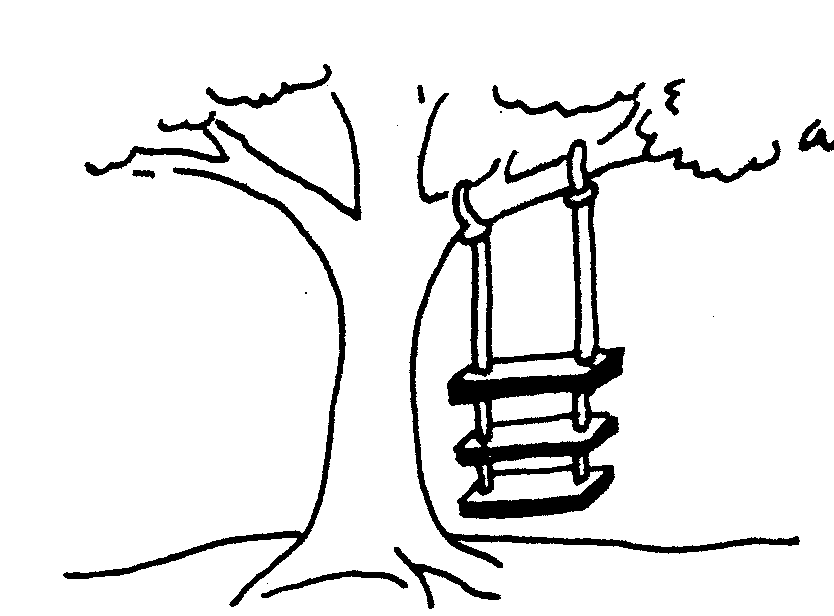 I thought this graphical representation of a curriculum applies really well to the proposed Computing Programme of Study. (See My response to the ICT/Computing consultation for more information about that.)
Computer help is not always helpful
 It’s very tempting to try to make life as easy as possible for end users by being proactive, ie anticipating what is likely to be useful to them, and then implementing that as a default option (or possibly not even an option, but compulsory).
Perhaps some of your students will be tempted, when designing a computer program for use by non-technical people, to make it as ‘proactively helpful’ as possible. If so, they should beware. A good idea would be to undertake some market research, if only of a rudimentary nature, to avoid the pitfall of merely annoying people.
I was a teenage geek
 This article is a bit autobiographical, but there is an objective point to it. Actually, it’s completely autobiographical, but there is still a point to it.
One day when I was 15, I was milling around in this youth club trying to look cool, when someone came up to me and asked me if I’d be interested in joining a cinematography club he wanted to get started. He explained to me that I’d learn how to use a cine camera to shoot films, edit the films,learning about lighting and all that other technical stuff, so I said “Yes!”.
I’d never touched a cine camera in my life.
5 Characteristics of an Ideal Programme of Study for ICT
Many people in the educational ICT field in England are busy working on a new ICT Programme of Study to replace the current (disapplied) one. Here are my thoughts on what the ideal Programme of Study would be.
Read MoreSubtlety in the ICT Programme of Study
The ICT Programme of Study is both short and non-specific as far as the technology it references is concerned. It’s easy, therefore, to fail to appreciate some of the subtleties in it. This is especially true of the Attainment Targets towards the end of the document, in which often the same phrases are used and it’s difficult to identify why one skill is deemed to be higher or lower than a similarly-worded one.
Read MoreICT in the Rose Review of the National Curriculum
I wrote this document in May 2009. Since then, the proposed Level Descriptions have been changed. Here is a summary of the differences between this document and the revised changes, not in terms of the descriptors themselves, but my comments on them. Basically I have taken the view that a difference is only a difference if it makes a difference, so if the proposed level descriptor has changed, but its import hasn't, I haven't commented on it. In fact, as far as I can tell only two of the level descriptors have changed, and then only slightly.
Although this post is clearly aimed primarily at colleagues in England and Wales, it may be of interest to teachers from other countries too, as it shows what we're expecting young people to be able to do at different ages.
Also, it covers the whole of the programme of study for ICT, not just primary.
Anyway, here is a summary of the changes:
| Level | Changes in New Descriptor? | Comments on Changes |
| 1 | Yes - shorter | None |
| 2 | Yes - shorter | None |
| 3 | Yes - the reference to editing and formatting has been removed | It's now quicker to read, but I think it has lost some of its clarity |
| 4 | No | Not applicable |
| 5 | No | Not applicable |
| 6 | No | Not applicable |
| 7 | No | Not applicable |
| 8 | No | Not applicable |
| Exceptional Performance | No | Not applicable |
The level descriptors are © 2009 QCDA Copyright. I have reproduced them here in accordance with the QCDA's terms.
Update on 2009-12-03 12:03 by Terry Freedman, Educational ICT Consultant
Oops!
Chris Padden has kindly pointed out to me that the Programme of Study for ICT is different in Wales. He pointed me to this assessment grid. There are further documents on the Welsh Assembly Government website.