
People really do judge by appearances. (If you don’t believe me, try turning up to your next job interview wearing wellingtons and a pair of shorts.)
Read More
The usual headlines...
Education technology research, and how it's reported
Journalists often seem to get it wrong when it comes to reporting educational research, and they seem to love it when they can go with a headline like “Schools wasting money on useless technology”. I made that up, but the reporting of the recent OECD research, the Decoding Learning research from Nesta in 2012 and other work is quite often presented in those sort of terms.
Everything is not all that it seems but, importantly, what can we do about it?
Read More
Communities are important!
3 ICT and Computing communities you should join
Three communities that ICT and Computing teachers should join.
Read MoreResearchEd Tech conference
Saturday 17th October sees the first (and hopefully not the last) ResearchEd Tech conference. This is ResearchEd with a technology focus. At the time of writing there appear to be just 5 tickets remaining. However, the intention is to live stream as many sessions as possible.
Read MoreAda Lovelace Day Competition
As you may be aware, next Tuesday (13th October) is Ada Lovelace Day. In my next newsletter I’ll be announcing details of a competition whereby three lucky readers can win a copy of The Thrilling Adventures of Lovelace and Babbage, by Sydney Padua.
Read More5 reasons to join Computing communities
 Teaching can be a lonely profession, especially if, as is often the case, you are the sole teacher of ICT or Computing in your school. Whether you’re on your own or part of a team, I’d thoroughly recommend joining a community or several. Why?
7 Things to consider when considering adopting another school’s “big idea”
 So, you’ve visited a school, and seen its new “big idea” in action. The reception area of the school proclaims, “We are an X school!”, where “X” is the big idea: Flipped Learning, Bring Your Own Device, One-to-One, or anything else. It looks great – wonderful, in fact – but will it work in your school? Here are seven things you need to consider.
ICT and Computing Reading catch-up
 Greetings! I hope you have had a nice summer break. I’ve taken some time off, in the sense of not trying to update this website as frequently as I usually do. But I was doing some reading and writing, so I thought you may find these links interesting as you start a new school year.
Believe it or not, I started this post a week ago. It’s not that I’m a slow writer (I’m not), but I kept thinking “Ooh, that would be interesting to include” and “Ooh, that looks good too”. well, after a lot of “ooh-ing” I thought “Ooh, I’d better stop and hit the Publish button”. Just as well, because one of the conferences I mention is tomorrow – eeek! Anyway, now even this intro has started to take on a life of its own, so I’m going to stop right now. There. See? It’s just a question of self-discipline.
Making the flipped classroom work
 The principle of the flipped classroom — that kids learn the content at home and discuss and work with it in school — is something that many teachers would probably agree with. But there are problems with the “pure” model of flipping the classroom, and so we need to be able to compromise.
4 reasons not to have an e-learning committee in a school
 In my last post I suggested 6 reasons to have an e-learning committee in a school. But not everything in the garden is rosy. Based on my experience as ICT co-ordinator in several secondary (high) schools, here are what I see as the downsides.
6 reasons to have an e-learning committee in a school
 In my past roles as ICT Co-ordinator or e-learning co-ordinator, I have formed and chaired an ICT or e-learning committee. What are the pros and cons of having such a body?
7 questions to ask regarding whether education technology improves learning
 Does education technology improve learning? The intuitive answer to those of us involved in education technology is “of course it does”. However, the evidence from research is not conclusive. I think the reason is that it’s actually very difficult to carry out robust research in this area. As the impact of education technology has often been a topic for discussion in the Naace and Mirandanet mailing lists, I thought it might be useful to try and clarify the issues as I see them.
7 reasons to have a Computing wishlist
 How do you decide what to spend money on when it comes to ed tech? Do you have a list of things you’d like to buy, or do you decide on an ad hoc basis when you read review of software and so on? Do you know how you would spend a small amount, like £10, or do you take the view that unless you’re allowed to spend at least £500 you don’t want to know?
21 reasons that education technology projects fail
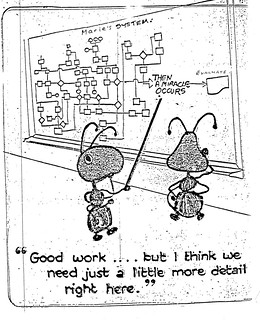 Why do some school and local authority initiatives, not to mention government initiatives, fail, especially when they concern education technology. In my experience, the cause can usually be found in one or more of the following. The next time you read about a 1:1 project turning into a nightmare, or a fantastic opportunity being wasted, it is almost certainly going to be because of one or some of the following
Blasts from our ICT Past
 I’ve been trawling through the archives again (I don’t get out much). The following appeared in the very first edition of my newsletter, which was originally called Computers in Classrooms (but is now called Digital Education), on 3rd April 2000:
How I got into coding and why I think everyone should do it!
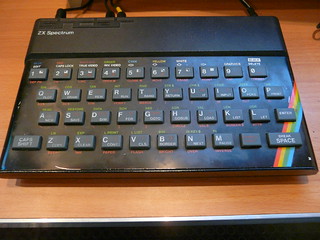 In this, the last of a three-part series on girls and women in computing, PhD student and Further Education lecturer Amanda Wilson describes how an early interest in computing followed by picking up everything she could while working led to a dream job.
Girls and technology
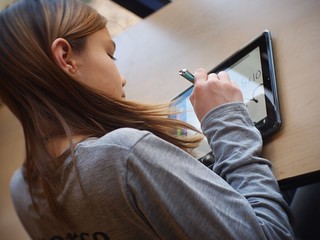 In this, the second of a three-part series about girls and women in Computing, school student Ellie Gregson suggests why girls tend not to choose STEM subjects.
Young people love to use technology. In school, we jump at the opportunity to use the iPads for research, or to use laptops for typing up essays or creating PowerPoints in class. In my school, when an iPad trolley is dragged into the classroom at the start of a lesson, there is always a race between the students to the front of the classroom, desperate not to have to share it with others, or be stuck with a tablet with a 10% battery life remaining.
Girls and Computing
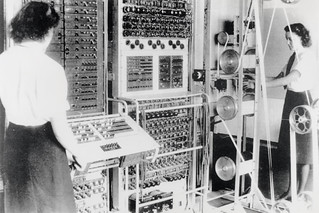 This is the first of three articles about girls and women in Computing.
On March 8th it was International Women's Day.
Book Review: The Thrilling Adventures of Lovelace and Babbage
 Ada Lovelace died young, at the age of 36, and Charles Babbage never built his Analytical Engine. Had Lovelace lived, and had Babbage actually built his invention, the computer would have been invented a hundred years before it was.
Isn't that an astonishing thought?!
My impressions of Bett 2015
 By Ben Davies
The trip to the Bett Show has always stirred feelings of both excitement and anxiety and this year's trip was no different. The excitement stems from the chance to spend the day immersed in education technology