I wrote and published this more than ten years ago (in 2014). Apart from the fact that some terminology has changed and some resources are no longer available, it is still relevant. What a sad situation.
Read More#Flashback Friday: Sexism in computer stores
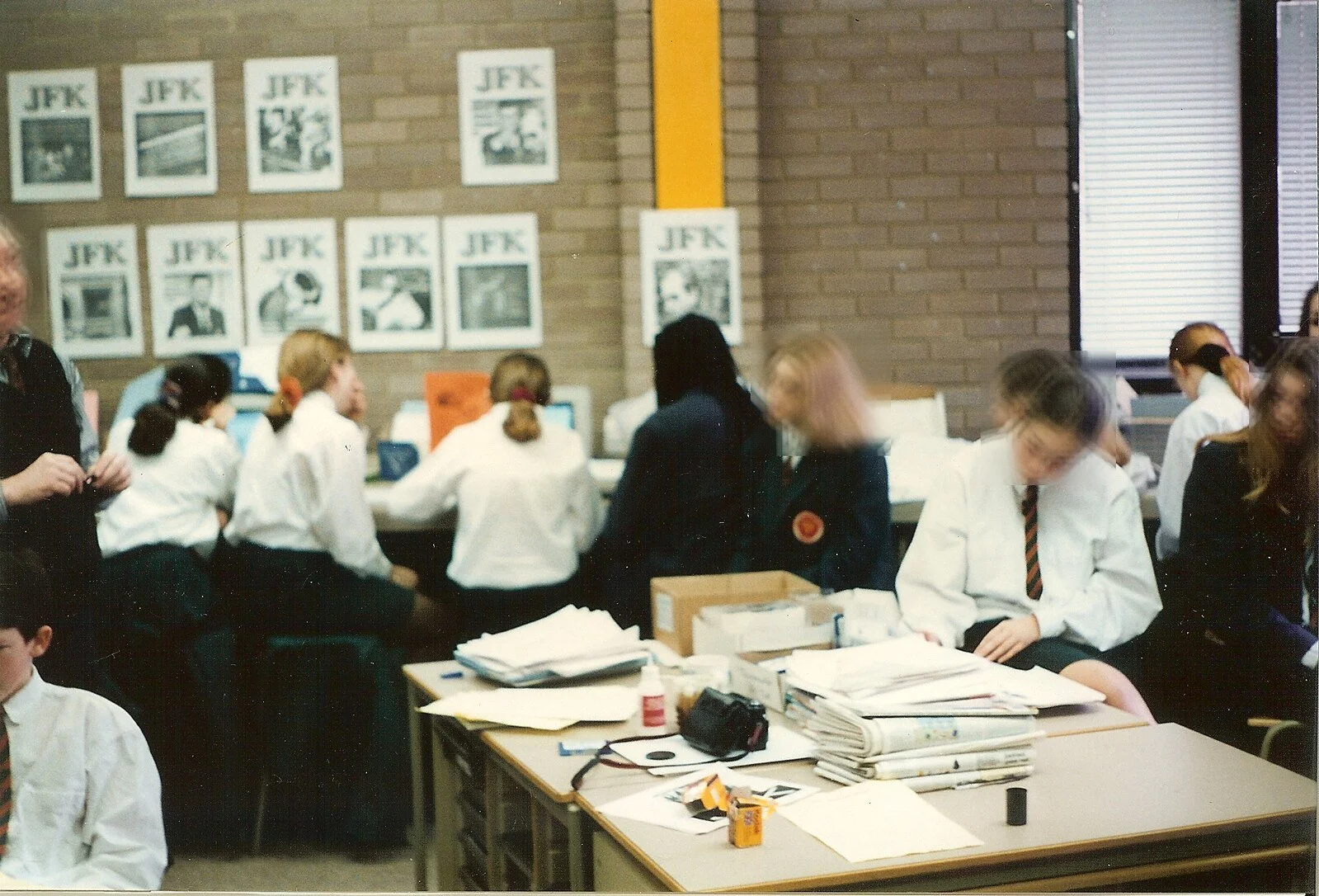
In 1994 I set out with my wife to discover the best place to buy a computer system -- and discovered a lot of sexism along the way.
Read MoreWhat I've been reading: The Trouble With Women
You would hardly believe the ridiculous things that 'genius' men have said about women's capabilities. I can't help thinking that if Ada Lovelace had been a man we'd have had computers at least one generation before we did. Anyway, here are my views on a book that deals with the issue.
Read MorePhoto from Stencil. Licence: CC0
Women and girls and technology: a matter of biology?
Are girls and women biologically predetermined to not be natural programmers? No, I don't think so either. This article contains some interesting points based on recent discussions, and links to (hopefully) useful articles.
Read MoreSexism in computer stores
In 1994 I set out with my wife to discover the best place to buy a computer system -- and discovered a lot of sexism along the way.
Read MoreHow I got into coding and why I think everyone should do it!
In this, the last of a three-part series on girls and women in computing, PhD student and Further Education lecturer Amanda Wilson describes how an early interest in computing followed by picking up everything she could while working led to a dream job.Girls and technology
In this, the second of a three-part series about girls and women in Computing, school student Ellie Gregson suggests why girls tend not to choose STEM subjects.
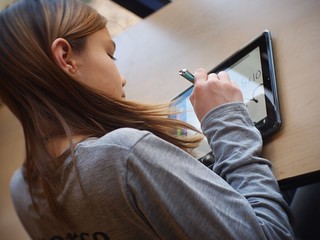
Young people love to use technology. In school, we jump at the opportunity to use the iPads for research, or to use laptops for typing up essays or creating PowerPoints in class. In my school, when an iPad trolley is dragged into the classroom at the start of a lesson, there is always a race between the students to the front of the classroom, desperate not to have to share it with others, or be stuck with a tablet with a 10% battery life remaining.
Girls and Computing
This is the first of three articles about girls and women in Computing.
On March 8th it was International Women's Day.
Digital Education Ezine April 2015
At last! Or, to use the vernacular, woo hoo! The latest edition of the Digital Education ezine is now out. It contains a round-up of products seen at Bett, articles on girls and women in technology, loads of links and book reviews. Here’s a detailed list of the contents:Encouraging girls to do computing: an economics approach
Where are the girls in ICT and Computing
In the context of technology, the main issue is that not enough girls go into computer science studies beyond the statutory provision, or computer-related jobs. Various figures are cited, but it seems to be generally agreed that only around 16 or 17% of students in undergraduate courses in Computer Science in the UK are female, and only around 27 or 28% of employees in information technology jobs are women — a figure that is true for both the UK and the USA. So what can be done about it?It doesn’t have to be pink
I turned my collar up against the wind. A useless gesture, because the wind contemptuously insinuated itself under my skin regardless, but it made me look hard. And hardness was needed in this job. I walked around the playground, glaring at kids who even just looked like they might be thinking of doing something wrong. Crowds of them parted as I approached. One looked shifty.
“You got a problem, son?” I gritted.
Is The ICT Curriculum Too Masculine?
One of the apparently insoluble problems of the age is how do you encourage more girls to take up ICT or Computing? I think a lot can be done, and have done so myself, but I wonder how far a lot of the effort fails to get to the heart of the issue, which could be the curriculum itself, the way it is taught, or a combination of the two?