In order to implement flipped learning, you need to ensure that certain conditions are in place.
Read MoreFlipped learning is not as simple as telling kids to watch a video or two.


Flipped learning is not as simple as telling kids to watch a video or two.
In order to implement flipped learning, you need to ensure that certain conditions are in place.
Read More![ENIAC. U.S. Army Photo [Public domain], via Wikimedia Commons. Picture credit for Eniac: This image is a work of a U.S. Army soldier or employee, taken or made as part of that person's official duties. As a work of the …](https://images.squarespace-cdn.com/content/v1/53b7d42de4b04cfc3188c6eb/1550079821886-TUICJIDYKXZIXMAK0OZX/ENIAC.jpg)
ENIAC. U.S. Army Photo [Public domain], via Wikimedia Commons. Picture credit for Eniac: This image is a work of a U.S. Army soldier or employee, taken or made as part of that person's official duties. As a work of the U.S. federal government, the image is in the public domain. URL: https://commons.wikimedia.org/wiki/File:Eniac.jpg
Making it possible for students to come face to face with real things from times gone by can have an electrifying effect on them. This is especially so when teaching Computing.
Read MoreNews, reviews, two competitions, free resources, interesting reading, a new Computing scheme of work, and women in computing -- just some of the stuff featured in the new issue of Digital Education. Subscribe for free!
Read MoreWhen it comes to travelling backwards and forwards in time, there are a few cyber security issues to be worked out!
Read MoreTo borrow from Mark Twain, reports of the death of Visual Basic for Applications as a viable programming language to teach in schools are exaggerated.
Read MoreMake use of what you already have.
What you have, in fact, is your pupils and other members of staff. Even if you are in a small school, or a large school but with no team, you may still be able to give your pupils the experience of addressing real problems through computing and ICT.
Read More"As soon as I found out about how to write code, I was hooked. I realised that this was what I should have been doing all along." Anna Shipman, who works for the Government Digital Service, talks about her love of coding.
Read More Teaching can be a lonely profession, especially if, as is often the case, you are the sole teacher of ICT or Computing in your school. Whether you’re on your own or part of a team, I’d thoroughly recommend joining a community or several. Why?
 I don’t think rules, as commonly formulated, are very useful in the context of Computing lessons. Rules are usually framed in the negative. For example, in a computer lab I went into a few years ago on one of my school visits, there was a poster on the door listing all the things that people shouldn’t do:
Do not leave the computers on.
Do not leave printing next to the computers.
Do not just switch the computers off.
and so on.
There are two main problems with this sort of thing.
 I mentioned recently that in his book The Craft of the Classroom)
 , Michael Marland provided very useful advice on very practical issues in the classroom, and good routines to ensure a smooth lesson. Routines are good, because pupils know what to expect. They are able to predict what is going to happen, and when. Some pupils, whose home lives are chaotic and unpredictable, may even feel safe because of routines. Here are some routines that I think are useful for Computing lessons.
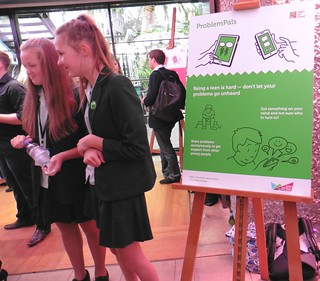 I attended the Apps for Good Awards last night. Very inspiring it was too. As always, the young people were very impressive. Whatever question I threw at them, they were able to answer it. But for now at least, I just wanted to repeat something that the co-CEO of Apps for Good, Debbie Forster, said at the end of the evening.
 Just in case you thought the difficulties of assessing pupils’ attainment in Information Technology are a new thing, and how terrible Levels were (are?), I thought you might like to read a report dating from 1995.
 I’ve been trawling through the archives again (I don’t get out much). The following appeared in the very first edition of my newsletter, which was originally called Computers in Classrooms (but is now called Digital Education), on 3rd April 2000:
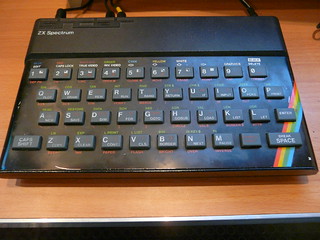 In this, the last of a three-part series on girls and women in computing, PhD student and Further Education lecturer Amanda Wilson describes how an early interest in computing followed by picking up everything she could while working led to a dream job.
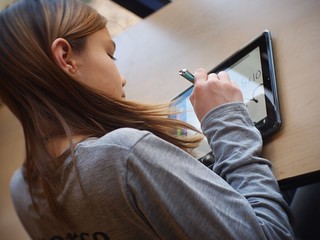 In this, the second of a three-part series about girls and women in Computing, school student Ellie Gregson suggests why girls tend not to choose STEM subjects.
Young people love to use technology. In school, we jump at the opportunity to use the iPads for research, or to use laptops for typing up essays or creating PowerPoints in class. In my school, when an iPad trolley is dragged into the classroom at the start of a lesson, there is always a race between the students to the front of the classroom, desperate not to have to share it with others, or be stuck with a tablet with a 10% battery life remaining.
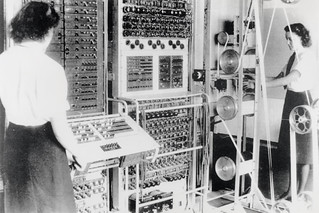 This is the first of three articles about girls and women in Computing.
On March 8th it was International Women's Day.
 Within 5 miles of where I sit now I can find the following:
The remains of a Saxon fort
 At last! Or, to use the vernacular, woo hoo! The latest edition of the Digital Education ezine is now out. It contains a round-up of products seen at Bett, articles on girls and women in technology, loads of links and book reviews. Here’s a detailed list of the contents:
 What’s the connection between Ada Lovelace, Charles Babbage, and me? Well, it’s a bit tenuous. Apart from the obvious, that we all liked computing (in effect), it is that they appear in a new graphic novel, and I love graphic novels.
(c) Terry Freedman All Rights Reserved