
To the casual listener, stride piano, boogie woogie piano and rock-n-roll piano all sound pretty much the same. Yet Fats Waller, perhaps the most famous stride pianist, detested boogie woogie.
Read More
Photo by Divyadarshi Acharya on Unsplash
Authentic Learning and Education Technology
To the casual listener, stride piano, boogie woogie piano and rock-n-roll piano all sound pretty much the same. Yet Fats Waller, perhaps the most famous stride pianist, detested boogie woogie. And nobody could deny the hint of menace in Long John Baldry’s voice as he sings his song....
Read MoreDon’t try to lay no boogie woogie on the king of rock-n-roll!

On this day #11: Making ICT and Computing real
This article, published on 5 December 2015, was one of a 7 part series on ways to make Computing be more interesting.
Read More
Photo from Stencil CC0
8 Reasons to use project-based learning in computing
I’ve long been an advocate of project-based learning, or PBL. Done properly, it can be much richer in terms of learning opportunities, and more fun. I believe it is entirely applicable to the teaching of the new Computing Programme of Study, for the following 8 reasons.
Read More7 Ways to make IT real: 6 Use what you have
Make use of what you already have.
What you have, in fact, is your pupils and other members of staff. Even if you are in a small school, or a large school but with no team, you may still be able to give your pupils the experience of addressing real problems through computing and ICT.
Read More7 Reasons to use project-based learning in computing
 I’ve long been an advocate of project-based learning, or PBL. Done properly, it can be much richer in terms of learning opportunities, and more fun. I believe it is entirely applicable to the teaching of the new Computing Programme of Study, for the following reasons.
7 ways to make IT real
A short while ago I published 8 articles under the heading “7 ways to make IT real”. (OK, so it looks as if I am numerically-challenged, but I'm not, as you will see!).
Well, here are the links to them, all in one place. Who says I don’t think of you!
7 Ways to make IT real: 7 Use online resources
There are some good websites where you can pick up some good ideas and resources. Here are just a few of them. Do explore them.
Read More7 Ways to make IT real: #5 Be realistic
One sure-fire way to turn pupils off computing and ICT is to set tasks that are either unrealistic in themselves, or contain unrealistic elements.
As an example of the former, I once came across an activity in which
7 Ways to make IT real: #4 Use external organisations
 When you’re attempting to give your pupils a flavour of the “real world”, it’s important to remember two things:
7 Ways to make IT real: #3 Solve real problems
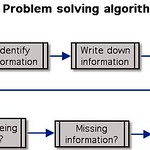 As I said in 7 ways to make IT real: #0 Make IT unreal, setting the kids a problem like “Imagine you’re going to open a video shop” is not going to cut it these days. You either need to set problems that are outlandish and obviously unreal, or set them ones which are all too real.
I’d suggest that the best way of doing so is to get the pupils themselves to identify problems. That’s the approach taken by
7 Ways to make IT real: #2 Involve parents
 It’s easy to see parents as “just” parents. They bring their kids to school, you let them know how their child is getting on, and that’s maybe as far as it goes. But it’s worth remembering that parents are also people in their own right, with interests and jobs that may be useful in terms of giving your pupils a real-world focus for computing and ICT.
7 Ways to make IT real: #1 Get local
 It’s easy to take your local area for granted, but try to see it with new eyes. Try to see it as if you were a tourist visiting the area for the first time. You may be pleasantly surprised to discover just how much is noteworthy from a computing or ICT point of view. Whether you want your pupils to simply notice the use of technology, or wish to get them to figure out how things work or even to create their own digital assets, you won’t be disappointed.
7 ways to make IT real: #0 Make IT unreal
 One way to make ICT interesting is to make sure it is relevant to young people’s lives, and has a genuine connection to the “real world”. Indeed, these are required of Ofsted in order to achieve an “Outstanding” grade in ICT. I have referred to this as “authentic learning”. So, in the next few articles I will be suggesting ways of approaching this.
ICT and small businesses: the brief
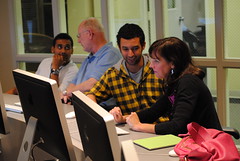 It is quite understandable that when people talk of the contribution that the business world can make to ICT lessons, they tend to think of big business. And why wouldn’t they? Big companies often have the money to finance the production of nice-looking resources, or even to provide people to spend a day in school running a simulation of some kind. However, my experience of talking to students in lessons is that small businesses, such as mine, have much to offer too. I thought I'd explore some ways in which that can happen, in an occasional series.
Authentic Learning and ICT
To the casual listener, stride piano, boogie woogie piano and rock-n-roll piano all sound pretty much the same. Yet Fats Waller, perhaps the most famous stride pianist, detested boogie woogie. And nobody could deny the hint of menace in Long John Baldry’s voice as he sings his song:
Read MoreDon’t try to lay no boogie woogie on the king of rock-n-roll!