
Applications for the next year for this innovative initiative are open, but the deadline for applications is imminent . Find out more…
Read MoreWhat makes a good ICT role model?
 In England we have a weekly soap set in a school called Waterloo Road. This has everything you would hope not to find in a school: inappropriate behaviour, theft, even attempted murder – and that’s just the staff. The kids are pretty OK by comparison: teenaged pregnancy, illegal drug-taking and gangs. Strangely enough, there doesn’t seem to be more than 30 kids on roll, judging by the number of people who attend whole-school assemblies. But my main interest is this: what (good) use of technology is shown in this programme?
A student’s view of ICT
 Back in 2010, Maddison Holt, a student in Australia, gave her view of ICT in ICT: A Whole New World. Eighteen months later, what does she think now?
Audio slides
 One of the things I like about the ICT in Education site (he says modestly) is that you can listen to the articles as well as read them. It means that the articles are accessible to sight-impaired people. But when I upload presentations, that is no longer true. At least, not until now.
7 reasons to incorporate digital photography into your course
 If I were running an educational technology/ICT course now, I’d make taking and sharing at least one photo a week a requirement for remaining on the course. If booting someone off the course was not an option, I’d tie in a significant proportion of the marks to those activities. All this is impractical, of course. Even if I were allowed to get away with such draconian actions, I wouldn’t want to penalise a brilliant student for not taking a few snaps now and again. But think of the benefits to everyone if digital photography were a key component of a course – any course.
Choose your own assessment
 In the changing room where I go swimming, there’s a machine that does everything. It measures your height, weight, Body Mass Index (BMI), and about half a dozen other things. I’m surprised it doesn’t measure my waist and shoe size as well. Yet, after using it twice, I have given up on it.
Don’t blame the technology
Technology can help a good teacher do wondrous and wonderful things – but bad use of technology is worse than no use of technology, in my opinion. There is, possibly, one exception to this general rule, which I will get to in a moment. What has brought on this sudden dazzling insight (well, it isn’t really instant, and it probably isn’t dazzling, but this is my blog so I can say what I like). An anti-ICT dogma diatribe by the behaviour guru, aka Tom Bennett.
Read MoreBring your own technology
 If ever there was an idea whose time has come, it is surely Bring Your Own Device or, to be less restrictive, Bring Your Own Technology. There are at least two comp0elling reasons for this.
ICT and small businesses: the brief
 It is quite understandable that when people talk of the contribution that the business world can make to ICT lessons, they tend to think of big business. And why wouldn’t they? Big companies often have the money to finance the production of nice-looking resources, or even to provide people to spend a day in school running a simulation of some kind. However, my experience of talking to students in lessons is that small businesses, such as mine, have much to offer too. I thought I'd explore some ways in which that can happen, in an occasional series.
Internet addiction: another flawed study
 You’d think people would have better things to do than do pointless surveys from which they then draw unlikely conclusions. Still, it keeps them out of mischief I suppose.
5 ways to develop critical thinking in ICT
 How do you encourage pupils and students to think critically in the context of educational technology? Although we can devote a lot of time and energy to setting up the "right environment", I can't help thinking that really it all comes down to some pretty simple questions, and very straightforward approaches.
Digital Learning Day
Read some of the highlights from the recently-held Digital Learning Day in the USA. I haven’t fully explored all these myself, but they look promising!
Read MoreAn interview with Julia Skinner
 I had the privilege of meeting, for the first time, Julia Skinner at the recent BETT show. Julia tweets as @theheadsoffice, and is the instigator of the 100 Word Challenge, which has been instrumental in encouraging many pupils to engage in, and enjoy, writing.
David Mitchell talks about Quadblogging and February 29

I had the pleasure of finally meeting up with David Mitchell, aka @deputymitchell. David is the brains behind Quadblogging, in which schools form groups of four in order to – well, I’ll let David explain it in his own words. In this video he talks about how the project originated, and how to get involved if you’d like to join in.
3D at Oakington Manor Primary School
By Ophelia Vanderpuye
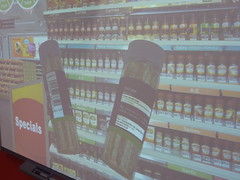 In 2006 following a visit to China by the school’s headteacher and ICT Advanced Skills Teacher, discussions took place about the possibility of building a new ICT suite as the then suite had become too small for the growing children. In the years that followed plans and visits to new build schools to give inspiration for the design of the new building In 2009, we took a bold leap into the unknown as our discussion with our architect and ICT suppliers started to show a design that was totally different to anything we had seen in the schools we visited.
Educating in the Third Dimension
By Graham Quince
 Firstly a bit of a confession, I’m not a fan of 3D. I honestly don’t think it adds anything to the movie experience. Plot makes a movie worth watching, not 50ft robots smashing debris into the audience. I’m not in the minority either, ticket sales keep proving most people aren’t interested in sitting for 2 hours to watch a theme park attraction. I first saw modern 3D in the Terminator 2 show at Universal Studios. It blew me away. It was amazing. It was 10 minutes long and things kept jumping out from the screen. And that’s my point, 3D is a gimmick. It’s very cool, but like a rollercoaster, it works best in short doses.
The 3D Landscape
 Recent changes in the 3D technology landscape are transforming the way we visualise and interact with 3D data and the real world. 3D applications and technologies have reached a level of maturity that are starting to add a real value to the education sector. Inition brings over 10 years experience of integrating 3D technologies alongside expert consulting and training services. We asked them to outline a few of their examples, from 3D displays through to scanning, 3D printing, motion capture and haptic interfaces.
Digital literacy and Computer Science
 Computer studies and its main component, programming, could be an exciting new addition to the curriculum. However, we must not repeat the mistakes of the 1980s, when the subject was, at least in my experience and in my opinion, insular, highly technical, and rightly perceived by some (especially girls) as “geeky”.
Educational Technology: Unofficial BETT Guide, a reminder
Developments in Education Technology: Reflections on the first day of BETT
For me, the day can best be characterised as one of mixed feelings and divided loyalties. To be sure, there was all the excitement and adrelain-inducing "buzz" for which BETT is noted, and why it ought to be prescribed on the National Health Service as a cure for "the blues", but the experience was not one of unadulterated pleasure.
Read More