
Phil Cowling, a teacher in the UK, evaluated a 3rd party selling platform called Sendowl, that we’ve been trialling, as well as the book itself.
Read MoreBook review: Go on, bore ‘em: how to make ICT lessons excruciatingly dull
by Jacqui Wilson
Read More I received a very nice review from Jacqui Wilson, a classroom teacher in Tasmania. Is a book about what made ICT boring still relevant if the focus is on Computing? Well I think so, because the issues I highlighted with respect to ICT are in danger of arising again with respect to Computing. Anyway, read what Jacqui says about the book.
Review of SMART Amp, by Ellie Gregson
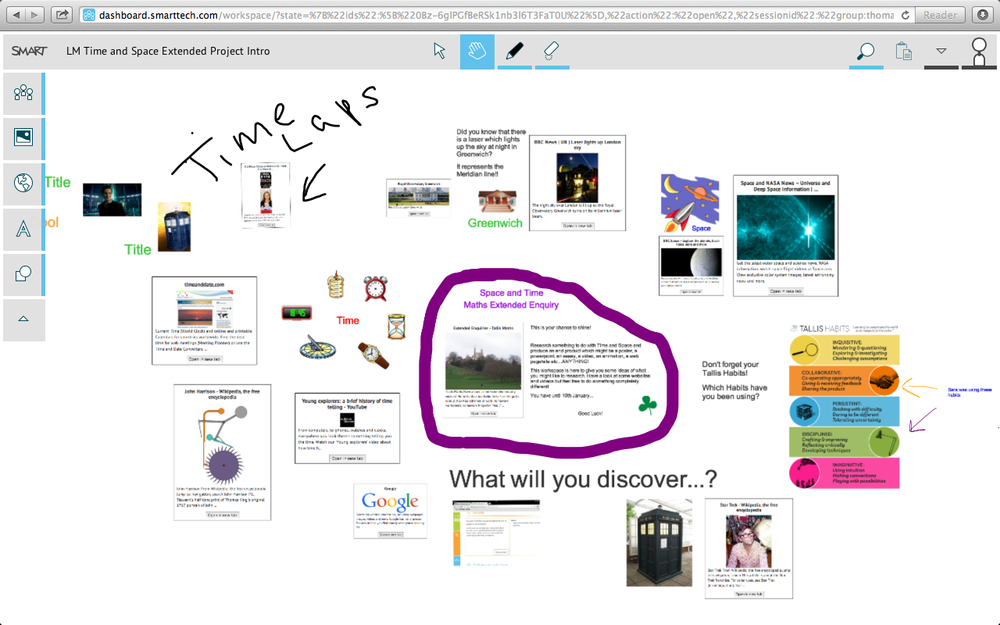 SMART Amp is an application designed to facilitate collaboration across a range of devices. Ellie Gregson, a Year 10 student, discusses what was good, and what was not so good, about its introduction into her lessons.
Review of Espresso Coding
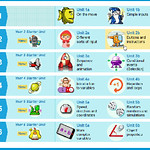 This application is designed to teach Computing at Key Stages 1 and 2 (a more sophisticated version for older pupils is being worked on).
What struck me immediately on using it is the amount of guidance available, both in verbal form and videos. There is quite a large range of modules to choose from, including “Starter” ones which take you through the basics and, where appropriate, recapitulate what has already been learnt.
Review of J2Code
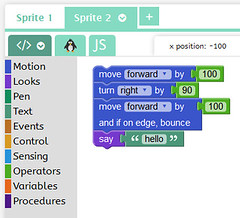 As usual, I gave this application a workout without seeking help from a manual or anything like that – which is just as well because there does not seem to be a comprehensive manual.
There are three applications in one: JIT5, LOGO and Visual. This is quite useful because if you are familiar with LOGO but not JavaScript, you can start pupils coding in an environment that is familiar to you. Also, if you teach very young children, JIT5 is highly visual and colourful.
An advantage of J2Code as a whole over 2Code is that it covers the age range from Key Stage 1 (5-6 year olds) to Key Stage 3 (13-14 year olds).
Review of 2Code
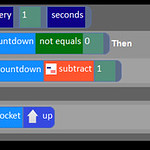 2Simple’s answer to the question “How can we teach coding to little ones?” is 2Code. The first thing that greets you when you go to the 2Code section of Purple Mash is the plethora of files to open.
Review of Computing Without Computers
This free book by Paul Curzon (yes, the one who wrote The Magic of Human-Computer Communication), attempts to explain programming in non-technical language. I’ve looked at similar books designed for students, and they were not as good as this one. So what makes this one so great?
Read MoreReview of Teacher’s Pet
 Go on, admit it: you still create worksheets, right? If you do, and you use Microsoft Word or OpenOffice to do so, you’ll find Teacher’s Pet very handy. It’s basically a set of macros that can transform lists of words into several different types of puzzle or test item.
Review of The Thinking Teacher
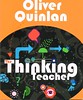 When I first picked up this book I made an error of judgement. Noticing that it seemed quite slim, I thought I could finish reading it in just one or two sessions. However, what I had not counted on was the book’s living up to its title. In short, it made me think. It made me think about what the author was saying in its own right, that is whether or not I agreed with it. It also caused me to reflect on my own practice as a teacher and, now, as a consultant.
Book review: Two girls, one on each knee (7)
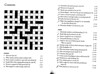 You could argue that crossword solving is a very good example of computational thinking. That is certainly what the security services thought during WW2 when they asked The Times to send them the names of anyone who could solve a cryptic crossword they’d supplied in 12 minutes or less. Those that did were invited to work at Bletchley Park, cracking codes for the war effort.
Digital Education: Safer Internet Day edition out now!
Updated! Discounts, competitions, news of events coming up, commentary, and advice about internet safety! And it's completely free!
Here’s what this issue contains:
Bett 2014 Review
 Is it really a week since I came trudging home from Bett 2014? I'm still in catch-up mode, which is why I haven't yet published my thoughts about the experience yet. But, I'd love to hear yours.
Please take just a few minutes to complete the Google Form below. My intention is to collate and share the findings.
Review of the Google Chromebook
 I’ve been looking at the Google Chromebook, and I have to say I am seriously impressed. There’s a lot of talk about tablets these days. I myself have promoted the idea of Bring Your Own Technology, which usually means a phone or a tablet. But the Google Chromebook is worthy of consideration, whether for yourself, or whether you’re considering taking your school into the mobile future.
In order to thoroughly evaluate the Chromebook from a school perspective, I not only used the device myself, but interviewed Bruno Reddy, Head of Maths at the King Solomon Academy in London, and Jaime Casap, Global Education Evangelist at Google.
Report from the 3D print show
Richard Smith, of Igloo in Education and Amazing ICT, recently visited the 3D Print Show in London. What did he make of it?
Read More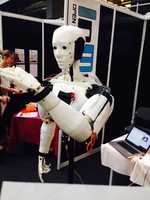
Hi, Richard Smith here from Igloo in Education. I am delighted to have been asked by Terry to do a guest blog post on the 3D print show that took place in London from 7-9th November.
The venue of the event, the Business Design Centre in Islington, sent out a clear message out to visitors: 3D printing should be about innovative design and the encouragement of original business ideas. Of
Report on RM Apple Seminar
A short while ago I attended one of the RM Apple seminars. If RM organise further such seminars, should you attend if you can? Hopefully, you will be able to answer that question yourself after reading this.
Read MoreBlog Review: nhowie
 I’ve been thinking for some time that I really ought to write an article every so often about blogs I like reading, or that have recently sprung up or come to my attention. I thought I’d get the ball rolling with “nhowie: Musing mainly about ICT in K-12 education”.
As I was saying…
I have two blog posts already started, and another two waiting to be transferred from my head to the computer and thence to the web. I have had to interrupt myself so many times because of work commitments that I have become impatient – with myself! Hence the title of this post which should read, in full:
As I was saying before I was so rudely interrupted…
Anyway, while I am in the process of completing the aforementioned articles, I thought I would mention the Propaganda exhibition that is currently on at the British Library.
3D Printing
Over the past few years I've written several articles about 3D printing and its potential application in education. I first came across a 3D printer at a City Learning Centre in London. That was 15 years ago at the time of writing, ie 1998. What I had not realised back then was that 3D printing had already been around for ages -- since the mid-1980s in fact.
Read MoreBring Your Own Technology Book Review
Here’s an interesting review of Mal Lee’s Bring Your Own Technology.
It’s good because, in my opinion, it’s pretty spot on. I also think the format is interesting.
Lessons from Reviewing the new Computing Curriculum
 This is not so much a review or even a summary of the recent Westminster Forum Conference called ‘Reviewing the new Computing Curriculum’ as a series of observations arising from it and related articles. The reason for that approach is that I’d like to make this article useful and interesting to as wide a range of people as possible, not only those concerned with the ICT or Computing Programme of Study in the National Curriculum in England and Wales.