

Tom Bennett's book Teacher Proof is, like the curate's egg, excellent in parts. Many of the practices that teachers are encouraged to do have no basis in research (or even common sense, if you ask me). In this book, the founder of ResearchEd takes issue with such matters.
Read More
Kay's survey of over 300 teachers has yielded some interesting results.
ICT and Computing
The DfE has summarily dismissed the ICT GCSE qualification. Kay Sawbridge carried out a survey to find out the possible consequences of this.
Read More
Oh joy! The next issue of Digital Education is out today!
Coming soon: Digital Education!
Another bumper edition of the Digital Education newsletter! Due out later today.
Read MoreA new front page for Digital Education
What do people think of the new Digital Education front page? Is it a case of "nice read, shame about the face"?
Read MoreWhat I've been reading
Some educational research books are better written than others. "Making a difference in education" is one of them.
Read More
Questions, questions, questions Picture from www.pixabay.com CC0
My best and worst IT lessons #7: What's the interest rate?
Whether or not you can easily look up the answers to questions is far less important than asking the right questions in the first place.
Read More
The usual headlines...
Education technology research, and how it's reported
Journalists often seem to get it wrong when it comes to reporting educational research, and they seem to love it when they can go with a headline like “Schools wasting money on useless technology”. I made that up, but the reporting of the recent OECD research, the Decoding Learning research from Nesta in 2012 and other work is quite often presented in those sort of terms.
Everything is not all that it seems but, importantly, what can we do about it?
Read MoreDigital Education Ezine April 2015
 At last! Or, to use the vernacular, woo hoo! The latest edition of the Digital Education ezine is now out. It contains a round-up of products seen at Bett, articles on girls and women in technology, loads of links and book reviews. Here’s a detailed list of the contents:
A Self-publishing journey
Starting tomorrow, a new series of occasional posts about my research into self-publishing.
The first two articles are:
The 3,000 Part Computing Lesson
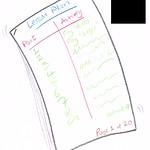 Every so often there comes along a new daft idea (or a newly-packaged old idea that has been mangled out of recognition (and thereby rendered useless) so that its “inventor” can be designated as a guru. Me? Cynical? Never!) One of the more unfortunate manifestations of this phenomenon was the three part lesson. It sounds good and logical, but then the thing that usually happens happened: Ofsted started insisting on it, and Headteachers demanded to witness it in every lesson. Woe betide the brilliant but hapless teacher whose lesson plans failed to include the three parts.
Education Technology Research Focus: Steve Wheeler
 Steve publishes the Learning with E's blog. The articles are not only very thought-provoking, they often also include references so you can follow up the reading for yourself. At the moment, Steve is writing a great series on learning theories. I asked him to tell me about his current research.
How are schools coping with the new Computing curriculum?
Now that a term has elapsed since the new Computing curriculum was introduced into schools in England, how are things going? I’ve been collating the responses to a call I made a few months ago to readers of my newsletter, to find out how people were preparing for the new curriculum. The results are very interesting, and I intend to share them very soon – I just have to tidy it up and make sure people are happy with any changes I’ve made to their submissions.
Read MoreDigital Education December 2014: Double issue, Free resources, 50% discount on ebooks, 75+ links and 10 guest contributors
 The Spectator does it. The Economist does it. Even children’s comics do it. So I thought: Let’s do it. Let’s make a Christmas double issue of the Digital Education newsletter.
I’d like to be able to say I’d planned it that way right from the start, but that would be something of (to use Winston Churchill’s wonderful expression) a terminological inexactitude. In truth, the November edition was delayed due to a family illness, so it made sense to bring out a bumper edition now so people who subscribe have plenty to keep them going until January! I’ve included articles on a wide variety of topics:
Don’t say it with Tweets
 Now that the Christmas card season is almost upon us, I thought this item from a few months ago might be appropriate. I received a press release back in May (I'm slightly behind with my emails) which states that people prefer receiving handwritten 'thank you' cards rather than a quick tweet or text message.
ICT in Primary Education – a new course for teachers and others
 Professor Diana Laurillard has informed me of a new course that is going to be run for teachers and others with an interest in how ICT is being used in primary education in various countries. I think it sounds very interesting. Here’s the official blurb:
This is to announce a new course on ICT in Primary Education, to run as a MOOC (a massive open online course), hosted by the University of London.
The Amazing Computing Education Projects Book
Lots of people are preparing for teaching Computing in the next school year. I thought it would be interesting and useful to collate some ideas, concerns and resources into a free ebook. Read on to find out how you can get involved — and why you should.
Read MoreCreating a game – a positive impact on learning?
By David Luke.
Read More I have had an interest in programming and creating games since I purchased a BBC Model A in the 80’s (the good old days!). However, it was only recently that I have actively promoted the introduction of games making into the ICT curriculum.
Two factors prompted my decision. Firstly, the introduction of the renewed ICT framework in spring 2008, which introduced learning objectives around ‘sequencing instructions’ and opened up options other than control. Secondly, the availability of easy to use games making software, which had the capacity to build games with a very professional feel.
The education research problem
Independent consultant and self-confessed “controversialist” Crispin Weston offers a personal view of the current educational technology landscape, and what needs to be done to transform it.Modern research still confirms the vital importance of students receiving timely, actionable feedback, the essence of “dialogic” teaching. But the amount of such personalised feedback in most schools and colleges is extremely limited.
Read MoreWhat are your top tips for ebook cover design?
I'm in the process of collating top tips and resources about this topic. I've compiled a list of useful links (see below), which I'm adding to continually, but if you have any advice based on experience it would be interesting to hear about it.
Read MoreLet's think about eBook Cover design
I’m involved in a great 5 week course (free!) for teachers called "Crafting your own ebook". I’ll be leading a session soon on the subject of designing a book cover, and although I’ve found some great resources, I thought I’d turn to the community to find out what tips and/or websites others might suggest.
Read More