26 + Tips for getting the most from your interactive whiteboards

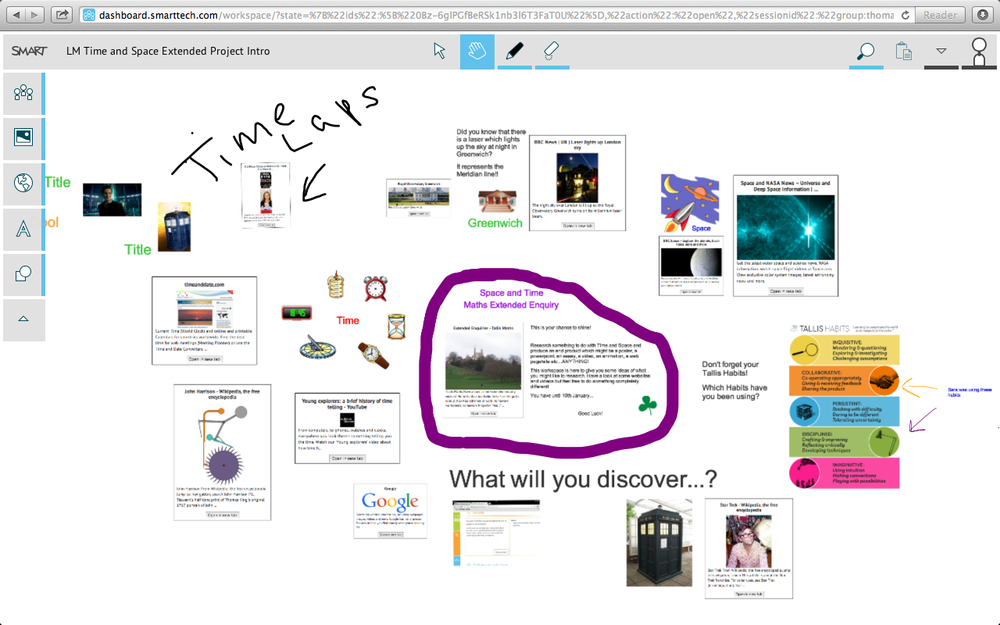
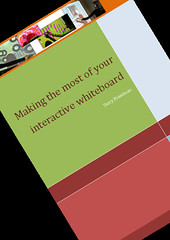
IWB Guide Cover (tilted)To borrow from Mark Twain, reports of the death of the interactive whiteboard have been exaggerated. Despite often being used ineffectively or even badly, it still has much to offer.

I’ve written a brief guide to making the most of your interactive whiteboard which I’ve called, logically enough, Making the most of your interactive whiteboard. Originally, this was in response to a request I received while teaching on a teacher-training course recently.

Read More

Assessing Computing: Grids and Badges

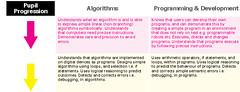
section of progression pathways gridSince Michael Gove, England’s then Education Secretary, announced that Levels were not fit for purpose – the purpose being to assess and describe students’ proficiency in National Curriculum subjects – there has been a proliferation of attempts to assess Computing without using Levels. Many of these have taken the approach, quite naturally, of devising a progression grid of some sort. All the ones I’ve seen break the grid down into the Computing Programme of Study’s component parts
Read More

How can teachers get to grips with computer programming, and where do we start? By Lawrence Williams

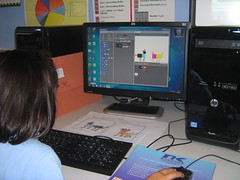
Pupil using Scratch, by Lawrence WilliamsMany teachers have been utterly dismayed by the seemingly impossible demands of the new Programmes of Study for Computing. How can we all suddenly develop a wide range of new skills in Computing? Can our pupils, aged from only 5 years, really understand, write, and debug computer programmes? It seems an impossible task. But help is at hand…. And from a teacher of English, with no Computing training! (Though with some experience in using ICT.)

Lawrence Williams explains.

Read More

Digital Education new edition out now!

Did you know that today is International Ada Lovelace Day? Information about this, online poetry, journalism and novel writing, may be found in our latest newsletter. It’s a relatively short “interim” edition, but it’s still packed with lots of wholesome goodness!

Here’s the full list of contents:

Read More

Audiovisual heritage: media archives and how best to use them, By Theo Kuechel

Theo illustrationThere are literally millions of free media resources for use in education. Theo Kuechel introduces some of them, with suggestions on how they might be used not only within the Computing curriculum but also more generally.

I was delighted to read, via an email from Terry, (our editor), that UNESCO has announced a World Day for Audiovisual Heritage to be held on the 27th of October this year. This timely initiative seeks to draw attention to the urgent need to preserve the worlds audiovisual heritage of film, television and sound recordings. Why this so important is graphically illustrated

Read More

Assessing without Levels

poll.jpgSince the Government in England announced that Levels aren't fit for purpose, and so shouldn't be used, lots of people have come forward with their own ideas. With the old system of Levels, the description of each Level was given. You didn't have to think about what Level to give a student who could do certain things: all you had to do was look at the Level descriptors, find the one that was the best fit, and that was it: job done.
Read More

Ideas for the computing curriculum: #3 Be self-referential

ideaIn this series I’m going to be making some suggestions, putting out some ideas. These are based on presentations I’ve given. I can think of how these ideas, or their implications, might be applied in the classroom. However, I think it better if I stand back and let you do that part of the work!

I know that this is counterintuitive, but what if you devised an activity to teach programming or computational thinking, but instead of of just telling the kids what to do, you make them solve a problem first – by applying computational thinking or some elementary programming?

Read More

Ideas for the computing curriculum: #0 What box?

ideaIn this series I’m going to be making some suggestions, putting out some ideas. These are based on presentations I’ve given. I can think of how these ideas, or their implications, might be applied in the classroom. However, I think it better if I stand back and let you do that part of the work!

One of the most depressing things for me is the degree of conformity I come across.

Read More

8 reasons that worksheets work for Computing

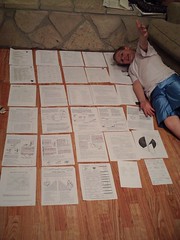
DSC03829The use of worksheets is often derided. You hear expressions like “death by a thousand worksheets”, and even a Government Education minister (now ex-Minister for Education) has weighed in, saying that teachers should use textbooks instead of worksheets [1].

Leaving aside the observation that how teachers teach is, in my opinion, none of the Government’s business – it’s the equivalent of telling doctors to use electronic blood pressure monitors rather than the manual kind – there are perfectly compelling reasons to use worksheets in the Computing classroom.

Read More

Quick look: Literacy from Scratch

Scratch ProjectIf you’re concerned that young children won’t be able to grasp computing concepts, or are worried about how you’re going to teach it, have a look around the Literacy from Scratch website.

Managed – and, I think, written by – Lawrence Williams, the  website contains examples of pupils’ work in Scratch, cross-curricular ideas and examples, and notes on pedagogy.

Read More