“I won’t say that [this paper] was an interesting read for me though: it is like asking a religious person to read a book about why they should believe in God.”
This report is the result of nine months of work that focused specifically on understanding how children and young people use new technologies.
The review below was written soon after its publication, by Sarah Hillier, who was at that time a teenager. I’ve just re-read her article, and I think its observations and incisiveness – not to mention the beauty of her writing – have stood the test of time. The article which follows has only been modified slightly from the original. I hope you enjoy it.
Read MoreOne of the things that I have found very puzzling is why victimhood has such a high status these days.
Read MoreWhile narrowing down the list to ten titles is somewhat artificial, a device, I also wanted to be pretty strict about what I included. I didn’t want this to be just a collation of the beginnings of all the reviews I wrote over the course of the year.
Read MoreThis is hands-down the most interesting edtech book I received for review in 2021, and easily the most inspiring.
Read MoreAll of the tools mentioned are free of charge, or have a freemium pricing model. This is important because as a school teacher, Richard understands the importance of affordable solutions.
Read MoreAn excellent observation is that even small changes can have profound effects.
Read MoreThis book is by no means an easy read, but it’s worth persevering with. It explains why graphic organisers or, more accurately, word diagrams work, drawing on various cognitive-related theories to do so.
Read MoreThis book will help teachers to address the parts of the Programme of Study concerned with computer systems, communications and online safety.
Read MoreMany moons ago I started my own podcast. It was called Terry Freedman’s Education Technology podcast, and it consisted of useful hints and tips for teachers of Computing and related subjects. I have to say that I found it hard going.
Read MoreI’m thinking that even if I gave a book I reviewed a rave write-up and five stars, it might still not make the list if a book I deemed deserving of four stars is comparatively better.
Read MoreThere seems to be no end of attempts to improve education by people who have either never worked in it, or not understood what they were looking at.
Read MoreWhile this book is comprehensive, and gives instructions step by step, it is not what you might call an idiot’s guide.
Read MoreHere is a very strange paradox. On the one hand, everyone agrees that a key ingredient for success in life is having great teachers. On the other, there’s a relentless narrative that education is somehow broken and that fixing it entails replacing teachers or transforming some or all of what they do.
Read More[When I was a teacher,] as with many of my blog posts these days, my own handouts and lesson summaries were festooned with drawings, diagrams and arrows.
Read MoreInstead of sitting down and having an actual break, you consume your lunch while diving into a pile of marking….
Read MoreThis book starts from the premise that while teaching is an art, it also relies on the mastery and application of skills.
Read MoreThis ‘Atlas’ takes students deep into the field of artificial intelligence which, according to Crawford, is actually neither artificial, nor intelligent.
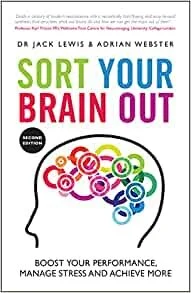
Read MoreOne of my first impressions: I like the fact that the book includes relatively recently-acknowledged attributes of the brain, such as neuroplasticity.
Read MoreWhen my room was flooded at three in the morning while staying in a Marriott hotel in Los Angeles, an assistant helped me to relocate to a different – and drier! – room. As compensation for the inconvenience, she gave me a voucher for a free breakfast in the morning. Bleary-eyed, I accepted it. On waking…
Read MoreMy views on what constitutes a book on edtech are fairly catholic. Indeed, it would me more accurate to denote the books I review as books for teachers of ICT, Computing, digital literacy etc etc,, rather than books on edtech. The latter tend to have titles like “How to teach Computing”, or “How to use Excel in the classroom”.
Read More