

UPDATED. The biggest ed tech event in the UK -- Bett -- is nearly upon us. But it's not the only conference going on that week.
Read More
Image from Pexels Licence: CCO
What makes a good training day? 10 suggestions and a link
Training days don't have to be dire. If you have choice in how you spend at least some of the day, here are ten suggestions, plus a link to a humorous audio recording.
Read More3 education technology blog posts you should check out
A few useful articles that you may not have come across before. They cover:
- project-based learning
- teen depression and cyberbullying and
- how to reduce the possibility of having your training stolen.
Coming soon in Digital Education
I'm in the process of planning a few themed issues of my newsletter, Digital Education. Read on for the low-down.
Read MoreQualitative data is important too
I'm a great believer in using different kinds of data to measure how well pupils are doing, not all of which are quantifiable in the usual sense.
Read More
Photo from Stencil. Licence: CC0
15 Ways To Make an Educational Technology Project Successful
How can you make an educational technology project, for example a school research initiative, successful? In a sense, the fact that it's to do with ICT in education is irrelevant. There are some generic 'rules' which ought to be abided by.
Read MoreInspecting Computing in schools: 6 research questions
The schools inspectorate in England (Ofsted) aspires to become a research hub. How might or should this affect Computing?
Read More
Photo from Stencil. Licence: CC0
Women and girls and technology: a matter of biology?
Are girls and women biologically predetermined to not be natural programmers? No, I don't think so either. This article contains some interesting points based on recent discussions, and links to (hopefully) useful articles.
Read More
Picture from GetStencil CC0 Licence
The latest Digital Education newsletter
Exclusive article about the forthcoming changes in the EU's data protection laws, pseudoscience (?), biological determinism, back to school resources and more are in the current issue of the Digital Education newsletter.
Read on for the full list of contents of this free newsletter.
Read More
The early August issue of Digital Education is out now!
Fake news, bad algorithms and drones -- in the latest issue of Digital Education
Algorithms are based on maths, and maths is objective, right? You might change your mind about that when you've read Weapons of Math Destruction, which I've been reading.
You can read my review in the latest issue of Digital Education, plus information about drones, fake news, and going back to school after the summer break, plus a good money-saving offer on an online graphics application, plus a bunch of other stuff. Read on for more details and for a sign-up form.
Read More8 Possible Reasons Your Educational Technology is Underused
If you're the ed tech co-ordinator in your school, and the facilities just aren't being used by other teachers, here are some possible reasons why that's the case.
Read MoreComputing Curriculum Conundrum: an analogy
A comic strip that, for me at least, encapsulates what has befallen the Computing curriculum in England.
Read More
Photo by Jills, issued on a CC0 licence.
The Computing curriculum in England: A timeline of hopes and experience
Has the Computing Programme of Study been an unequivocal success? In my article It Wasn’t Me Wot Done It, Sir! The Depressing State Of Computing As A Subject, I said that many students were voting against Computing qualifications with their feet, and also that girls were under-represented. Moreover, I stated that the situation was entirely predictable (many of us indeed had predicted it).
In this article I set out what I see as the key milestones in the journey to where we are now. I have included quotes from the sources, and also given the source in each case so that you can check out the sources yourself.
Read MoreIt wasn’t me wot done it, Sir! The depressing state of Computing as a subject
Here in England, students are voting with their feet: the numbers studying Computing at higher levels are going down. I hate to say "We told you so" but....
It's not as if nobody warned 'them'.
Read MoreMaking the Computing curriculum interesting
The Computing curriculum doesn't have to sound boring and nothing but coding.
Read MoreHow to get the most out of ISTE17 (and other conferences)
Listen to my interview with Vicki Davis about how to get the most out of #iste17 and other conferences -- and grab my book for £0.99/$0.99 or equivalent (plus VAT if applicable) -- a third of its usual price.
Read MoreWhere's the ed tech action? Maybe under your nose!
Not everything is a million miles away or up in the cloud, when it comes to education technology.
Read MoreWhy and how to become a teacher researcher

The classroom is a great place to conduct some research. Picture by Jordan Dreyer
In my opinion, every teacher should be a researcher, and I think that especially applies to teachers who have some degree of influence of what education technology is bought and used.
Why?
- It's important to know what's going on in your field. Imagine going to a doctor who last updated his knowledge ten years ago, or even one year ago.
- If you hope to convince the powers-that-be to spend more money on technology, you have to be able to prove that it works, or at least that it's likely to work.
- Research and reflection are good ways to improve one's teaching. The research part helps to avoid the 'echo chamber' situation in which you only know what's going on in your own school.
How?
- Read the research. This is not always accessible, either because of a paywall or because the language is too abstruse and abstract to be acted on quickly. Solutions:
- Check whether or not your status as an alumnus (assuming you have a degree) gives you access to academic journals online.
- Sign up to my newsletter, Digital Education. I often summarise research and review academic books in that, and it's free.
- Join the Association for IT in Education. Disclosure: I'm on their committee. You receive an academic journal called Technology & Pedagogy in Education, and that's worth a lot more than the subscription fee in my opinion.
- Attend conferences. A very accessible one in terms of cost, location, and down-to-earthness is Research Ed.
- Conduct research in your own classroom. You can do this even in a very quick and easy way:
- Know what the problem is you're trying to solve with the technology.
- Keep a note on what went well, what didn't go so well, and why.
- Get the kids' feedback too. I think having kids evaluate the technology is a no-brainer: they're the ones who are going to be using the stuff! I was pleased that John Galloway advocated this in a discussion hosted by the Guardian Teacher Network recently too.
- Read blogs. Some good ones to start with (apart from mine!) are:
- Plan B by Donald Clark
- EdTech Now, by Crispin Weston
- Learning with E's, by Steve Wheeler
Finally, do share your research and findings, whether from your own research or reading, with other people. If you haven't already done so, start a blog. Or share on Twitter or Facebook.
You might like my article, Education Technology research, and how it's reported
In case you became sidetracked earlier, here's the sign-up form for my newsletter, Digital Education:

Photo by Abel Tan Jun Yang CC0
8 conferences in the latest issue of Digital Education -- and a 50% discount!
8 conferences, and a whopping half price offer. What's not to like?
Read More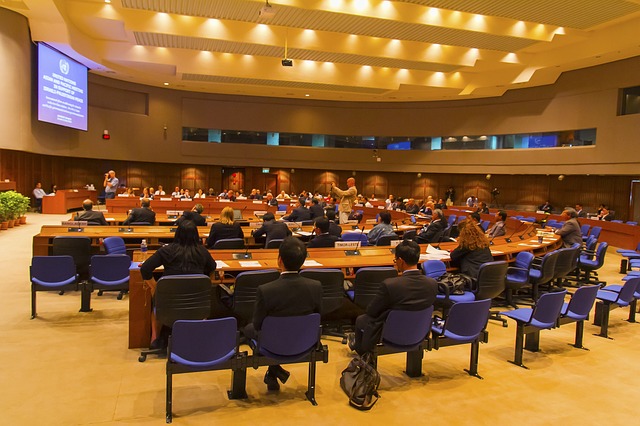
Photo by Keem1201 CC0
EdTechX Europe Conference: special discounts
The EdTechX Europe conference is coming, and I've secured a 35% discount for readers of the ICT & Computing in Education website, and 50% off for subscribers to my newsletter, Digital Education. Read on for more details.
Read More