Three communities that ICT and Computing teachers should join.
Read MoreCommunities are important!


Communities are important!
Three communities that ICT and Computing teachers should join.
Read More Teaching can be a lonely profession, especially if, as is often the case, you are the sole teacher of ICT or Computing in your school. Whether you’re on your own or part of a team, I’d thoroughly recommend joining a community or several. Why?
 The principle of the flipped classroom — that kids learn the content at home and discuss and work with it in school — is something that many teachers would probably agree with. But there are problems with the “pure” model of flipping the classroom, and so we need to be able to compromise.
I've always been a great advocate of what I call "authentic" learning, ie giving pupils a reason to actually do something. (I think that stems from my time at school, when I was forced to do mathematical exercises ad nauseum with no perceptible point to them!)
A couple of years ago I wrote a short series of articles called "7 ways to make IT real". As it happens, there were 8 articles in that series, thereby proving that all those years of my being made to do maths exercises were a complete waste of time....

“OK, then. What do you think about this?”
I was talking to the delegates on a course I was running entitled Assessing Computing. We were discussing sources of evidence of pupils having learnt stuff.
“What if you took the view: I’m a professional, and I’ll know it when I see it?”
The reactions of the class were very interesting.
 I’ve been trawling through the archives, and came across the following article. If you missed it the first time around, here’s a chance to read it. If you read it when it was first published, well here’s your chance to enjoy it again!
It’s about flash fiction, and how it can help teach ICT – don’t be put off by the old-fashioned terminology: it all still applies to the new computing curriculum.
 I don’t think rules, as commonly formulated, are very useful in the context of Computing lessons. Rules are usually framed in the negative. For example, in a computer lab I went into a few years ago on one of my school visits, there was a poster on the door listing all the things that people shouldn’t do:
Do not leave the computers on.
Do not leave printing next to the computers.
Do not just switch the computers off.
and so on.
There are two main problems with this sort of thing.
 I mentioned recently that in his book The Craft of the Classroom)
 , Michael Marland provided very useful advice on very practical issues in the classroom, and good routines to ensure a smooth lesson. Routines are good, because pupils know what to expect. They are able to predict what is going to happen, and when. Some pupils, whose home lives are chaotic and unpredictable, may even feel safe because of routines. Here are some routines that I think are useful for Computing lessons.
 Just in case you thought the difficulties of assessing pupils’ attainment in Information Technology are a new thing, and how terrible Levels were (are?), I thought you might like to read a report dating from 1995.
 I’ve been trawling through the archives again (I don’t get out much). The following appeared in the very first edition of my newsletter, which was originally called Computers in Classrooms (but is now called Digital Education), on 3rd April 2000:
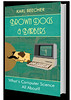 Have you ever studied Computer Science? If not, teacher Roger Davies, who teaches at Queen Elizabeth School, Kirkby Lonsdale, Cumbria urges you to read a wonderful new book.
 By Ben Davies
The trip to the Bett Show has always stirred feelings of both excitement and anxiety and this year's trip was no different. The excitement stems from the chance to spend the day immersed in education technology
 At last! Or, to use the vernacular, woo hoo! The latest edition of the Digital Education ezine is now out. It contains a round-up of products seen at Bett, articles on girls and women in technology, loads of links and book reviews. Here’s a detailed list of the contents:
 Being digitally literate is not just about knowing how to use programs or being aware of copyright law. It’s also about being able to ask the right questions. This is another reason to have a news section in your Computing lessons
 Like many Englishmen, the most important thing to me is having a decent cup of tea. So I was delighted when we bought a variable temperature kettle. This doesn’t just heat up the water to boiling point. It lets you select the right temperature for the kind of drink you have. But how does it work?
 I’ve long been an ardent advocate of spreadsheets. They can be an invaluable tool in business, education or any other field in which planning, cost or both are paramount. As far as Computing and ICT is concerned, they can be used for teaching modelling and computational thinking. However, they have been denigrated as being “just” an office tool, far removed from the exciting world of coding or robotics.
 I have suggested 5 reasons to have a Computing news section of your lessons. If you think that’s a good idea, here’s how to go about it.
(c) Terry Freedman All Rights Reserved