
There are many courses being offered to help you plan for, and implement, the new Computing Programme of Study. Here is a short selection of providers to get you started.
Read MoreUseful ICT and Computing Conferences coming up
 With the new Computing Programme of Study looming on the horizon, there are a number of conferences and other events coming up in the near future. Here’s a list of some of them. The Education Show isn’t specifically about ICT or Computing, but there are seminars in those areas so it’s definitely worth looking at.
Creating a game – a positive impact on learning?
By David Luke.
Read More I have had an interest in programming and creating games since I purchased a BBC Model A in the 80’s (the good old days!). However, it was only recently that I have actively promoted the introduction of games making into the ICT curriculum.
Two factors prompted my decision. Firstly, the introduction of the renewed ICT framework in spring 2008, which introduced learning objectives around ‘sequencing instructions’ and opened up options other than control. Secondly, the availability of easy to use games making software, which had the capacity to build games with a very professional feel.
Book review: Two girls, one on each knee (7)
 You could argue that crossword solving is a very good example of computational thinking. That is certainly what the security services thought during WW2 when they asked The Times to send them the names of anyone who could solve a cryptic crossword they’d supplied in 12 minutes or less. Those that did were invited to work at Bletchley Park, cracking codes for the war effort.
Digital Education: Safer Internet Day edition out now!
Updated! Discounts, competitions, news of events coming up, commentary, and advice about internet safety! And it's completely free!
Here’s what this issue contains:
Computer Programming Explained
By Woody Zuill
Read More Computer programming is the process of designing and writing computer programs. That is pretty straightforward, isn't it?
Improve student behaviour and attainment
 Sponsored article
 Seating charts make a real difference to the classroom learning environment in terms of teacher effectiveness and student attainment. Through using a seating chart, the teacher is imposing their authority before the lesson has even begun and making it clear to the students that the classroom is the teacher’s territory and they are in control of it. By using their knowledge of students and putting careful thought into the design of the seating chart the teacher can minimise negative interactions between students and take advantage of peer-to-peer learning strategies.
Review of the Google Chromebook
 I’ve been looking at the Google Chromebook, and I have to say I am seriously impressed. There’s a lot of talk about tablets these days. I myself have promoted the idea of Bring Your Own Technology, which usually means a phone or a tablet. But the Google Chromebook is worthy of consideration, whether for yourself, or whether you’re considering taking your school into the mobile future.
In order to thoroughly evaluate the Chromebook from a school perspective, I not only used the device myself, but interviewed Bruno Reddy, Head of Maths at the King Solomon Academy in London, and Jaime Casap, Global Education Evangelist at Google.
Digital Education Issue 1 is out tomorrow!
 Our newsletter Computers in Classrooms has been folded up, put away in a drawer and replaced by another one. Welcome to Digital Education!
Business emails to inspire confidence (not)
 There must be a whole generation of people who know the mechanics of using technology, but have no idea of how to take charge of it. I am thinking in particular of the ridiculous marketing messages I receive, that advertise targeted marketing services. I mention this because, despite all the lambasting of “Office skills”, it is demonstrably clear that people need them. I could even make a case for this being related to digital safety. How? Reputation is important, and marketing messages that have “schoolboy errors” do nothing to enhance one’s credibility. Consider the following examples:
5 Things to consider regarding seminars at Bett
With the vast amount of choice at the forthcoming Bett show (15 different events, hundreds of seminars, loads of exhibitors, plus networking), we need some criteria by which to judge whether or not something is worth going to or not – or worth staying for if you already have gone. Here are my suggestions. And remember: your time is precious, so if it becomes apparent that a seminar you thought would be relevant to your needs turns out not to be so, then get up and leave.
Read MoreBeing connected without being connected
 I have finally – finally! – realised what all the Facebook status updates I find so tedious have in common. That is, apart from the fact that they ostensibly have nothing in common, and that I find them tedious. I talked about the things I find irritating in How much should we share online?, so there's no need to rehearse it all over again.
Getting the best out of Bett now available
 Over 170 hints and tips from a Bett veteran! Yes, this is my UNOFFICIAL guide. Feel free to download it or share it, via an embed code.
Now includes a floor plan!
If you have already downloaded it, you may wish to download it again, as this is a revised edition containing extra information.
Assessing “soft” skills
Do you have anything you’d like to add to the discussion, Terry?
The scene was a meeting at the Edusummit conference at UNESCO in Paris in 2011. The question came from the Chair.
Thank you, but no: everything I was going to say has already been said.
That was my response, because I didn’t see any purpose in repeating points that had not only been made, but also generally agreed upon. In fact, my contributions to many meetings are based on Salvator Rosa’s, dictum:
Be silent, unless what you have to say is better than silence.
The question is: does that make me a good collaborator, or not so good? How do we measure such things? And does any of it matter anyway?
Crafting the perfect eTextbook
 Starting very soon is a 5 week online course called Crafting the perfect eTextbook. I’m slightly biased, because I’m involved in it, but it is shaping up to be really great.
The syllabus consists of, in brief:
Plagiarism in education
It’s often said that if you steal from one person’s work, it’s plagiarism, but if you steal from lots of people it’s “research”. Very droll, but plagiarism is a serious business. As well as being potentially economically damaging to the victim, it is demeaning for the perpetrator – although, like all thieves, they probably don’t realise it.
Read MoreApplying computational thinking in the “real world”
 One of the justifications for teaching computing and coding is that “computational thinking” is a useful skill for pupils to have, in order to apply it in wide variety of situations. A worthy aim, but I’ve heard very few convincing examples given. Actually, I don’t think I’ve come across any examples of how pupils might use computational thinking in a broader context, or how it applies beyond the relatively narrow confines of computer science.
However, Anna Shipman, a software developer, currently working for the Government Digital Service, believes that a software development approach can and should be taken in other areas of life. In particular, she relates how it proved useful in the context of fixing a leaky roof.
Competing with World of Warcraft
 I’ve just started reading Focus, by Daniel Coleman. If a book may be judged by the degree and speed with which it raises one’s blood pressure, I have to say this is pretty good value. I’m only 3% in, according to my Kindle status bar, and already I’ve found three things to disagree with. And let’s not forget that that 3% includes all the “prelims”, i.e. title and copyright pages, table of contents, and so on.
 Preparing for the new Computing curriculum: What if #5
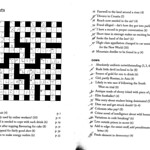 Would it be possible to create a self-referential puzzle or challenge? And if so, could it be helpful in the teaching of computing?
6 Ways to respond to requests for pointless data
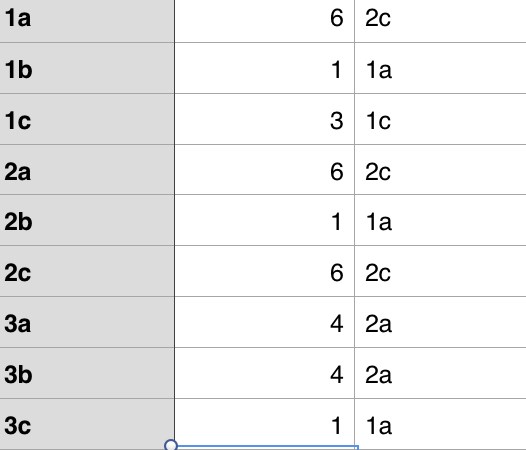 So, there you are, basking in your new-found freedom to report to parents what their children can actually do in Computing and ICT, when the data impresario in your school says they want you to supply the school office with a “Level” for each child. And for good measure, they want you to do that four times a term in order to monitor progress. How should you respond?