Is the ICT Curriculum Fit for Purpose?

ICT in the ‘old’ National Curriculum as it stands in my opinion is completely unfit for purpose.   A curriculum written 10 years ago can in no way reflect the changes in technology and the skills that children need to be taught in the modern world.

This is the view of Steve Kirkpatrick, as expressed in an article called The future of ICT in the curriculum? on his excellent Teaching With Technology blog. I have a lot of respect for Mr Kp, as he styles himself, so I went back to basics and had a look at the 1999 Programme of Study, and its updated online version (primary and secondary – Key Stage 3 and Key Stage 4).

Sorry, Steve, I have to completely disagree with you. It may not be all flashing lights, so to speak, but that is precisely the point. The Programme of Study, and its associated Level Descriptions, were written in a deliberately technology-free way in order to future-proof it. Indeed, one could argue that the weakest parts are the examples. Even the updated online version, with its example of “multimedia” (as compared with the original “sound” and “graphics”) is starting to curl at the edges as new technology like virtual worlds and, more recently, augmented reality have stumbled into the educational spotlight.

Steve goes on to say:

The problem is that the the ICT curriculum needs to be developed from the ground up and not from the top down.

That’s no problem. The ICT Programme of Study is “vague” enough for any creative bunch of teachers to invent their own ICT curriculum and make it match the Programme of Study. For example, read my Delegation Case Study for information on how I and a group of ICT teachers went about this around 12 years ago. The scheme of work we used, and adapted to our own purposes, not only satisfied the then existing Programme of Study for ICT, it also matched the 1999 rewrite -- and could still be used, with a bit of tweaking, obviously, today. My point is that I have always seen the ICT Programme of Study as enabling rather than restricting.

Steve says:

Can we as educators develop a skill based ICT curriculum that  is relevant and low cost that will deliver for future learners?

Skills-based? Aaaaargh!! What happens when the skills become completely irrelevant (like in about a year, if that)? The only viable curriculum, in my opinion, is one which takes a problem-solving approach, and in which the relevant skills are learnt as needed.

Where do you stand on these issues?

The Law Says.... 7 Ideas For Using Comic Strip Characters

Gentle persuasion?Join thousands of others and subscribe to Computers in Classrooms free! More prize draws coming up -- details soon.

I've used a comic book character -- Judge Dredd -- to advertise my newsletter. How else might you or your students use this sort of approach? Here are seven ideas.

  • Warn against leaving your login details lying around.
  • Advertise a new school visit.
  • Encourage students to enrol for an IT course.
  • Describe the dangers of smoking.
  • Use as the basis for a caption competition.
  • Illustrate a how-to guide.
  • Use on the front cover of a trouble-shooting guide.

I realise that there is a danger that using a comic book character to illustrate a serious issue could end up trivialising the issue. My response would be that years and years of serious graphic novels says otherwise.

But in any case, shouldn't learning, and the learning environment, be fun?

The image above was created using ComicBrush in accordance with its terms and conditions.


When To Procrastinate

Procrastination, n. The action or habit of postponing or putting something off; delay, dilatoriness. Often with the sense of deferring though indecision, when early action would have been preferable. Oxford English Dictionary.


My intention was to arise from the settee and take the tea things into the kitchen. I’d managed to reach Stage two of the three stage procedure (Stage one is thinking about it, Stage two is announcing it, Stage three is doing it). Having discovered that thinking about it had no effect, I made a dynamic and bold statement that I was going to do the deed. (I think what I actually said was something along the lines of, “I suppose I ought to drag my carcass into an upright position so I can take all this detritus away”, but let’s not split hairs.)

In response, my father-in-law, whose name is Frank, came out with a statement that really ought to be immortalised as “Frank’s Law of Procrastination”. He said:

If you're slow enough, someone else will do it.

Sound advice, and so true, generally speaking. But after laughing, I started to think that there are times when procrastination is, actually, the most sensible course of action. Or inaction. And although procrastination usually has negative and unflattering connotations, if you look at the OED’s definition (above), you’ll notice that it says “Often with the sense of indecision…”. Often, not always. There is, it seems, nothing oxymoronic about the phrase “planned procrastination”.

So when would procrastination be a good strategy to adopt? I can think of a number of situations.

Freedman’s Variation of Frank’s Law of Procrastination

If you wait long enough, someone else will beta test it.

There are those of us who, whilst liking the sense of exhilaration one gets from trying out something completely new, have become rather fed up with having trashed computer systems, security holes, and other unforeseen consequences. These days, I never buy anything until it’s on at least version 3.

Freedman’s Law of Intemperate Emails

We all know this one, and I’m surprised that as far as I can find out, nobody else has so egotistically given their name to it (my excuse is that I needed a snappy heading to this bit). When you hammer out an email reply telling your correspondent to do something to themselves which is anatomically impossible, that’s when you hit the Send key when you meant to hit the Delete key. Having done something like that myself once, I now draft a response in my word processor, or as an email reply but with the name(s) of the recipient(s) removed, so that even if I do accidentally hit the Send key nothing will happen.

Freedman’s Law of Decision-Taking

(You can tell that I’m on a roll here, can’t you?). I’m very good at taking decisions, but I’d not be the right person to have commanding you on a battlefield. I like to look at the situation from different angles, seek other people’s opinions and then sleep on it. Obviously there are exceptions to every rule (I wonder if that rule has an exception?), but I usually find that if I resist my urge to respond straight away I end up thinking of nuances and issues which had previously escaped me.

A good example of how planned procrastination is a useful device is when a client says they would like the bid, or case study, or vision document or whatever I’m writing for them to include X. It seems a good idea at first, until I think about it and realise that including X will mean also including Y and Z in order to explain and contextualise X, and doing all that would put us way over the word limit. But after sitting on it for a day, I realise that if I said W (do keep up at the back), it would get across the whole idea of X but without going into so much detail.

Bottom line

We live in an age when instantaneous responses are possible, expected and, furthermore, highly valued. But I think we need to ensure that youngsters are taught the value of waiting and thinking, in spite of all the pressures to do otherwise.

If you enjoyed reading this article, you’ll probably also like 21 rules for computer users.

Some Statistics about the Amazing Web 2.0 Projects Book

The Amazing book.

Since its publication in March 2010, the Amazing Web 2.0 projects book has been:

  • Downloaded 14,770 times.
  • Viewed 2,748 times in Myebook.
  • Vewed 544 times in SlideShare.
  • Viewed 429 times in Scribd.

Read more about it here.

Download it by clicking on the link below:

oops!

Thanks to Nyree Scott, of the University of Canterbury, for pointing out an error to me: Year 1 is 5-6 year olds, not 6-7 year olds. Don't know how I came to make such a daft mistake, but it's all corrected now!

Is Plagiarism Really a Problem?

I don’t often get annoyed when I read the newspaper these days –- well, not more than once per page anyway – but an article in today’s Guardian entitled “Internet plagiarism rising in schools”, with the subheading “Half of university students also prepared to submit essays bought off internet, according to research”, really wound me up. This for several reasons.

Firstly, the research was carried out by a researcher from the University of Manchester, and the results will be presented at a conference called The Plagiarism Conference sponsored by, amongst others, a company called nLearning, which supplies plagiarism-detecting software. Now come on: how likely is it that they would sponsor a conference in which someone comes along and say “Hey! Our research shows that you really don’t need to be buying plagiarism-busting aplications!”

Don’t get me wrong. I’m not suggesting that the research was fabricated or misreported, or that anyone has said or done anything which is underhand. The fact is that there is a tendency for research results to reflect the views or principles of the researcher or organisation involved.

I first heard about this phenomenon when I was studying Psychology at uni. It was an option I took in my first year, and in one of our experiments we looked at something called the Experimenter Effect. It was fascinating really. Paired off, we students were given the role of either experimenter or subject, and then each experimenter was given an instruction sheet to read to our subject, explaining the nature of the task he or she would be doing. The sheet included the directive to read out the instructions exactly as they were set out, apart from the last paragraph. That final paragraph told me that the task was impossible. What I didn’t know at the time was that other experimenters’ final paragraph said the precise opposite, that the task was as easy as falling off a log.

Despite, as we all thought, carrying out our instructions to the letter, and reading the sheet out exactly as it was written, ie with no diversion from the text or even giving our words a particular nuance, those of us who were told the task was impossible witnessed our subjects flailing and failing abysmally, whilst our more optimistic colleagues saw their subjects succeed with glee.

The same sort of thing was discovered many years ago in the field of Economics, in which it was found that the (to all intents and purposes objective) research of left-wing think tanks tended to reveal things like, for example, the official rate of unemployment was an understatement of the true figure, whilst their right-wing counterparts’ research demonstrated errors in the opposite direction. There was no suggestion that anyone was being economical with the truth.

It seems to me, therefore, that the results of research are coloured by hidden influences such as expectations, underlying methodology, the type of questions asked, and so on. I don’t think truly objective research is possible, and I would even apply that “law” to my own humble efforts. For example, it is hardly surprising that when I set out to find out how teachers were using Web 2.0 applications in their classrooms, and what the outcomes were for students, I discovered that teachers who use blogging and so on in their lessons universally report that it had a profoundly positive effect on their students’ learning. (Read all about in the Amazing Web 2.0 Projects Book, which is not only stupendous, but also free!)

Bottom line: I tend to take all research results, especially the ones I read about in newspapers, with a pinch of salt. And I say "especially" because I find it very depressing that stories like this seem always to be reported without any critical faculty whatsoever being exercised. Like those stories that pop up every so often in which someone starts ranting that kids don't know how to use apostrophes these days, a clear indication if ever there was one of the wholesale failure of teachers, schools and society in general -- and it is mentioned, almost in passing, that the ranter has just published "Apostrophes for Dummies". I know journalists are busy people, with deadlines and stuff, but surely they could at least raise an eyebrow?

Secondly, I refuse to believe that 50% of university students are cheats or potential cheats.

Thirdly, what exactly has changed over the last however many years apart from, perhaps, the ease with which one can buy essays? I recall a “student” I was put in contact with through a private tuition agency offering to pay me three times the hourly rate to write an essay he could copy and pass off as his own. I refused, and he was so upset and angry that he complained to the agency about me, telling them that I had made the offer to him! That was 25 years ago. As far as I can see, the difference is that now he would go to a website and anonymously purchase an essay written anonymously by someone who has basically abandoned all pretence of being professional or ethical.

Fourthly, how come their tutors need software to tell them if their students are cheating? If you read your students’ essays over the year, and listen to them debating in seminars, how could you fail to notice if their writing suddenly used different language, different sentence structures or just seemed different?

Well, maybe university tutors deal with hundreds of (to them) faceless students these days. But schools?  I mean, why should any school need a computer to tell that their kids are “cheating”?

And are they even cheating? There’s an old maxim that if you steal from one writer it’s called plagiarism, but if you steal from lots of writers it’s called research. Do youngsters actually know the difference between plagiarism and research unless they’re taught?

This is nothing new either. In my very first teaching job, when I taught Economics, I set an essay to answer the question, “What are the causes of unemployment?”. When I had marked the essays I gave the class feedback as follows:

That essay you did for me was tackled really well. The only thing I would say, though, to save us all a lot of a bother next time, is that instead of copying several pages straight out of a textbook, just hand me in a sheet of paper with your name on, together with the title of the textbook you’d like to copy from, and the relevant page numbers, and I’ll mark the book instead.

So how did I know thay’d copied large swathes of textbooks? First of all, I possessed all the main textbooks and knew them quite well. I knew the way their authors expressed things. But more importantly, I knew my students, so when the lad who would usually come out with such gems as “My granddad wouldn’t of got any work if he hadn’t gone out looking for it” handed in an essay which was full of sentences like “Indeed, we can surmise from observation of the effects of tax incentives on industry in regional development areas …”, something told me that he may not have written it all by himself.

You don’t need technology to detect plagiarism, cheating, copying or whatever you wish to call it. What you need is teachers who know their students, and common sense – and time by the powers-that-be for teachers to get to know their students, and freedom to trust and rely on their own professional judgement (because that, when it becomes subconscious, is actually “common sense”).

Moreover, if students really are cheating, we need to ask ourselves some questions, such as:

  • Are they really cheating, or have they simply not understood that that isn’t real research, or don’t have the literary skills to summarise or reword passages they read in articles and books?
  • If it turns out that they are cheating, is that because we seem to be living in a society in which it increasingly appears to be the case that the end is regarded as justifying the means?

If there is any truth in that latter suggestion, perhaps we would agree with Cassius in Shakespeare’s Julius Caesar: “The fault, dear Brutus, lies not in our stars, but in ourselves.”

Delete Cyberbullying

If you wouldn't say it in person, why say it online?

The National Crime Prevention Council in the USA has addressed cyberbullying in a number of short videos. They make the point very well: why behave differently online to how you would conduct yourself offline?

There's another, perhaps less obvious, message that comes across when you watch the videos. To quote from Edmund Burke ,

The only thing necessary for the triumph of evil is for good men to do nothing.

Use this as a starting point for discussion with pupils. Perhaps they could make their own cyberbullying video too: that approach has been used to great effect in a number of schools.


Who'd Have Thought It?

Interesting video that highlights just how amazing is the mobile technology we probably take for granted. OK, it's an advertisement, but I think it could make a nice starting point for a discussion with pupils.

One of the projects I used to set students when I was teaching was to envisage their library of the future. Some of the outlandish ideas they came up have since come to pass. So I wonder where youngsters think technology is going?

How to Write An Online Review: Guiding Your Students

Is writing an online review any different from writing an offline one? Probably the biggest difference is the (usual) restriction on word count. Most good website articles weigh in at around 500 words. Occasionally -- very occasionally -- I expand beyond that, but a good rule of thumb is that anything over 1,000 words or so could probably benefit from being split into two or more posts.

Strange that, when you come to think of it. You'd think that, given what is effectively an infinite amount of space, a website could cope with a few essays now and again.

Of course, the key factor is not the amount of room you have, but the supposed antipathy of readers towards scrolling. "Keep it above the line!", advertisers demand. That is, make sure the viewer doesn't have to scroll down in order to see it. So the same goes, or so the common wisdom has it, for any copy appearing on a computer screen.

In fact, restricting your prose to above the line (or fold, as it's also known) is not only an impossible exercise (how do you know how big your readers' screens will be, or how large they like their text?) but a pointless one. As Jacob Neilsen points out, people are quite happy to scroll down these days, although given people's relatively short attention span when reading text on a screen, it's probably better to err on the short side, given a choice.

Now, the reason that I've gone into some detail on this apparently minor point is that I think it's important to give people reasons for doing something, or not doing it, and this is where I think How to Write an Online Review falls down. It gives short, sharp advice, without really explaining the reasoning behind it, or leaving any room for discussion.

And there is room for discussion. You might want to question not only the scrolling argument, but even the attention span argument. For example, if I invite you to write a review of a software application, which would cost a school several hundred dollars to implement, I'd expect more than a cursory 500 words, unless the product is such a pig that it's not worth wasting any words on it. (I'm reminded of Dorothy Parker's review of a book: "This is not a book to be tossed aside lightly. It should be thrown with great force.") More importantly, my readers would want you to go into some depth. After all, if they think it's too long they'll vote with their mice; but you ought to give them that choice.

So the "rule" about keeping the review to "500 words or less" -- it should actually be "fewer": why does a video about writing contain such an error? -- is not a rule at all. It is a point to be discussed with an editor (which may be yourself, if you're writing for your own website or blog), taking into account the nature of your audience.

If you don't know how your readers feel about long articles, then you need to ask them, or find out in some other way. In other words, you need to do research, and act accordingly. Where will you do your research? Well, apart from reading articles on the subject, you could also analyse your web statistics. How long are people spending on your website? How long are they spending on each page, on average? Which posts are the most popular? How are they different from the rest? (Google Analytics is a great tool for answering the quantitative questions.)

Already, we have taken this apparently simple task of writing a review from a kind of painting-by-numbers approach which, frankly, has no, if any value, as far as the ICT curriculum is concerned, to one that starts to address Levels 4 or 5 (audience), and even nudge up to the higher levels (customer feedback). The temptation to use a video like this straight off the bat without really thinking about it is great indeed. But that's like buying something in a supermarket because it's on special offer, not because you will actually use it.

There's another curious bit of advice in the video: use strong verbs and nouns. What's a strong noun? What's a strong verb, come to that? Surely it would be better to use the most appropriate word? I may be wrong, but without having been given an explanation of the word "strong" in this context, how can I know?

One useful piece of advice is to use the active rather than the passive tense. This is always the right thing to do unless you are writing an academic article or your objective is to bore the reader into a stupor. Saying something like, "I drew the picture and then coloured it in using the Fill tool" is much more dynamic, and therefore engaging, than the passive (almost supine) "The picture was drawn by the reviewer ,etc etc".

What about the advice that was left out? For example:

  • Discussing with the website editor or blog owner exactly what his or her requirements are.
  • Should screenshots be included?
  • What rights are you giving away?
  • Must the review be brand new, or is it OK to recycle one you wrote before?
  • If you live in the UK, such are our libel laws that it's probably a good idea to be on the safe side and make sure you include the magic mantra, "In my opinion" in the review if you've decided to pan it.

Incidentally, everything I've written here is only my opinion, which I formed whilst watching and reflecting on the Howcast video (see below).

So am I saying this video is a waste of time and that you shouldn't show it? Not at all. By all means, use it as a starting point for discussion with your class, and use it (or its best points) as an aide-memoir once you've covered the topic.

In fact, once you've decided to not use it straight out of the box, but to encourage discussion and questioning around it, you'll probably conclude that it's not really a bad piece of video at all.


10 Obligations of Bloggers

If you blog for an audience, as opposed to simply for yourself, what are your obligations? I’d say the following:

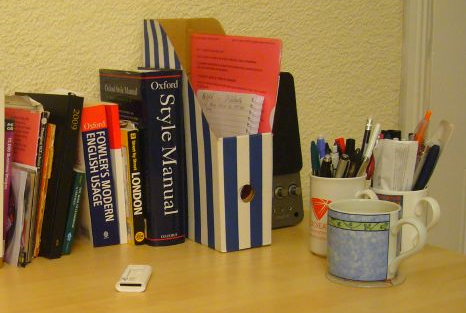
Use manuals to help with tricky or confusing words.

Write with integrity

For example, if you write about a product you have some connection with, especially if your report is positively glowing, then state that connection loud and clear. Unfortunately, the opposite is also true, ie if you don’t have any connection you should probably say so. I use the word ‘unfortunately’ simply because I think it’s a pity that some people think that if you like something, you must be getting a pay-off in some form.

Write accurately

Accuracy is another facet of integrity. Check facts, quotes and references. If you don’t have time to do that, make it clear that you’ve written what you believe to be the case, rather than present it as fact. Some people think that bloggers somehow naturally have more integrity than professional journalists, but I think integrity has to be worked at.

Write incisively

I know that one of the great thing about blogging is that it’s OK to air some half-thought-out idea, which on later reflection or in the light of further information may become regarded as less useful than it first appeared. I think that’s fine, as long you don’t try to sound as if not only do you know what you’re talking about, but that any other viewpoint is plain wrong. Why not just say: “I’ve only just seen this, so my initial thoughts are…”, or “I just had an idea that I haven’t had time to think through, but…” or “Here’s the kernel of an idea; tell me what you think.”?

Writing incisively shows through in the questions you ask as well as what you state. It’s not obligatory to always have an answer.

Write regularly

I think if you have built up a following, even if it’s only a dozen people, you owe it to them to write as regularly as you can. I don’t think you have to write every day necessarily, but reasonably often, like once a week.

(This is something of a counsel of  perfection: I have only just managed to update my My Writes blog for the first time in months, because I have been concentrating on the ICT in Education one, which I update pretty much every day).

Write well

I realise that to a large extent good writing is, like beauty, in the eye of the beholder. What you find beautiful I may regard as too florid. Writing which keeps me engaged may leave you in despair at its starkness. That sort of thing is a matter of taste, and there is little if anything to do about that. But surely it is not unreasonable to expect – to take just one example --  that those who blog at least trouble themselves to check the vocabulary they use and not, for example, confuse ‘continual’ with ‘continuous’ or ‘uninterested’ with ‘disinterested’?  Books which deal with commonly confused words are easy enough to obtain, after all.


Write for a purpose, with the reader in mind

I think if you write for yourself, you can be completely self-centred about what you write. However, in my opinion, as soon as you have an invited audience (which, by definition, you do have by making your blog URL known), you have an obligation to give them a reason to read your blog, whether that’s entertainment, enlightenment or simply stuff to think about.

Write for all your audiences as well as each of your audiences

We urge pupils to write for an audience, and to write differently for different specific audiences.  Should we not also encourage them to develop a set of over-arching principles that would apply to all writing, for all audiences?

Write with consideration

I suppose this is a personal thing, but I don’t like the idea of having swearing, or even implied swearing, on my blog, in case it offends some readers. That’s why I sometimes don’t publish comments expressing an opinion ‘robustly’. People are entitled to their opinion, and they’re entitled to express it forcefully, but if they do so by using expletives I’m afraid it won’t see the light of day here.

Be yourself

As Polonius said in Hamlet, “To thine own self be true.” I think an obligation that each blogger has is to define his or her own set of obligations. That is, I think that if you’re going to write publicly you have to develop a set of rules by which to write by. They may be very different from the ones I’ve listed here, which clearly reflect my own value system, but I think the process of thinking about them is important.

Be silent

Finally, I don’t think it’s necessary, or even wise, or useful, to pass comment on something as soon as it’s been announced. It’s good to be first with the news, but it’s also good to be among the first with well-considered reflections.

As Salvator Rosa said,


Be silent, unless what you have to say is better than silence.

What have I overlooked?

Facebook Privacy Settings -- Again

Stand by for yet more changes to the way Facebook presents your privacy settings, according to TechCrunch. According to Chris Pirillo,

Facebook currently has nearly 200 different privacy options and 50 privacy settings. It’s no wonder that the average person gets hopelessly lost when trying to figure out where they need to opt-out.

He goes on to say:

Why the hell do they have to opt-out, anyway? Shouldn’t it be more of an opt-IN scenario?

This is absolutely right. In my opinion, it is always better to err on the side of caution and assume that the average person, if asked, would prefer the default position to be privacy rather than non-privacy.

Should your private data be under lock and key?That is why I use a double opt-in system for subscribing to the newsletter, Computers in Classrooms. (That's where, after signing up, you receive an email asking you to confirm that it really was you who completed the form and you really do wish to subscribe.) As far as I'm aware, that is not a legal requirement, but is regarded as good practice. In any case, it seems to me to be safer on legal grounds, given that the advice from the UK's Information Commissioner states:

If challenged, you would need to demonstrate that the subscriber has positively opted in to receiving further information from you.

I do wonder, sometimes, whether privacy means as much to young people as it does to us oldies. But whatever their natural inclinations, they should be aware of their rights, and what their data may be used for.

Privacy rights vary according from country to country, so people really need to be encouraged -- urged, even -- to read the Terms and Conditions and/or Privacy Statement on websites before signing up to something.

Astonishingly, many people don't, as one company happily discovered when, as an April Fool wheeze, it told customers that it legally owned their souls! The news article from the Daily Telegraph states:

Almost 90 per cent of customers agreed to the terms and conditions without reading – either that or they were happy to surrender their souls. The 12 per cent of customers who refused the terms were given a £5 gift voucher.

I was intending to review some software once, when I read on the company's website that the copyright in any article which mentioned the product belonged to the company. That's a ludicrous proposition, of course, and almost certain to be kicked out of court, assuming it ever got that far. However, I took the view that (a) I don't have the time or inclination to engage in a legal tussle, and that (b) I have no desire to publice a company that would make such claims anyway. The result was that the company gained nothing from my use of its software. If you think about it, its legal staff or advisers are working at odds with its marketing staff.

As for what the data might be used for, young people need to realise that, from a marketer's point of view, it is better for people to have to opt out of receiving marketing messages than to have to opt in. That's because most people most of the time take the course of least action: it takes more thought and effort to tick a box than to not tick it.

Issues to discuss with students

  • Are you aware of your legal rights? (Whether you're in a position to enforce or defend them is another matter entirely.)
  • Where would you find out what your legal rights are?
  • Is there a case for requiring all websites to have a Terms and Conditions and/or Privacy page?
  • Should such a page be written in user-friendly language rather than legalese?
  • Does privacy matter?
  • What should the default position be for something like Facebook, given that one could argue that the whole point of it is to enable people to find you easily?

The Value of Play

I've been watching, and watching and rewatching a video called Play, by David Kaplan and Eric Zimmerman. It's a film which envisages a possibly not-too-distant scenario in which games have become totally immersive. The line between game and reality blur — over and over again.

The first time I watched it I didn't quite 'get' it. The second time I understood it a lot more. The third time I was able to completely enjoy it, and after that I started to think about the possibilities for the ed tech teacher.

I don't think many teachers would feel comfortable showing this to a group of students. A pity, really, because there is so much rich discussion you could have with them. However, there are some risqué elements, like a scene where the main character grabs a woman's breast, followed by some choice words by the recipient of this unwelcome contact, and one with Japanese schoolgirls, which is clearly tongue-in-cheek but which may be unwise to show to a class. Anyway, watch it and decide for yourself.

But if there is a good chance that you will feel unable to show it to your students, why am I bothering to mention it?

Well, there is always the possibility of showing selected scenes, to illustrate points for discussion.
However, even if you watch it only with colleagues, perhaps as part of a team meeting or a staff training day, there is much to discuss. I have always believed, and found, there to be value in having an intellectual discussion for its own sake. This is especially important for teachers: ours is an intellectual profession, so we need to practise being intellectual.

If, having watched the film, you don't think you can use it, pass on the details to colleagues teaching media studies. They may find it interesting to consider how the lines between film, game and reality are not very apparent. There is also a video, on the Future States website (see below), showing the making of the film. I don't think it's very revealing myself, but it may be interesting for students to glimpse what a real film set looks like.

So what sort of issues does the film raise?

One is a moral issue about how points are accumulated. Watch the thug in the first sequence, to see what I mean at its most obvious, but the issue is repeated throughout the film.

Another is to do with truth — not only in the sense of distinguishing game from reality, but in terms of integrity. Look at the choices faced by both the politician and the psychiatrist. There's an element of humour there, but perhaps like much humour it touches a nerve.

There are underlying issues as well, to do with genuineness. For example, all the options presented to the psychiatrist appear to have equal weight. Do professionals like psychiatrists, doctors, even teachers, really ask questions which have no greater value than any of the alternative questions they might have asked instead?

But perhaps this is all getting too deep. Watch the film, which lasts just under 20 minutes, and see what you make of it.

A little background: I found out about this by looking at the Sliced Bread blog, where Tony Searl wrote an article called Future State. I chose to read that at the suggestion of my random blog reading generator.

See also the two articles cited in the References section.

On the topic of games, the forthcoming issue of Computers in Classrooms, the free (woo hoo!) newsletter, is a games special, with articles about 'serious' as well as 'educational' games (the distinction is not mine), reviews and original research from a student's dissertation and BESA, to cite two, plus some great prizes to be given away.

How to Randomize Your Blog Reading

OK, I know it's ridiculous, but I am currently subscribed to 829 blogs. That means if I checked one per day it would take nearly three years to get through them all. What I ought to do is go through them, and be absolutely ruthless about weeding out the ones I don't read as often as I should. Erm, that would be all of them then.

Or perhaps I should ditch the ones I don't like too much. But I often read blogs I don't like because they are useful sometimes.

So I've decided that the only answer to a ridiculous problem is a ridiculous solution: I have decided to experiment with randomizing my blog reading. Here's how it works, using Excel.

Setting up the random blog post generator

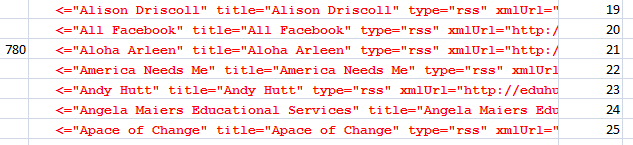
Extract from my blog list

  1. Open Excel and start a new workbook.
  2. Open your RSS feed reader.
  3. Export your subscriptions to what is called an OPML file. This option will be found somewhere in the menu system of your blog reader. In Google Reader, for example, you click on the link at the bottom of the screen called 'Manage your subscriptions', then to Import/Export.
  4. Next, open the OPML file in your web browser.
  5. Select all the text in the file.
  6. Paste it into the Excel file. You should find that each blog you subscribe to lands on a row all to itself.
  7. Get rid of any extraneous text at the top of the worksheet, ie any text which is clearly not an actual blog. Make sure that the first blog is in row 1 or, if you wish to be prim and proper and give your columns headings, row 2.
  8. Get rid of extraneous text at the beginning of each line, such as 'outline text'. Use the Find and Replace tool for this, replacing the offending text with nothing.
  9. Next, we need to assign a number to each blog. The easiest way to do so is by using the formula =row() in the column to the immediate right of your list of blogs. For example, in my spreadsheet the blogs are listed in column F, so I have placed the row formula in Column G. Don't worry about obliterating some of the text in the blog list: you can always widen the column just enough for you to be able to read the name of the blog. If you have started your list on row 2 rather than row 1, amend the formula to =row()-1. You only have to enter the formula in the very first row of data.
  10. Place the mouse pointer on the bottom right hand corner of the cell with the =row() formula in it, and double-click. This will copy the formula all the way down.
  11. Next, we need to place a random number generator somewhere near the top of the worksheet. The best formula to use is Randbetween: =randbetween(bottom,top). Thus in my case this has to be =randbetween(1,829).
  12. Save the spreadsheet with an impressive sounding name. I've saved mine as 'blogarizer'.

Using the random blog post generator

Putting this 'blogarizer' to work is simplicity itself.

  1. Just press F9, and a number will appear where the Randbetween function resides.
  2. Scroll down your blog list to find the blog to which that number has been assigned.
  3. Go to your RSS reader and go to that blog.

Some awkward questions

I'm about to start experimenting with this myself. If you decide to try it, let me know how you get on. Although this is an interesting approach to having too many blogs to read, a few questions spring to mind:

  • Does each number really have an equal chance of being generated? I have my doubts, but I think I will have to assume it does, unless someone proves to me otherwise.
  • Although each blog (we assume) has an equal chance of being chosen, is this actually a fair, in the sense of equitable, method of doing so? Would it not be more fair to weight the randomizer in some way, perhaps to reflect the fact that some people really contribute to the education community and therefore 'deserve' to have their blog posts read?
  • Is this actually a sensible way of approaching the problem? It means, in effect, that someone who writes about every aspect of his/her life, and only occasionally about educational technology, stands an equal chance of being read as someone who posts exclusively about educational technology -- and whose posts might therefore be deemed to be the more useful of the two.
  • Is it ethical? I mean, there are people whose blogs I follow because their posts never disappoint -- which is pretty good going if you think about it. Yet here am I saying, in effect, "Thanks a bunch for all the great work you are doing, but you have only a 1 in 829 chance of being read by me on any given day." Is that right?

I think it's interesting that although this approach may be fair in the purely mathematical sense, it could be grossly unfair in other ways.

So what's your opinion?

Preview of The Blue Nowhere, by Jeffery Deaver

So there I was, feeling pretty tired from working too hard, thinking to myself that I really need a break from everything related to educational technology. “I really must get out more.”, I told myself.

Definitely worth reading!And indeed I have, metaphorically speaking, by embarking on a novel by Jeffery Deaver, called The Blue Nowhere. It involves computer hacking. (It’s possible that I haven’t quite got the concept of getting away from it all.)

Like all Jeffery Deaver books, there’s an intriguing plot and, no doubt, plenty of plot twists to come. I have read only about an eighth of it, therefore I cannot review it exactly, just give my impressions so far.

It features a computer hacker who selects his murder victims and then gets to know all about them by hacking into their computers.  As an aside, it’s interesting to note how much seems to have changed, in both technology and terminology, in the nine years since the book was published in 2001. For example, do we continue to draw the distinction between hackers (the good guys, or at least the not-really-evil guys), and crackers, the nasty pieces of work? Does anyone still do phreaking, that is hacking into telephone systems in order to make free calls overseas? If so, haven’t these people heard of Skype?

Of course, they did it, and possibly still do it, for the challenge. This isn’t directly relevant in regards to this book, but it’s of tangential interest.  An understanding of human behaviour, and human nature, is an essential weapon in the true hacker’s armoury. It’s long been recognised that the biggest hole in sophisticated security systems is the human element, and serious hackers – the really serious ones -- are very adept at social engineering. That is, appearing to be someone you’re not (a computer repair person, for example) and, like all good con artists, brilliant at getting people to actually want to help you.

This is very much a theme in the book, as is the issue of keeping oneself safe online. The book is probably too long to make it feasible to set as an assignment (though it might go on a recommended summer reading list if you teach older ones), but there is much to be drawn from it in a professional sense.

  • For example, what could victim #1 have done to protect herself whilst online?
  • Can hacking ever be morally right? Discuss.
  • Data protection is the sort of topic which can be as dry as dust and little more than trying to memorise the laws that have been passed. This story highlights issues which illustrate (or can be used to illustrate) important data protection issues.

You would have to go about this sensitively. Without care, using the book to bring out these kinds of issues could lead to some students – and their parents – becoming totally paranoid about going online at all. As you’ll see if you read the book, keeping safe isn’t entirely a matter of ‘stranger danger’ and not meeting online friends in real life.

But if you’re worried about scaring the kids then you could just read the book for its own sake, for relaxation.

Which is what I’m going to do for the rest of the day.

To purchase the book, click on the picture above and you'll be taken to Amazon UK, where you can buy the book and thereby help me to put some more crumbs on my family's table, courtesy of the Amazon affiliate scheme. Thank you.


The Role of Technology in Campaigning

In the UK at the moment we're in the run-up to a General Election, so we're being assailed in all sorts of different ways by various political parties. Given that some syllabuses require students to design a campaign, I think it's interesting to consider the ways in which technology could be, and sometimes have been, used.

Here is my 'back-of-an-envelope' list of ideas.

  • Website, containing essential information about policies and contact details.
  • Blog, updated daily -- not necessarily about the party or the person, but about relevant issues.
  • Twitter account, so that people can follow the person's activities and thoughts. Less maintenance than a website or blog in some respects.
  • Facebook fan page.
  • YouTube video channel.
  • Flickr group of relevant or pertinent photos.
  • Daily or weekly podcast.
  • Radio channel.
  • Emailed newsletter.
  • Digital magazine (which could be part of website).

That's a tall order for a single person, but for a political party it should not be too much trouble at all. The list is based on four principles:

  • It should be easy for people to find out what they need to know about the party or Parliamentary candidate.
  • It should be easy for people to be updated frequently, by whichever means they prefer.
  • Potential supporters should be engaged, not just talked to or, even worse, talked at.
  • What probably matters is a decent marketing strategy, to catch so-called 'floating voters' -- the people who can be persuaded to vote for one party or another if the arguments and presentation are right.

So on the subject of marketing, what is it that each political party is trying to sell? When it comes down to it, probably a set of values rather than a set of policies. Therefore, rather than try to inform the floating voter of the finer points of its manifesto, perhaps each party would be better off trying to create a viral video instead, or create a geocaching-based game of some description. Or some really great t-shirt designs with matching mugs.

So this raises at least three questions:

First, a marketing/philosophical/political question I suppose, rather than a technological one: does it make sense to try to sell a political party and its policies in the same way as you might try to sell a rock band or a can of beans? Or am I being incredibly cynical and ridiculous?

Second, in terms of the technology, what have I left out?

Three, if you're one of the people teaching a syllabus which requires students to design a campaign, what sort of things have they come up with that use technology in interesting ways?

This is an expanded version of an article published today in the Computers in Classrooms newsletter.

We Don't Need No Rules of Grammar

Steve Wheeler (@timbuckteeth)has posted a useful article reminding students that when it comes to succeeding academically, accuracy in using the language still counts.He lists a set of rules which humorously make the point, such as "Avoid clichés like the plague." My question is: do the same rules apply to bloggers?

Is it forbidden to break the rules? (Photo by Elaine Freedman)I think there are two main issues. Firstly, it's fine for bloggers or creative writers of any kind to bend or even break the rules of grammar, if that is done in a purposeful way. For example, I might wish to write a sentence consisting of just two or three words, or even a single word, for emphasis, which breaks Rule 10: "No sentence fragments.", as in:

You would think installing this application would have dire effects on your system. Not so.

Secondly, I disagree with some of the rules anyway. To be specific:

Prepositions are not words to end sentences with

As one of the commenters on Steve's post says, this isn't a rule as such, just someone's invention. Trying to obey it can lead to all sorts of grammatical gymnastics. I think Sir Winston Churchill said it best:

This is the kind of English up with which I will not put.

And don't start a sentence with a conjunction

It sounds like sound advice, yet doing so can often be used to good effect, for example:

But there was no way of knowing that.

Starting the sentence with the conjunction 'but' gives it an immediacy and impact that the acceptable alternative, "However," lacks. Indeed, the comma itself, which is grammatically correct in this context, induces a pause, as it is supposed to, thereby slowing down the pace. In my opinion, pace is just as important in non-fiction writing as in fiction or poetry. Would you not agree?

It is wrong to ever split an infinitive

Well, possibly the most famous split infinitive in the English language, "to boldly go etc", from Star Trek, is not improved by rendering it as "Boldly to go" or "To go boldly". Perhaps that's because of its familiarity, but there are lots of examples in everyday life where to not split an infinitive would come across as forced, unnatural. Usually the distinction is drawn between written and spoken language. A blog, surely, can be both.

Avoid clichés like the plague

Good advice, but hard to abide by. After all, clichés became clichés because they were deemed to be so apposite.  You could try to coin your own analogies and metaphors rather than use a cliche, but in the wrong hands that can come across as self-satisfaction at one's own cleverness. Much better to write naturally and plainly. After all, if the image conveyed by the metaphor distracts from the subject of the writing itself, the whole point of communication has been lost. Therefore a far more useful piece of advice would be to avoid metaphors and similes unless they are truly necessary. They rarely are.

No sentence fragments

Why not? Sometimes these can be used to great effect. I wrote an article in which I not only used sentence fragments, but placed each fragment on a line of its own. I thought that was quite effective in conveying the style in which I would have said the same thing had I been having a conversation with the person I was referring to. In any case, for the sake of balance, these rules ought to include one which forbids writing long, complex, sentences. See, for example, my review of The Making of a Digital World, which contains such gems as:

This process is nested in the process in what Modelski terms the active zone process, defined as the spatial locus of innovation the world system, representing the political process driving the world system evolution, and unfolding over a period of roughly two thousand years (again separated into four phases).

Don't use no double negatives

Hmm. Well I can see that doing so might not be a guarantee of examination success, but certainly in other contexts the use of a double negative can be rather effective. For example:

Badges? We ain't got no badges. We don't need no badges!

(See http://en.wikipedia.org/wiki/Stinking_badges)

You'd have a hard job trumping Elvis Presley's triple negative in the song Hard Knocks:

Nobody never gave nothing to me.

Conclusions

The point is that you want to communicate not only clearly, so that you end up saying exactly what you mean, but engagingly. No disrespect to academics, but I have the impression that engaging the reader is usually seen as very much an optional extra. Depending on the nature of what you're writing about, and your target readership, the rules of grammar in the traditional sense may or may not apply. Audience and context are key.

Of course, all this assumes that you know the rules of grammar and good writing to start with. If you don't, those quoted by Steve would be good ones to print out and stick on your wall.

Another good source of information is the Grammar Girl podcast. This is surprisingly useful — surprisingly because, as we all know, rules of grammar and syntax differ between the USA and the UK. As George Bernard Shaw observed, "England and America are two countries divided by a common language."

However, Mignon Fogarty, the 'grammar girl', makes a point of highlighting the correct versions for a British audience and for an American one, where there is a difference.

Finally, the much-maligned grammar checker in Word and other wordprocessors does a reasonable job. You don't have to accept all the suggestions, but surely it's better to have the choice than to remain ignorant to the fact that you may have got it wrong?

8 Point Room Check

Use a checklist to help keep the facilities in tip-top conditionHere's a checklist you can use to help keep a computer suite in tip-top condition. Make sure the students know you will be checking as well.

Room number ____

  • Are all the computers working?

  • Are all the printers working?

  • Do the printers have paper in them?

  • Have discarded print-outs been cleared away?

  • Are all the mice working?

  • Are all the monitors working?

  • Is the network working?

  • Is there a student User ID list handy in case someone forgets their details?

This article was originally published on 14th October 2006.

50 Rules of Social Media Etiquette for Students

I've just been checking my Google Reader subscriptions., and came across this interesting post from Social Guy. It contains 50 'netiquette' rules for students, categorised into General, Twitter and Facebook. Helpfully, there are sections devoted to job-seeking and grammar as well.

Observe the rules of etiquetteI don't agree with all of these 'rules'. For instance:

Substituting “2″ for “to” looks like you’re in junior high.

Well, perhaps, but it also saves one character, which could be crucial!

Another one:

You might think it’s nice to send an automatic message every time someone follows you, but it actually makes you look lazy and unengaged. Social media is about the personal effort behind the connection.

I agree, but not responding at all for a while also makes you look unengaged.

I shouldn't use this set of rules completely out of the box, but as a very useful starting point for discussion with students.

Web 2.0 For Rookies: Geotagging

Geotagging is the term given to the adding of geographical metadata to photos, videos, tweets, websites and other media. This ' metadata ' can include longitude and latitude, and other attributes such as altitude. There's a fuller version of this summary information over at Wikipedia , but let's think about the applications of this technology in school.

You can geotag photos, which is a fancy way of saying that you can embed geographical metadata into your digital photos. Have a look at the information -- the metadata - shown below for two photos. One important difference between the two is that the one on the right includes information about where the photo was taken.

Spot the difference

There are several ways of entering this information in a photo. One is to buy a camera that does it automatically. That's still a bit of an expensive option. Compact models are starting to appear at a price which makes it feasible to consider having two or three in a school for lending out to classes, but not one per class, much less several per class unless the school has a clearly thought-out policy regarding the purchase and use of handheld devices. (For example, Scargill Junior School uses sets of SmartPhones for geotagging photos.) This is a clear example of where allowing youngsters to use their iPhones would make perfect sense, if managed carefully. If the kids have the technology, we should be providing educational opportunities for them to use it. Seems like a no-brainer to me. (There's a good article in the early-April issue of Computers in Classrooms in which a teenager describes how essential his phone is to him. I believe he sometimes even uses it for talking to people!)

Another option is to place your photo on a map in Flickr . This works well, but can be a cumbersome process if there are lots pf pictures to process. Obviously, it would be a good idea to make this process an educational activity in itself: something the geography folk could get involved in perhaps? There's a geotagging group on Flickr , with links about how to use the mapping facilities there.

Yet another approach is to but a wi-fi-enabled storage card, which is what I hope to experiment with soon. This looks like a brilliant option. It's not exactly cheap, though, and at the moment it seems to me that you'd get better value for money by purchasing a new gps-enabled camera than one of the full-works eye-fi cards, even though it would cost you more. I think this is an area where careful research, and some patience, are required.

So what can you actually use geotagging for in education? One obvious answer is anywhere that mapping is relevant. For example, a presentation about a school trip can be made to come alive by placing the photos taken on a map. And school excursions can themselves be made more exciting by the use of geocaching , which is essentially a treasure hunt that makes use of GPS-enabled devices to find hidden objects.

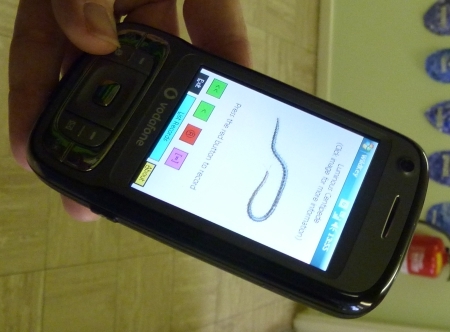
Get SmartExploration of different habitats in the local area or school grounds can include geotagging the photos taken. In Scargill Junior School, mentioned earlier, the children use the SmartPhones to take pictures of minibeasts , and the exact location of the insects is recorded at the same time, enabling them to find them easily again, and to place them on a map.

Anything involving measures of distance or altitude will not only thrill the geography teacher, but will be welcomed with open arm by the mathematics teachers too. For history teachers, also, the use of geotagging to explore where past battles took place must be an exciting prospect. You could also bring in a discussion of the impact of information technology on society: in England during WW2 rural place names and signposts were taken down so that the Germans would get lost if they managed to land on our shores. (See this set of Yahoo! Answers , especially #3.) How useful would that bluint approach be in this day and age?

Even the artists can get involved. You can find out how by going to Lesson Planet , where a multitude of suggestions for geotagging and using GPS-enabled devices will be found. You have to log in to find out the detail, but there are pages of ideas which subject specialists should be able to make sense of.

An example of geotagging you may have come across is the Clustr map . Seen on numerous blogs , this is a map showing where visitors have come from. Variations may also be found on widgets which proclaim when the last visitor arrived on the site, and where they are accessing it from, and the sort of thing I experienced when taking part in a Classroom 2.0 Live discussion , when as people joined the discussion they were invited to enter their location on a world map. 

This kind of thing is, I have to say, terribly exciting! It's fascinating to see how many people in different parts of the world are looking at your stuff. It engenders a sense of curiosity ("What country is that ?" ), and even a sense of responsibility: in some cultures some of the things we say and do would probably cause deep offence.

OK, so geotagging is fun, and educational, but where does Web 2.0 come into it? I think there is the obvious answer that the sort of thing I just mentioned msakes it interesting and more meaningful to collaborate with other people from a different location. On a more everyday level, it's possible to take a photo of something, say a restaurant, review the thing you've taken a picture of, and upload both to a site where anyone looking for a restaurant (say) in that area will come across your review and photo.

My own view is that geotagging is not so much an example of a Web 2.0 application in itself, but it is certainly one that can enhance what I would call the 'Web 2.0 experience'.

Other useful references:

Educational Geo-caching (especially pages 10-13)

Geotagging in education

Google Earth for Educators

JSchools use geotagging , wikis , iPhones to teach


Who Needs Drivers?

One of the stories featured in the next edition of the Computers in Classrooms newsletter is about driverless cars. This is at once both exciting and terrifying, so I think it will be interesting to look at under the topic heading 'technology in society'.

The concept is not new, of course. Work has been going on in this area for a few decades. Here in London, England, we have the Dockland Light Rail, which can do its thing with no driver.

So, in case you're intending to read that article,  here is a video I made back in 2006 about the Dockland Light Rail. Think of it as an advance organiser, cf Ausubel. (If you're not familiar with that idea, take a few minutes to go through the SlideShare presentation below.)


Vlog02.mpg
Uploaded by terryfreedman. - More college and campus videos.