
The term “guru” is bandied about all too often these days. But how apt is the term? I think for a person to be described as an education technology guru, the following criteria have to be satisfied. I’m basing these on my understanding of the role of a guru in traditional meditation practices. The guru there is an enlightened person who is helping others to achieve the same state of consciousness. So here is my set of criteria of ed tech gurudom.
Read MoreWhen BYOT becomes BYOW
 We’re now in the age of the smartwatch. Motorola launched its version very recently, and the Apple iWatch launches today. Bring Your Own Watch (BYOW) has been with us for ages, but the smartwatch introduces a new challenge to those schools which do not agree with the Bring Your Own Technology (BYOT) concept.
Ideas for the computing curriculum: #0 What box?
 In this series I’m going to be making some suggestions, putting out some ideas. These are based on presentations I’ve given. I can think of how these ideas, or their implications, might be applied in the classroom. However, I think it better if I stand back and let you do that part of the work!
One of the most depressing things for me is the degree of conformity I come across.
Ideas for the computing curriculum: #1 Talk to the lamp post
In this series I’m going to be making some suggestions, putting out some ideas. These are based on presentations I’ve given. I can think of how these ideas, or their implications, might be applied in the classroom. However, I think it better if I stand back and let you do that part of the work!
There’s a really good chance that in some schools, or in some classes, the computing curriculum will be just as boring as the old ICT curriculum was accused of being. I think the basic starting point for any scheme of work should be a simple proposition: using technology is mostly enjoyable. It can also be exciting. Therefore, learning about technology should be equally enjoyable and exciting. If it isn’t, something is wrong.
Should we welcome the nanocams?
I’m reading a short story by Ian Creasey called “The Edge of the Map”. In the world depicted by Creasey, automated cameras called “nanocams” take photos and newspapers (and other media, presumably) source their illustrations from the pool created by them. In other words, there is no need for specialist photographers.
This raises a number of interesting questions.
Preparing for the new Computing curriculum: What if #5
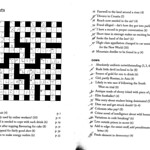 Would it be possible to create a self-referential puzzle or challenge? And if so, could it be helpful in the teaching of computing?
Preparing for the new Computing curriculum: what if #4
The new Computing curriculum is little more than a checklist. But what it lacks in detail, especially regarding progression, it more than makes up for in terms of the freedom it affords schools to interpret the new Programme of Study in a way that suits them.
Read MoreWith that in mind, have you ever researched your own area
Technology-inspired words are definitely buzzworthy!
 New words are always interesting, I think, and not just the ones that have been inspired by technology. But before I say any more about that, I feel the need to get something off my chest. Don’t worry, I won’t make this a long post: the last thing I want is people tweeting me to say TL;DR (too long; didn’t read).
7 Ways to make IT real: #1 Get local
 It’s easy to take your local area for granted, but try to see it with new eyes. Try to see it as if you were a tourist visiting the area for the first time. You may be pleasantly surprised to discover just how much is noteworthy from a computing or ICT point of view. Whether you want your pupils to simply notice the use of technology, or wish to get them to figure out how things work or even to create their own digital assets, you won’t be disappointed.
Smart street signs
 When I last visited Cambridge, England, I thought the street signs were pretty good. Rather than display how far away things are, they tell you how long it will take to walk to them: far more useful.
But a new idea, called Points, goes way beyond that.
Should websites have tip jars?
 In case you’re unfamiliar with the term, a tip jar is a device whereby people can contribute a donation to a website – a bit like the jars in cafes in which customers can drop a few coins by way of a tip to staff. Indeed, the websites I’ve come across that have tip jars tend to ask visitors to help them buy their next coffee in Starbucks.
Before we can go any further, is this an educational issue? I believe it is, or could be, for the following reasons
We are running a good service –you can see it in real time
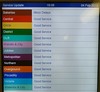 Here’s a photo I took recently on the London Underground. There are periodic announcements, static noticeboards, and electronic delays constantly assuring us that we are experiencing a good service. I presume it is intended to introduce a feel-good element into an otherwise mundane existence.
A 21st century skills paradox
 Every time I attend an educational ICT conference, at least one of the speakers talks about how little we know about the future. The refrain goes something like this:
- Kids entering school now will be leaving to join the world of work in around 2030.
- We can’t predict what the world is going to be like even in five years’ time, let alone 20.
- Therefore we need to teach kids 21st century skills (working as part of a team etc).
This all sounds profound and straightforward, but it really isn’t.