
Almost nobody needs a gasp of computer programming, and even fewer need to know how computers actually work.
Read More
That didn’t impress me much
On this day: Should the ICT Programme of Study be disapplied?
"The degree of ignorance displayed by people who seemed not to have read the Programme of Study, or to understand what the unintended consequences might be. “
Read MoreOn this day: Review of the Flip Video
This seems like a hundred years ago! Since the introduction of the Flip Pocket Video Recorder a couple of years ago, several variations on the theme have been put on the market, both by rivals and Flip themselves.
Read MoreIf you stop fiddling, will Rome stop burning?
This is an article I published around the start of Covid.
Read More
Terry thinking, by Terry
Revisited: Time to grow up?
From 2010: Here’s a thought. I like to think of myself as a glass half full type of person. So why all the doom and gloom about the apparent lack of Governmental support, in the UK, for technology in the classroom?
Read More
Why Subscribe to Blogs? My survey results + up-to-date data
In 2009 I invited readers to take part in a small survey asking the question "Why do you subscribe to blogs?". Here they are the results, updated with information from an AI app.
Read More10 reasons to use comics and cartoons in the classroom (Updated)
There are at least ten good reasons to use cartoons or comics in your lessons. This article explains what they are, with links to research and useful resources.
Read MoreI don't agree with Cognitive Load Theory (CLT). Here's Why -- Updated
A question: is Cognitive Load Theory another example of the emperor’s new clothes?
A daunting prospect, so what’s your motivation? Photo by Terry Freedman
On this day: Encouraging other teachers to use education technology
Gretchen Rubin talks about four kinds of self-motivation. Might this provide a way of thinking about how to encourage colleagues to use education technology in their lessons?
Read More

On this day in 2010: Review of the Dell Latitude 2110
 “Oooh!” “Ah!” “Oh my!”. Such were the collective gasps emanating from the Freedman household when I unpacked the Dell Latitude 2110 Netbook I’d been sent to review. Slim, striking and silent (but enough about me), the Latitude certainly makes the grade as far as aesthetics are concerned. But how does it actually perform?
On this day: What is good practice in ICT and Computing?
I suppose this article will ruin for good my chances of a knighthood, but I am finding it harder and harder to keep quiet on this subject.
Read More
Terry self-portrait, cartoonified, black & white, by Terry
Hubris in the world of education technology (Amended)
I believe that there's a fine line between letting people know you're an expert, and displaying too much self-regard. If keeping on the right side of that line proves a bit of a challenge, here are three "rules" that could help.
Read MoreOn this day: Ode to Code
"I wonder if it's possible to write a poem about coding", I thought to myself. Well, it is, and here it is. First Chaucer, then Shakespeare, and now me. No doubt schoolchildren of the future will be studying this for their Eng Lit exams, but in the meantime you can read it here first! Enjoy.
Read More
On this day: Manual labour: what's your documentation like?
Is your documentation well-written but useless?
Read More
Backlist: What I'm reading: Bounce
What does it take to become an expert? And what can the Computing teacher do about it?
Read More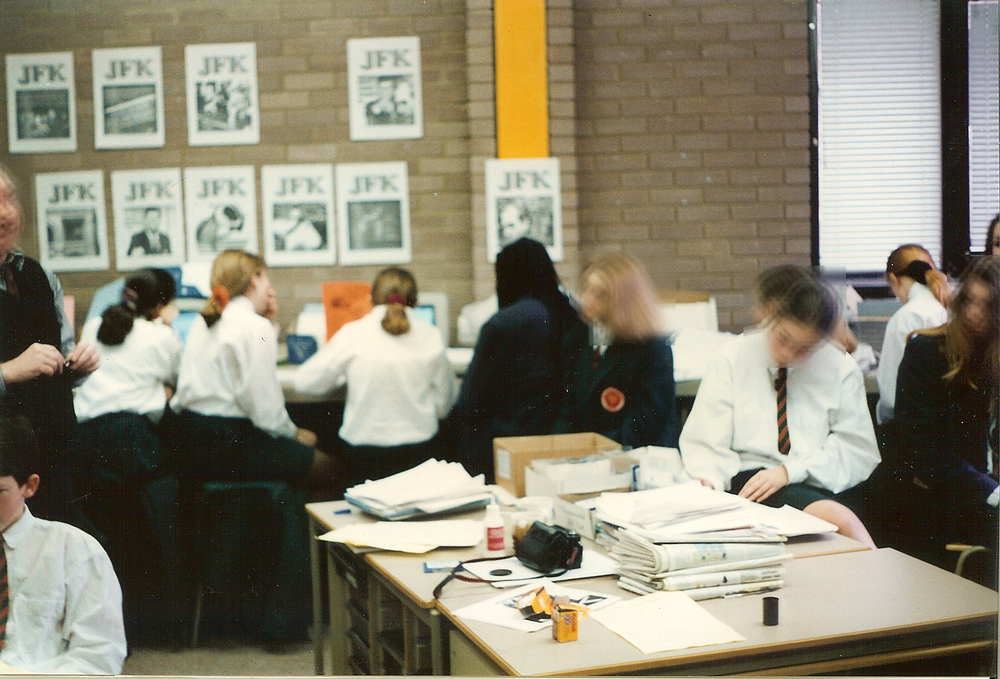
Photo by Terry Freedman
6 routines for Computing lessons Revisted
Routines are good, because pupils know what to expect. They are able to predict what is going to happen, and when. Some pupils, whose home lives are chaotic and unpredictable, may even feel safe because of routines. Here are some routines that I think are useful for Computing lessons.
Read MoreA rubric for assessment? What a joke! Revisted
A lighthearted look at rubrics as a form of assessment.
Read More
Graphic by Terry Freedman
Professional Development in Technology (Updated)
The key question to ask about anything in education is “So what?”. If you can’t answer that question truthfully and convincingly in terms of students learning outcomes, then why are you undertaking that activity?
Read MoreOn this day: Set trivial assignments for students of Computing stuck at home
Why set students real-world, life-changing, humanity-saving problems when trivial challenges are likely to prove equally, if not more, useful?
Read More