
There are several conferences coming up in computing, ICT and education technology. If you’re not careful, you could spend all your time and money going to conferences without getting any actual work done! Still, I do think it’s worth going to two or three a year if you can persuade the powers-that-be that it’s in their interests to allow you to attend. So, here’s the current listing. I’m not saying it’s a definitive list, just the ones I know about.
Read MoreInspiration for students of Computing (and other subjects)
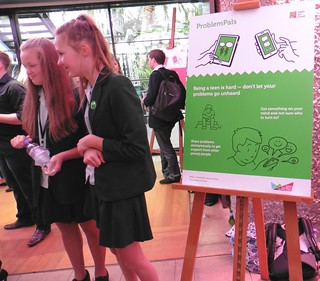 I attended the Apps for Good Awards last night. Very inspiring it was too. As always, the young people were very impressive. Whatever question I threw at them, they were able to answer it. But for now at least, I just wanted to repeat something that the co-CEO of Apps for Good, Debbie Forster, said at the end of the evening.
The Big Ten Educators
 Technology and Learning over in the USA has published a list of its choice of the top ten people in education. The list makes for interesting reading.
Everyone’s an educational expert, but it was ever thus
 Have you noticed how everybody seems to be an expert on education these days? In fact, you only have to pick up a newspaper more or less any day of the week to find some minor celebrity saying something asinine like “Schools should teach kids how to stay safe online” (Really? What a great idea. How come we didn’t think of that?!). I don’t take much notice of these people, but it does annoy me when they somehow get on to conference programmes.
7 questions to ask about big name speakers at education technology conferences
 I enjoy a good keynote, especially if it “delivers”. To my mind, a keynote should be informative, inspirational and entertaining. All too often, however, keynotes by so-called “visionary” speakers leave me feeling both uninspired and uninformed. I am left with having been entertained, which is all very well, but unless it’s an after-dinner speech I’m also left feeling cheated. So these days, where there is a choice between attending a celebrity speaker’s talk or that of an “ordinary” teacher who is doing great stuff in his or her classroom, I will almost always choose the latter. In fact, I have developed a kind of rubric that I follow when deciding whether or not to attend a celebrity presentation. It consists of a number of questions, which I’ve written up below. Feel free to use them if you think they are useful. Some of these questions cannot be answered until you have attended a talk given by the person in question. But you will know for next time.
Girls and Computing
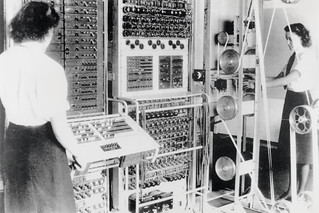 This is the first of three articles about girls and women in Computing.
On March 8th it was International Women's Day.
My impressions of Bett 2015
 By Ben Davies
The trip to the Bett Show has always stirred feelings of both excitement and anxiety and this year's trip was no different. The excitement stems from the chance to spend the day immersed in education technology
Digital Education: another update
Thank goodness: my mailing list company has managed to sort out its problems (see Digital Education Update), and everything is now working as it should. So if you wish to subscribe, here's the button that enables you to do so:
Read MoreDigital Education update
Last week I sent out an absolutely huge edition of the Digital Education ezine – see Digital Education Ezine April 2015 – and then waited for the number of subscribers to go up and down. And what happened? Absolutely nothing. My immediate response was to feel a bit despondent.
Read MoreDigital Education Ezine April 2015
 At last! Or, to use the vernacular, woo hoo! The latest edition of the Digital Education ezine is now out. It contains a round-up of products seen at Bett, articles on girls and women in technology, loads of links and book reviews. Here’s a detailed list of the contents:
Digital literacy is about asking the right questions
 Being digitally literate is not just about knowing how to use programs or being aware of copyright law. It’s also about being able to ask the right questions. This is another reason to have a news section in your Computing lessons
Coming soon: a bumper edition of Digital Education
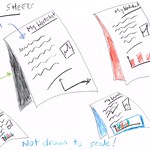 The next edition of Digital Education is super-huge. To give you some idea of just how big, there are 16 guest contributors. This is what’s covered:
Book review: The Long Tail, by Chris Anderson
From the archives
"The Long Tail" has been lauded and quoted at length. But what does the book actually say, and how does it stand up to scrutiny. In this lengthy review I give it a cautious "thumbs up".
Lovelace, Babbage and Me
 What’s the connection between Ada Lovelace, Charles Babbage, and me? Well, it’s a bit tenuous. Apart from the obvious, that we all liked computing (in effect), it is that they appear in a new graphic novel, and I love graphic novels.
Spreadsheets: vindicated at last!
 I’ve long been an ardent advocate of spreadsheets. They can be an invaluable tool in business, education or any other field in which planning, cost or both are paramount. As far as Computing and ICT is concerned, they can be used for teaching modelling and computational thinking. However, they have been denigrated as being “just” an office tool, far removed from the exciting world of coding or robotics.
The Thrilling Adventures of Lovelace and Babbage: The Book
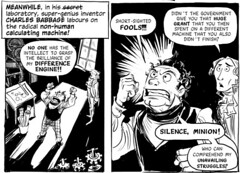 If, like me, you enjoy reading comics and graphic novels, and are interested in Computing, you may already be familiar with the blog called 2D Goggles Or The Thrilling Adventures of Lovelace and Babbage. This relates the story of the development of the Difference Engine and other aspects of the lives of Ada Lovelace and Charles Babbage. Their adventures are based on (mostly) real events and episodes, with a lot of poetic licence thrown in! I thoroughly recommend reading the adventures, and I suggest encouraging your students to do so too. It will help them learn about the development of computing and computer programming in an enjoyable way.
More testimonials about my Assessing Computing course
 I don’t usually like to blow my own trumpet/toot my own horn, but I thought these comments were so nice that I’d share them. I’m one of those people who, if I see a delegate looking a bit fed up, I start to wonder if they are going to storm out and demand their money back or something. I mean, it could be that they are worried about their gas bill, or that that is just their normal expression, but I start to worry anyway. So nice comments are always a bonus. Look at this one, for example:
Handsome, debonair and erudite, the presenter dazzled us with his brilliance and –
Oh, wait a minute. That’s my own self-evaluation.
A Self-publishing journey
Starting tomorrow, a new series of occasional posts about my research into self-publishing.
The first two articles are:
My funky new newsletter button
 I decided to change the sign-up button for my newsletter, Digital Education. Why? Why not? This is what it looks like now: