I submitted my review of this book to Teach Secondary magazine, an educational magazine in the UK. The first review below is what the magazine published. The second one is what I actually wrote! In substantive terms there is little difference between the two, but you may find it interesting to see what the editor altered.
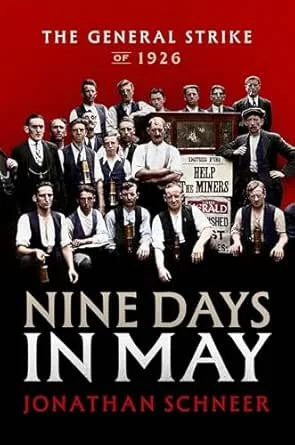
Nine Days in May: The General Strike of 1926
(Jonathan Schneer,OUP,£25)
The published review
The General Strike of 1926 arose from the grievances of coal miners, which led to the TUC calling out thousands of other workers in support. It was an abject failure, however, and this book explains why. The TUC didn’t want to so much defeat the government as replace it altogether in a general election – thus perhaps proving Wellington’s observation that the only thing worse than losing a battle is winning it. Moreover, the then Prime Minister, Stanley Baldwin, had spent considerable time planning for the possibility of widespread strikes. Nine Days in May is a highly detailed account of all this, and an object lesson in realpolitik that clearly highlights the disparities between the miners and the pit owners. My only criticism would be that it’s arguably too detailed, making it sometimes difficult to appreciate the bigger picture. Nevertheless, it’s a marvellous resource for economics and politics students.
My original review
Nine Days in May: The General Strike of 1926
(Schneer, OUP, £25)
The General Strike of 1926 arose from the grievances of coal miners which led to the TUC calling out thousands of other workers in support. It was an abject failure, and this book explains why. On the one hand, the TUC did not want to defeat the government, only to replace it in a general election, perhaps reflecting on Wellington’s observation that the only thing worse than losing a battle is winning it. And on the other hand, the Prime Minister, Baldwin, had spent a long time planning for the possibility of widespread strikes. A highly detailed account which forms a case study in realpolitik as well as highlighting the disparities between the miners and the pit owners. Perhaps one criticism is that it is arguably TOO detailed, making it difficult sometimes to appreciate the bigger picture. Nevertheless, this is a marvellous source for economics, economic history and politics students.
If you would like to comment on this article, subscribe to my newsletter Write! via this article: Compare and contrast #13.