
I’m working on the next edition of Digital Education, and it contains some really great articles. For example, Mel Thompson asks whether philosophy should influence educational policy-making, which may seem a bit outré but, surprisingly enough, there is much that advocates of “computational thinking” would agree with I think.
Read MoreDon’t say it with Tweets
 Now that the Christmas card season is almost upon us, I thought this item from a few months ago might be appropriate. I received a press release back in May (I'm slightly behind with my emails) which states that people prefer receiving handwritten 'thank you' cards rather than a quick tweet or text message.
The view from here... New Zealand, By Derek Wenmoth
 Derek Wemoth, the Director of CORE Education in New Zealand, tells us what's going on in his part of the world.
As the school year has not long started in the Northern Hemisphere, we’re looking ahead to the final term here in New Zealand, with summer on the horizon, along with exams and the usual end of year events.
Why school is still relevant in the age of technology
I find myself becoming increasingly irritated by people who say that we no longer need schools. The “argument”, if I can so dignify their pronouncements, seem to consist of the “logic” (ditto) that kids have lots of access to technology, and they can teach themselves how to use it, and therefore schools, and by extension teachers, are redundant.
Read MoreWhy should new teachers use social media?
It seems to me that the sense of belonging to an intellectual community is becoming less apparent in the staffroom, because of the need for schools to deliver on the latest half-baked, ill thought-out “initiative”
Read MoreThe things you can do with data! Part 1
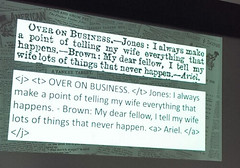 I found it difficult to sleep last night. The reason is that I attended a symposium yesterday, and was exposed to so many new ideas that I’m having to do quite a bit of processing. Actually, that’s quite exciting. I often enjoy conferences, but rarely come away buzzing from them. Now, I normally wouldn’t write about a conference so soon after attending it, but I wanted to bring a few things to your attention straight away. I’m sure you’ll find them interesting in their own right (at least, I hope you do), and you may wish to discuss them with your students. It’s all part of my quest to show that computing and ICT can be interesting and enjoyable, and not just for geeks.
Not about educational ICT…
Believe it or not, I write about other stuff too! In case you’re interested, I’ve just published articles about a conference and a couple of books for authors
Read MoreMoney, Money, Money
This article is not about education technology or related matters as such; it's more about my experience of attitudes to paying for work. It's worth reading, I think, if any of the following applies to you:
- you're thinking of asking a consultant to do some work
- you have some students who are running a business of some kind
- you are thinking of moving into consulting yourself.
An alternative view: Changing Paradigms, by Crispin Weston
Crispin Weston, who describes himself as "a controversialist", suggests that our outlook is not progressive at all. To quote:
Read More"... when we look at education technology, we find that almost nothing has changed at all."
11 criteria for evaluating a school’s education technology
 Whether you are moving to a new school, or staying where you are, it’s good to stand back and try to gauge what the school’s education technology is like. Why you would want to do that if taking up a new post is obvious: you want to see how the land lies so that you can start to identify any improvements that could be made.
Assessing Computing: Grids and Badges
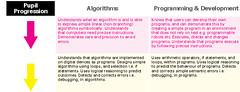 Since Michael Gove, England’s then Education Secretary, announced that Levels were not fit for purpose – the purpose being to assess and describe students’ proficiency in National Curriculum subjects – there has been a proliferation of attempts to assess Computing without using Levels. Many of these have taken the approach, quite naturally, of devising a progression grid of some sort. All the ones I’ve seen break the grid down into the Computing Programme of Study’s component parts
Digital Education new edition out now!
Did you know that today is International Ada Lovelace Day? Information about this, online poetry, journalism and novel writing, may be found in our latest newsletter. It’s a relatively short “interim” edition, but it’s still packed with lots of wholesome goodness!
Here’s the full list of contents:
Digital Education Out Now!
 Some news from Terry Feedman...
The October 2014 edition of Digital Education, the free ezine for those with a professional interest in educational ICT and Computing, was published a few days ago.
There are articles on research, a couple of cynical articles (Ambrose Bierce said that a cynic is someone who sees things as they are, and not as they ought to be!), and much more, covering digital literacy, computing, assessment and management stuff. Here’s the full list:
A rights rip-off
 In his newsletter OLDaily, Stephen Downes has drawn attention to a blog post by Paul Bradshaw, entitled “The Great British Bake Off copyright grab: We can use your #ExtraSlice Twitter images but not give you credit”.
Digital Education “Interim” Edition Out Now!
I’ve just published an ‘interim’ edition of Digital Education, the free newsletter for people with a professional interest in educational ICT and Computing. Here’s what it contains:
Read MoreThe Education Technology Guru test
The term “guru” is bandied about all too often these days. But how apt is the term? I think for a person to be described as an education technology guru, the following criteria have to be satisfied. I’m basing these on my understanding of the role of a guru in traditional meditation practices. The guru there is an enlightened person who is helping others to achieve the same state of consciousness. So here is my set of criteria of ed tech gurudom.
Read MoreDigital Education: the first edition of the year is now available!
 We’re in the first couple of weeks of the new school year here in England, and the first edition of Digital Education, our free newsletter, is now available! Pardon the exclamation mark, but the fact that it has now been published is a minor miracle. Right at the very last minute, I tried to delete a letter, and Microsoft Word went insane. It reform mated the whole document into just three pages, and hid most of it. I managed to retrieve it though — by selecting it all and then copying and pasting it into a new document. So, given that I almost threw the newsletter, my computer and the cat out of the window in frustration, I think an exclamation mark is more than justified!
Digital Education: Getting the year started
 Now that we’ve have had a week or so to get settled in to the new school year, I thought a short edition of the Digital Education newsletter would not come amiss. That will be published tomorrow, and here’s what it will contain:
Become an expert Google educator
Ed tech heroes get nervous too
I was struck by a comment made my Steve Dembo on Facebook recently. He said:
“I imagine that some day I'll stop getting nervous before presentations. But today is not that day”
I’ve met Steve: passionate, enthusiastic, a great speaker. I came across him via his blog and podcasts some years ago. I found him to be really inspirational, and was delighted to meet him at a conference a few years ago. So I was shocked to read his comment, though not surprised.