A depressing future for writers?
Read MoreFrom Tom Gauld’s Revenge of the Librarians


From Tom Gauld’s Revenge of the Librarians
A depressing future for writers?
Read More
My depiction of ChatGPT getting more and more frazzled by the number of assignments I throw at it — Drawing by Terry Freedman
Yes, it’s all over the internet, but ChatGPT is still worth looking at. I am compiling a list of useful (I trust) links, and have a few things to add to the plethora of comments already out there.
Read More
Taking place at the British Museum in London, the exhibition could be used to provide interesting perspectives or links to several subjects — including programming.
Read More
Experiment by Nick Youngson CC BY-SA 3.0 Alpha Stock Images
As a teacher, you’re meant to be the fount of all knowledge, right? Even if your teaching style is to be a guide on the side rather than the sage on the stage, you’re still expected to actually know stuff. Well, sometimes it pays not to know, or at least to appear not to know.
Read More
Video by Terry Freedman — nothing to do with the exhibition, but I thought it looked science fictiony.
There’s a great science fiction exhibition on at the Science Museum in London at the moment — until 4 May 2023. Science |Fiction is a great medium for discussing technology…
Read MoreI’ve been experimenting with using ChatGPT to write course outlines, and for one of the courses I compared the result with the outlines I had already written (and taught to). The results were interesting.
Read MoreI asked ChatGPT to write some dialogue advertising my newsletter in the style of a 1930s wise guy gangster.
Here’s what it came up with….
Read MoreI asked ChatGPT, and here’s what it said…
Read MoreEvidence-based education tends to be regarded in much the same way as Oscar Wilde viewed advice: useful for other people.
Read MoreThe idea of professional learning networks, or PLNs, has been around a long time. So what is there to say about them with regard to teachers’ professional development and wellbeing?
Read MoreBack in 1971, when computers in schools were barely conceivable, Seymour Papert and Cynthia Solomon produced a revolutionary paper. Reproduced in this book, their Twenty Things to Do with a Computer introduced teachers to the idea that programming could be used to engage children, release their creativity and still learn stuff.
Read MoreSeason’s greetings from Freedman Towers.
Read More
Section of an artcile records spreadsheet, by Terry Freedman
Although I haven’t been overly impressed with ChatGPT as a creative force, I have to say that I am impressed with it as an alternative to Google.
Read More
On This Day, by Terry Freedman
What if intelligent computers decide to look after us, and protect us from ourselves?
Read More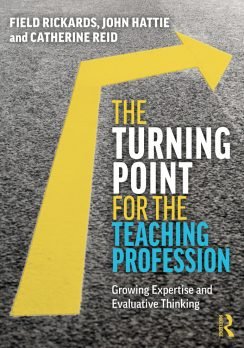
Click the image to see this book on Amazon (affiliate link)
Given that the government has laid down what must be taught, periodically pontificates on the ‘best’ teaching methods, goes so far as to indicate a preference for particular resources and has appointed an external organisation to oversee quality control, can teaching be truly thought of as a profession?
Read MoreAs ChatGPT is on everybody’s lips at the moment, I thought I’d revisit an article I wrote several years ago.
Read MoreAn interesting and lighthearted look at some of the problems arising from the Back to the Future movies.
Read MoreIt was when my wireless router told me that there was no printer on the network that I finally flipped.
Read MoreIt is a sad confirmation that the trope that education lacks any sort of collective memory is in fact well observed.
Read More
Image by Clker-Free-Vector-Images from Pixabay
This is a blast from the past. But kids are kids.
Read More(c) Terry Freedman All Rights Reserved