 How do you assess project-based learning? John Partridge explains how he has approached this issue.
Assessing project-based learning in Computing
How do you assess project-based learning? John Partridge explains how he has approached this issue. How do you assess project-based learning? John Partridge explains how he has approached this issue.
 Kathryn Day describes how she and her colleagues have approached the teaching of the Computing Programme of Study in Suffolk, England.
 In this series I’m going to be making some suggestions, putting out some ideas. These are based on presentations I’ve given. I can think of how these ideas, or their implications, might be applied in the classroom. However, I think it better if I stand back and let you do that part of the work!
I know that this is counterintuitive, but what if you devised an activity to teach programming or computational thinking, but instead of of just telling the kids what to do, you make them solve a problem first – by applying computational thinking or some elementary programming?
 In this series I’m going to be making some suggestions, putting out some ideas. These are based on presentations I’ve given. I can think of how these ideas, or their implications, might be applied in the classroom. However, I think it better if I stand back and let you do that part of the work!
One of the most depressing things for me is the degree of conformity I come across.
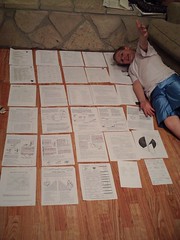 The use of worksheets is often derided. You hear expressions like “death by a thousand worksheets”, and even a Government Education minister (now ex-Minister for Education) has weighed in, saying that teachers should use textbooks instead of worksheets [1].
Leaving aside the observation that how teachers teach is, in my opinion, none of the Government’s business – it’s the equivalent of telling doctors to use electronic blood pressure monitors rather than the manual kind – there are perfectly compelling reasons to use worksheets in the Computing classroom.
 If you’re concerned that young children won’t be able to grasp computing concepts, or are worried about how you’re going to teach it, have a look around the Literacy from Scratch website.
Managed – and, I think, written by – Lawrence Williams, the website contains examples of pupils’ work in Scratch, cross-curricular ideas and examples, and notes on pedagogy.
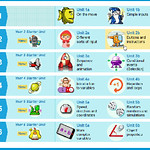 This application is designed to teach Computing at Key Stages 1 and 2 (a more sophisticated version for older pupils is being worked on).
What struck me immediately on using it is the amount of guidance available, both in verbal form and videos. There is quite a large range of modules to choose from, including “Starter” ones which take you through the basics and, where appropriate, recapitulate what has already been learnt.
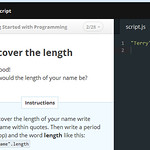 Code Academy is an online tutorial-based website for teaching yourself how to code. You can select which programming language you wish to learn, from the following list
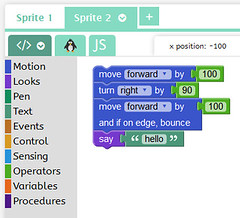 As usual, I gave this application a workout without seeking help from a manual or anything like that – which is just as well because there does not seem to be a comprehensive manual.
There are three applications in one: JIT5, LOGO and Visual. This is quite useful because if you are familiar with LOGO but not JavaScript, you can start pupils coding in an environment that is familiar to you. Also, if you teach very young children, JIT5 is highly visual and colourful.
An advantage of J2Code as a whole over 2Code is that it covers the age range from Key Stage 1 (5-6 year olds) to Key Stage 3 (13-14 year olds).
 Strangely enough, the most popular blog post on this website is 13 reasons to use educational technology in lessons. Why strange? Because I wrote it over three years ago. I re-read it recently, and (thank goodness!) I still agree with what I wrote all that time ago. I’d like to add more to it, but rather than do that I thought I would contribute to Mark Anderson’s series on this subject.
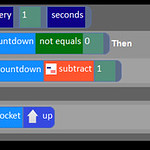 2Simple’s answer to the question “How can we teach coding to little ones?” is 2Code. The first thing that greets you when you go to the 2Code section of Purple Mash is the plethora of files to open.
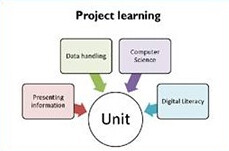 John Partridge, Assistant Head for eLearning, explains how Computing is taught through a project-based learning approach at his school.
I remember clearly looking at the first draft of the new curriculum and just being totally shocked by the degree of change. It had been clearly signalled that the new draft would be a step-change, but I didn’t appreciate the shift which was about to take place. Almost nothing remained from the previous programme, save a few references to digital resources and, in a later draft, safe use of technology. So it was clear that some serious work was going to be needed to make sure our school adapted.
 I've been giving talks on preparing for the new Computing curriculum, and as well as waxing lyrical that also involves listening to others' concerns. It also means hearing about some innovative approaches that colleagues have adopted.
At the same time, I have been conducting a survey of what people have been doing to prepare for the new curriculum. I'll be publishing the results in due course. In fact, some of the resources mentioned in the collection of coding resources in the early July 2014 edition of Digital Education came to my attention from that survey.
So, given that at the time of writing there's about 2 or 3 days to go till the end of term, what can you realistically do at this stage to prepare for September?
I’m reading a short story by Ian Creasey called “The Edge of the Map”. In the world depicted by Creasey, automated cameras called “nanocams” take photos and newspapers (and other media, presumably) source their illustrations from the pool created by them. In other words, there is no need for specialist photographers.
This raises a number of interesting questions.
(c) Terry Freedman All Rights Reserved