 By Ben Davies
The trip to the Bett Show has always stirred feelings of both excitement and anxiety and this year's trip was no different. The excitement stems from the chance to spend the day immersed in education technology
 By Ben Davies
The trip to the Bett Show has always stirred feelings of both excitement and anxiety and this year's trip was no different. The excitement stems from the chance to spend the day immersed in education technology
 At last! Or, to use the vernacular, woo hoo! The latest edition of the Digital Education ezine is now out. It contains a round-up of products seen at Bett, articles on girls and women in technology, loads of links and book reviews. Here’s a detailed list of the contents:
 Being digitally literate is not just about knowing how to use programs or being aware of copyright law. It’s also about being able to ask the right questions. This is another reason to have a news section in your Computing lessons
 The next edition of Digital Education is super-huge. To give you some idea of just how big, there are 16 guest contributors. This is what’s covered:
From the archives
"The Long Tail" has been lauded and quoted at length. But what does the book actually say, and how does it stand up to scrutiny. In this lengthy review I give it a cautious "thumbs up".
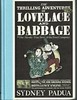 What’s the connection between Ada Lovelace, Charles Babbage, and me? Well, it’s a bit tenuous. Apart from the obvious, that we all liked computing (in effect), it is that they appear in a new graphic novel, and I love graphic novels.
 I’ve long been an ardent advocate of spreadsheets. They can be an invaluable tool in business, education or any other field in which planning, cost or both are paramount. As far as Computing and ICT is concerned, they can be used for teaching modelling and computational thinking. However, they have been denigrated as being “just” an office tool, far removed from the exciting world of coding or robotics.
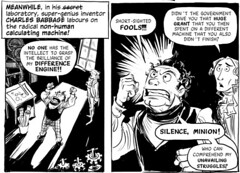 If, like me, you enjoy reading comics and graphic novels, and are interested in Computing, you may already be familiar with the blog called 2D Goggles Or The Thrilling Adventures of Lovelace and Babbage. This relates the story of the development of the Difference Engine and other aspects of the lives of Ada Lovelace and Charles Babbage. Their adventures are based on (mostly) real events and episodes, with a lot of poetic licence thrown in! I thoroughly recommend reading the adventures, and I suggest encouraging your students to do so too. It will help them learn about the development of computing and computer programming in an enjoyable way.
 I don’t usually like to blow my own trumpet/toot my own horn, but I thought these comments were so nice that I’d share them. I’m one of those people who, if I see a delegate looking a bit fed up, I start to wonder if they are going to storm out and demand their money back or something. I mean, it could be that they are worried about their gas bill, or that that is just their normal expression, but I start to worry anyway. So nice comments are always a bonus. Look at this one, for example:
Handsome, debonair and erudite, the presenter dazzled us with his brilliance and –
Oh, wait a minute. That’s my own self-evaluation.
Starting tomorrow, a new series of occasional posts about my research into self-publishing.
The first two articles are:
 I decided to change the sign-up button for my newsletter, Digital Education. Why? Why not? This is what it looks like now:
 This is a bumper edition that contains loads of articles, including contributions from Rose Luckin, Maddi Holt, student Ellie Gregson, student Caleb, pupil Anna, Alan Mackenzie and Simon Finch. Read on for the full list of contents.
 I thought you might like some information on the forthcoming edition of Digital Education, which includes a special e-safety supplement. It contains the following articles:
 Over the years I’ve become almost inured to the inanities of the online world, and especially their manifestations in the world of education. So when I received an email declaring “Congratulations, you have won an award!” my first thought was “Oh yeah? I suppose all I have to do is submit my bank details and complete a 38 page questionnaire over a premium telephone line.”
 Although I was good at statistics at university, it’s not an area that I especially warm to. However, even if terms like “grade point average” leave you cold, I think you have to collate some data to be an effective leader of education technology.
(c) Terry Freedman All Rights Reserved