
If you're told you'll be teaching Computing from now on, but don't feel competent to do so, what practical steps can you take in order to get up and running? Here are 12 suggestions.
Read More
4 Ways to come up with innovative ideas for teaching Computing
To borrow from Dr Johnson, I find that most innovative ideas in Computing I read about are both new and exciting. Unfortunately, the ones that are new are not exciting, and the ones that are exciting are not new. It’s all very well “pushing the boundaries”, but all that does is give you more of the same.
Read MoreAnother criterion of IT project success: nothing
You can end up being so focused on measurable criteria that you miss really important stuff.
Read MoreWhy Is The Curriculum Like a bus Timetable (updated)?
I’ve observed lessons in which the teacher feels obliged to race on in order to get through the scheme of work. That results in some, if not all, students being left behind.
Read MoreQuick looks -- The System: Who owns the internet, and how it owns us
[Links corrected!] My question is: will this be of any use to someone teaching computing, or to students learning computing?
Read MoreReview: Atlas of AI
This ‘Atlas’ takes students deep into the field of artificial intelligence which, according to Crawford, is actually neither artificial, nor intelligent.
Read MoreHow to use pupils to evaluate education technology resources
What people say, and what they do, can be two different things. I have had a situation in which pupils tell me materials are “boring”, having just spent 45 minutes working intensively with those materials without a break!
Read MoreIntroducing kids to programming via a spreadsheet sweet shop
Spreadsheets are dead, right? Wrong! Not only are they a great tool for teaching programming concepts, they can easily be addressed under the Computing programme of study.
Read MoreWhy your Computing department needs a library
Like all educators, computing specialists should read more than just material directly related to what they’re teaching. It’s about being, and being seen to be, an expert in the subject.
Read MoreTo be an ed tech maverick, you need to be sensible (updated)
What does it mean to be a maverick? To me, it means not going along with the general consensus about something, just because it’s a consensus. There is always a natural tendency to think “all those people can’t be wrong”, or “there’s no smoke without fire”, but in fact all those people could be wrong and there could be smoke without fire.
Read More
Book reviewing, by Terry Freedman
6 Graphic "Novels" for Computing teachers
If you’re looking for some good reading material, these “graphic novel” books may be just what you need. They’re all non-fiction, hence the quotation marks.
Read More10 Characteristics of a good Computing Scheme of Work
*UPDATED* What are the attributes of a good ICT and Computing scheme of work? Here's the list of characteristics I've always looked for.
Read More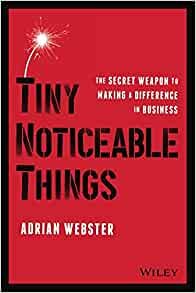
Click to see this on Amazon (affiliate link)
Tiny Noticeable Things
The following list contains examples of things I did in school that made life much easier for those on the receiving end. What might you do?
Read More
Old technology, by Terry Freedman
Choosing word processing software
It may be true, as we’re often told, that most people use only 20% of the features of Word and other “high-end” programs. That may tempt you to buy or rent less pricey software that do not have so many features. Although that makes sense, I think it’s a mistake.
Read MoreAn email discovery
A prime example of Sattingler’s Principle.
Read More
Nothing esoteric about this! VB example, by Terry Freedman
Esoteric programming languages
Programming languages are meant to be useful, right? I mean, I didn’t miss a memo or anything? That’s what I thought too. However…
Read More
Think outside the box, by Terry Freedman
Technology and communication: less leads to more -- Updated
When it comes to communication, being restricted is definitely better, ie more conducive to effectiveness, than having no limits at all.
Read MoreIn case you missed it: Converting an offline course to an online one -- ebook
This is a fairly comprehensive account of the steps I went through to convert a course from one I taught in a physical classroom to one I could teach online.
Read MoreIn case you missed it: Converting an offline course to an online one Checklist
In case you missed this when I posted it during half-term… I’ve written a long article about how I converted a course I’d taught in a classroom to one I was able to teach online. You can grab a checklist version of it in the form of a pdf by signing up to my newsletter, Digital Education, which is free.
Read MoreTackling tech troubles while teaching online (or avoiding them in the first place)
The following seven tips are based on my own experience, both as a tutor and a student, of things not going to plan.
Read More