Big ideas for ed tech leaders: What’s your self-talk?

HiatusWhen I was in my teens I wanted desperately to get involved in television production, especially the filming and editing side. So I was delighted when one day there was a the start of a new behind-the-scenes series about how television studios operate. Well, the presenter started off by saying, “This looks boring, all these cables and wires everywhere, but…”. Then, a few minutes later, “This is a boring part, but…”. After 15 minutes I switched channels. I’m not even sure that the series was completed. Who wants to be told that the thing they have given up their time to watch is ‘'”boring”?


Read More

Book review: Go on, bore ‘em: how to make ICT lessons excruciatingly dull

by Jacqui Wilson

BoredI received a very nice review from Jacqui Wilson, a classroom teacher in Tasmania. Is a book about what made ICT boring still relevant if the focus is on Computing? Well I think so, because the issues I highlighted with respect to ICT are in danger of arising again with respect to Computing. Anyway, read what Jacqui says about the book.

Read More

Digital Education December 2014: Double issue, Free resources, 50% discount on ebooks, 75+ links and 10 guest contributors

blog readingThe Spectator does it. The Economist does it. Even children’s comics do it. So I thought: Let’s do it. Let’s make a Christmas double issue of the Digital Education newsletter.

I’d like to be able to say I’d planned it that way right from the start, but that would be something of (to use Winston Churchill’s wonderful expression) a terminological inexactitude. In truth, the November edition was delayed due to a family illness, so it made sense to bring out a bumper edition now so people who subscribe have plenty to keep them going until January! I’ve included articles on a wide variety of topics:

Read More

Big data: is small beautiful?

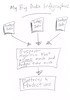
My Big Data InfographicAccording to the 2014 Horizon Report for K-12 education (ie Kindergarten to 18 years old), big data and analytics will be adopted by education within the next two to three years. Big data. It’s the current buzzword in education (one of several, at least), but what exactly is it? And is it really of any practical use? And should we be using it anyway?
Read More

The hidden dangers of doing digital business: what schools, teachers and students need to know

Diverted TrafficIn theory, setting yourself up to sell products on the internet is the easiest thing in the world. Once you’ve created the product, you upload it to a 3rd party platform that will handle all the sales and deliveries automatically, and you just sit back and watch the money roll in. If only it were as simple as that. But why would  a school want to do something like that anyway
Read More

Whiteboards: not dead yet

Getting Ready for OLED Technology - A Small Collage of Interactive Wall Applications on Our Smart Boards at the Interactive Interactive Show and Open Houses - Sheridan Interactive Multimedia One Year Post Grad College in OakvilleI heard an interesting snippet from Mike Cladingbowl, National Director at Ofsted, recently. He said that when interactive whiteboards were first introduced, Ofsted inspectors saw an increase in “chalk and talk”. Hardly surprising, because interactive whiteboards made chalk and talk, ie teaching from the front, easier.
Read More

Computing and ICT vocabulary

Vocabulary - Words Are ImportantTrawling through the articles published on my original website, I came across this one about vocabulary. Happily, the “new” publication it refers to is still available. Incidentally, I’m a great believer in paying attention to vocabulary and the correct use of correct terminology, so at the end of this “reprint” I’ve inserted a couple of references to other articles I’ve penned on this subject. The original article was published in 2008, and is shown in a different font, below.
Read More

26 + Tips for getting the most from your interactive whiteboards

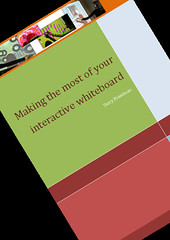
IWB Guide Cover (tilted)To borrow from Mark Twain, reports of the death of the interactive whiteboard have been exaggerated. Despite often being used ineffectively or even badly, it still has much to offer.

I’ve written a brief guide to making the most of your interactive whiteboard which I’ve called, logically enough, Making the most of your interactive whiteboard. Originally, this was in response to a request I received while teaching on a teacher-training course recently.

Read More

Assessing Computing: Grids and Badges

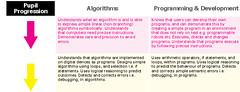
section of progression pathways gridSince Michael Gove, England’s then Education Secretary, announced that Levels were not fit for purpose – the purpose being to assess and describe students’ proficiency in National Curriculum subjects – there has been a proliferation of attempts to assess Computing without using Levels. Many of these have taken the approach, quite naturally, of devising a progression grid of some sort. All the ones I’ve seen break the grid down into the Computing Programme of Study’s component parts
Read More

How can teachers get to grips with computer programming, and where do we start? By Lawrence Williams

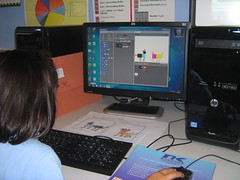
Pupil using Scratch, by Lawrence WilliamsMany teachers have been utterly dismayed by the seemingly impossible demands of the new Programmes of Study for Computing. How can we all suddenly develop a wide range of new skills in Computing? Can our pupils, aged from only 5 years, really understand, write, and debug computer programmes? It seems an impossible task. But help is at hand…. And from a teacher of English, with no Computing training! (Though with some experience in using ICT.)

Lawrence Williams explains.

Read More

Digital Education new edition out now!

Did you know that today is International Ada Lovelace Day? Information about this, online poetry, journalism and novel writing, may be found in our latest newsletter. It’s a relatively short “interim” edition, but it’s still packed with lots of wholesome goodness!

Here’s the full list of contents:

Read More