In case you missed it...
Nearly two years ago now I wrote an article here called What young people can do, and 7 implications of that.
I think its central points are still relevant, and I hope you agree and find the article useful and interesting.

In case you missed it...
Nearly two years ago now I wrote an article here called What young people can do, and 7 implications of that.
I think its central points are still relevant, and I hope you agree and find the article useful and interesting.
 To borrow from Dr Johnson, I find that most innovative ideas in ICT I read about are both new and exciting. Unfortunately, the ones that are new are not exciting, and the ones that are exciting are not new. It’s all very well “pushing the boundaries”, but all that does is give you more of the same.
In my opinion there are four main ways of generating ideas that are both genuinely new and genuinely exciting. Here they are.
 Yeccchhh!!!! That was my reaction every time I saw a colleague’s keyboard. Never mind the fact that there are more germs on the average keyboard than on an average toilet seat apparently, and that other people had to use this bloke’s computer occasionally. Even worse was the fact that he was a member of my team!
 In a recent post on his blog, Neil Adam discusses the idea of everyday items being connected to, or at least known about by, the internet. He also considers the fact that the whereabouts of things like clothing can already be tracked over the internet courtesy of technology such as RFID tags.
 Here is a list of predictions I made in 2001 about the classroom of the future. I’m pleasantly surprised about how accurate it has turned out to be – but I think it will be even more challenging to predict the next ten years because there are so many options opening up. What are your predictions for the next ten years? And is it worth bothering to make such predictions anyway?
 We probably all like to think that our first stab at something is going to be perfect. We tend to resent “helpful” suggestions, at least at first. Oscar Wilde, when asked if he could make a few changes to a play he’d written, quipped “Who am I to tamper with a masterpiece?”. However, editing usually makes things better rather than worse. The challenge is convincing youngsters (and others!) that suggesting some edits is not a reflection on their abilities or knowledge.
 Here’s a short video we made a few years ago (I’ve lost weight and had a shave since then) just to test out the then newly-acquired Flip video. Like a lot of writers I was talking about my two favourite subjects: me, and my books. But joking aside, there is a serious side to all this.
 Here’s an idea you might like to try, if you haven’t already: use your pupils to evaluate resources. After all, they’re the ones who are going to be using them! There are five main ways of doing so, not all of which are mutually exclusive. Here they are.
 When I saw several hundred people lining up for some sort of job registration recently, I immediately thought of the challenges of assessing pupils’ educational technology capability. A bit of a stretch? Not necessarily.
 Can you envisage a time when human beings will have relationships with robots? You could argue that to some extent we already have a relationship with electronic things (in my case, a love-hate relationship!), but can you imagine a time when we might marry robots, or have sex with them?
 It’s August in Britain, and it’s raining. In fact, I was reading today that the Meteorological Office has issued a severe weather warning for the South-East of England! So, a typical British summer in other words. What better time, if you’re still enjoying the school holidays, to visit an exhibition or two?
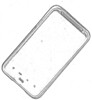 It’s strange, is it not, how certain linkages occur, what some would call coincidence , and others synchronicity ? Yesterday, the mobile phone was the common factor for me, and continued to play a part: I became so engrossed in responding to an email that I missed my station by two stops, and had to backtrack!
(c) Terry Freedman All Rights Reserved