
You might think that philosophy has little to do with education in general or Computing in particular, but the concept of “smart thinking” espoused in the following article by Mel Thompson certainly has resonance with “computational thinking”.
Read MoreEducation Technology Research Focus: Steve Wheeler
 Steve publishes the Learning with E's blog. The articles are not only very thought-provoking, they often also include references so you can follow up the reading for yourself. At the moment, Steve is writing a great series on learning theories. I asked him to tell me about his current research.
My Informatics scheme of work part 1
 I thought it would be interesting to dig out my scheme of work for Information Technology – as it was then then – from 1997. It was based on the Informatics scheme of work published by the now defunct organisation Acitt. Acitt was a subject association for ICT Co-ordinators. I helped to shape the Acitt scheme of work, but the one I used myself was a variation, adjusted to meet the circumstances pertaining to my school. I’ve reproduced it below.
Assessing Computing: the need for a manual override option
 When I was crazy about film-making as a teenager (see I was a teenage geek) I never liked using fully automated cameras. Yes, they were convenient, and they saved you the bother of having to think too much, and the results were passable. But they left no room for exercising one’s professional judgement. Using a camera with a manual override button enabled you to find out what the camera “thought” the aperture and other settings should be, and then use them as a basis for your own decision.
Big ideas for ed tech leaders: Know your data, part 2
I have already looked at the data you need in your role as leader of the subject Computing or ICT or similar. What sort of data do you need as e-learning co-ordinator or similar? Here’s what I think. Not every item on the list will be applicable to everyone’s situation, so take the bits that work for you and ignore the rest. I hope you find this list useful.
Read MoreBig ideas for ed tech leaders: Know your data, part 1
 Although I was good at statistics at university, it’s not an area that I especially warm to. However, even if terms like “grade point average” leave you cold, I think you have to collate some data to be an effective leader of education technology.
Big ideas for ed tech leaders: What’s your self-talk?
 When I was in my teens I wanted desperately to get involved in television production, especially the filming and editing side. So I was delighted when one day there was a the start of a new behind-the-scenes series about how television studios operate. Well, the presenter started off by saying, “This looks boring, all these cables and wires everywhere, but…”. Then, a few minutes later, “This is a boring part, but…”. After 15 minutes I switched channels. I’m not even sure that the series was completed. Who wants to be told that the thing they have given up their time to watch is ‘'”boring”?
Getting the Best out of Bett 2015: a reminder
 Bett 2015 kicks off in a few hours' time, so this is just a reminder that my guide to Bett 2015 is now available. It contains over 200 hints, tips, suggestions and opinions. It even contains a detailed floor plan -- the first such guide to do so! It's in pdf format, but as it's quite hefty I suggest you download it onto your phone or tablet and read it on the screen.
Big ideas for ed tech leaders: Who’s in charge?
Unless you’re fortunate enough to be able to have carte blanche over the design of your school, your technology budget, how Computing or ICT is taught, and who teaches is, you are going to be the inheritor of someone else’s legacy.
Read MoreBig ideas for ed tech leaders: Don’t focus on the goal
As an education technology leader you need to have a vision, you need to have goals. But once you have established the vision and goals, it’s a good idea to forget about them.
Read MoreBig data: is small beautiful?
 According to the 2014 Horizon Report for K-12 education (ie Kindergarten to 18 years old), big data and analytics will be adopted by education within the next two to three years. Big data. It’s the current buzzword in education (one of several, at least), but what exactly is it? And is it really of any practical use? And should we be using it anyway?
When it comes to coding, how secure is your network?
Darren Bartlett outlines the options.
Read More With a new Computing curriculum that focuses on students learning to code and writing simple programs it’s important for school ICT and Computing heads, teachers or those responsible for ICT/Computing to make sure their school network is secure and able to handle the new requirements without compromising the rest of the system.
Here are a few considerations to help with that and make sure your data is safe and the students can enjoy exploring new learning securely.
Encouraging girls to do computing: an economics approach
Discussions about getting more girls to do computing tend to focus on strategies like providing role models or some form of positive discrimination. Unfortunately, providing role models is not always easy, and I disagree with positive discrimination on principle. So what's the alternative?
Read More5 Tips about reporting to parents
 You may not always think so after a long and gruelling parents' evening, but parents are your friends! By keeping them well-informed of their child's progress, you not only keep them happy but also may be able to enlist their assistance.
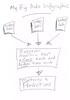
My Big Data Infographic
I’ve been working on a long-ish article about big data for my newsletter, Digital Education. To give you a hint of some of my misgivings, here is a diagram I prepared to illustrate some of my points.The art of execution
 A big problem which faces all organisations is actually getting things done. So, if you are an ed tech leader, what can you do about it in your school or department? Here are 5 key actions to take.
The view from here... New Zealand, By Derek Wenmoth
 Derek Wemoth, the Director of CORE Education in New Zealand, tells us what's going on in his part of the world.
As the school year has not long started in the Northern Hemisphere, we’re looking ahead to the final term here in New Zealand, with summer on the horizon, along with exams and the usual end of year events.
Schools’ approach to assessment without Levels
 When Michael Gove told everyone that Levels were not fit for purpose, so we don’t have to use them, we were given a great opportunity to rethink how we assess students and how to report our judgements. Unfortunately, I have had the distinct impression that many of us were finding it hard to do so. It seems that I was not imagining it.
New ideas for a new Computing curriculum
 I had the pleasure of attending one of the RM Technical seminars recently, and it was well worth the time. The event was divided into several strands. I chose the Curriculum and E-safety option rather than one of the more technical ones.
As well as a very entertaining keynote lecture by Sir Ranulph Fiennes, there were three sessions:
An alternative view: Changing Paradigms, by Crispin Weston
Crispin Weston, who describes himself as "a controversialist", suggests that our outlook is not progressive at all. To quote:
Read More"... when we look at education technology, we find that almost nothing has changed at all."