
Just in case you hadn’t realised I’ve updated my original post about this several times, here is a list of the conferences I mentioned, in alphabetical order.
Read MoreConferences coming up
There are a few conferences coming up in England which you may find useful. Note that this is by no means an exhaustive list!
Read MoreInternet safety report
 Concentrating purely on web filtering to keep kids safe online is a bit like looking for your keys under a lamp post because, although you lost them somewhere else, it’s lighter there. A third of children in Europe access the internet from a mobile device, according a new report:
33 % of 9 to 16 year-olds who go online say they do so using a mobile phone or other handheld device.
Computers in Classrooms
The latest issue of Computers in Classrooms has just gone out. Here’s why you should subscribe…
Read MoreWhat makes a good ICT role model?
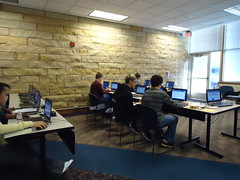 In England we have a weekly soap set in a school called Waterloo Road. This has everything you would hope not to find in a school: inappropriate behaviour, theft, even attempted murder – and that’s just the staff. The kids are pretty OK by comparison: teenaged pregnancy, illegal drug-taking and gangs. Strangely enough, there doesn’t seem to be more than 30 kids on roll, judging by the number of people who attend whole-school assemblies. But my main interest is this: what (good) use of technology is shown in this programme?
ICT: Irrelevant Curriculum Today?
 ICT teacher Nigel Willetts discusses ICT qualifications and their associated syllabuses. This is a longer-than-usual article, but it's a great rant read. Enjoy!
I apologise in advance. What follows is a rant! Terry was forewarned! However, the purpose of such a rant is to instigate a debate with regard to what we, as ICT teachers/specialists are expected to deliver and examine our pupils on in our schools. The focus is firmly on the GCSE/AS and A2 ICT curriculum. I am not even sure if I have any tangible answers myself, but, in my experience of educationalists, we all love a good rant/debate, don’t we?
Should the ICT Programme of Study be disapplied?
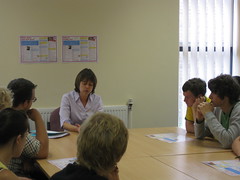 Yesterday I submitted my response to the English Government’s consultation on the issue of whether the ICT Programme of Study should be disapplied from September 2012. The consultation period ends today. I think responding is a very important thing to do, for reasons I’ll go into in a moment, but first, an explanation to readers not living in England, or a reminder to those who are.
In a nutshell, and somewhat paraphrasing, Michael Gove, Secretary of State for Education in England, said:
ICT and poor journalism
 I attended a Westminster Legal Forum event about libel reform today, and someone asked whether bloggers were “real” journalists (or something like that). That sort of question implies that bloggers are somehow inferior to genuine journalists. I have to say, however, that when it comes to reporting on education policy, “proper” journalists do not always acquit themselves well in terms of accurate reporting. This was especially true in January 2012 in response to Michael Gove’s speech at BETT.
Don’t blame the technology
Technology can help a good teacher do wondrous and wonderful things – but bad use of technology is worse than no use of technology, in my opinion. There is, possibly, one exception to this general rule, which I will get to in a moment. What has brought on this sudden dazzling insight (well, it isn’t really instant, and it probably isn’t dazzling, but this is my blog so I can say what I like). An anti-ICT dogma diatribe by the behaviour guru, aka Tom Bennett.
Read MoreBring your own technology
 If ever there was an idea whose time has come, it is surely Bring Your Own Device or, to be less restrictive, Bring Your Own Technology. There are at least two comp0elling reasons for this.
What does a good ICT school look like?
I was asked yesterday what a good ICT school looks like. The question threw me momentarily, and the fact that it threw me threw me as well: a sort of meta-throwing. Then I realised why: I don't think you can tell whether a school is good at ICT just by looking. All that looking does is help you make some working assumptions which you can then, one hopes, test out.
Read MoreAutomated report writing
 I have never met a teacher who enjoys writing reports. If you have one or two small groups, it’s not too bad, but if you have ten different groups of thirty kids, crunching out 300 reports is a bind. And, often, a pressured bind at that, shoehorned between exam results and end of term. But with any luck, a new breed of software could spell the end of such drudgery.
ICT consultant or ICT interim manager?
 What are the differences between a consultant and an interim manager?
It may be the case that you do not need to appoint a full-time employee for the post of educational technology manager.
Using an ICT consultant
Given that consultants as a species have a pretty dreadful reputation, why should a school even consider using one? There are several reasons you might want to hire an educational ICT consultant:
Read MoreComputer Science courses should be left to the experts: teachers
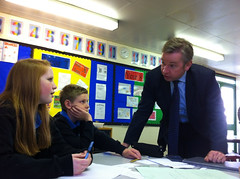 It’s astonishing how everyone is an expert on school education these days. Everyone, that is, except the people who actually work in and with schools. The latest half-baked idea appeared in the BETT opening speech by Michael Gove, the Education Secretary for England & Wales. Here’s what he said:
Universities, businesses and others will have the opportunity to devise new courses and exams. In particular, we want to see universities and businesses create new high quality Computer Science GCSEs, and develop curricula encouraging schools to make use of the brilliant Computer Science content available on the web.
This is a dreadful idea for several reasons.
Technology & Learning Editor Kevin Hogan Interviewed
 I had the pleasure of meeting up with Kevin Hogan again at BETT this year. Kevin is the Editor of Technology and Learning, which is a good magazine, a great website, and a brilliant blog and a new international blog. In this short video he talks about BETT, and the differences between educational technology in the USA and the UK, as well as his plans for the magazine.
4 Reasons that the ICT Programme of Study “had” to go
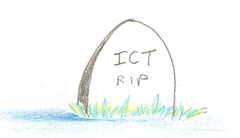 The fate of the ICT Programme of Study could have been predicted accurately long before Judge Gove donned his black cap and passed the death sentence. After several years of what might be justly described as a “war of attrition”, the weight of the “evidence”, such as it is, made such an outcome unavoidable.
This article is not, to continue the analogy, meant to be the beginning of an appeal process
Education Technology and ICT at BETT 2012: 7 Things to do afterwards
 There is always a danger that no matter how good an event is, it will turn out to have very little impact in the longer term, as you forget what you saw and more pressing concerns vie for your attention. Here are 7 suggestions for preventing that from happening.
Educational Technology: Unofficial BETT Guide, a reminder
Developments in Eduucation Technology: Reflections on the first day of BETT
For me, the day can best be characterised as one of mixed feelings and divided loyalties. To be sure, there was all the excitement and adrelain-inducing "buzz" for which BETT is noted, and why it ought to be prescribed on the National Health Service as a cure for "the blues", but the experience was not one of unadulterated pleasure.
Read More