
I submitted my review of this book to Teach Secondary magazine, an educational magazine in the UK. The first review below is what the magazine published. The second one is what I actually wrote! In substantive terms there is little difference between the two, but you may find it interesting to see what the editor altered.
Read MoreReview: Finding Fibonacci: The Quest to Rediscover the Forgotten Mathematical Genius Who Changed the World
Finding Fibonacci is a memoir of the authors’ quest to find out about Fibonacci.
Read MoreReviews: Two for History teachers
Two books on the Nazi era.
Read More
The Digital Education newsletter, by Terry
Do newsletters, websites or other online resources need to be super-fancy?
A couple of years ago someone said to me that they like my newsletter, Digital Education, although it looks a bit old-fashioned. I thought about that, and whether I wanted to update the look of it, but decided not to, for two main reasons.
Read MoreReview: Craftland: A Journey Through Britain's Lost Arts and Vanishing Trades
A book that offers a glimpse into the way traditional crafts were practised before the Industrial Revolution.
Read MoreReview: Listen In: How Radio Changed the Home
A couple of generations before the first internet cafés were opened, someone attempted pretty much the same thing by opening a ‘radio café’.
Read MoreReview: The Library of Ancient Wisdom: Mesopotamia and the Making of History
There's a really interesting section in this book about how ceramic storage of data and information is probably the most likely medium to stand the test of time.
Read More

Quick look: Hitler's People
Yes, I know that this has nothing (ostensibly at least) to do with ICT or Computing, but I thought it might be an interesting book in general, and for history teachers in particular.
Read More

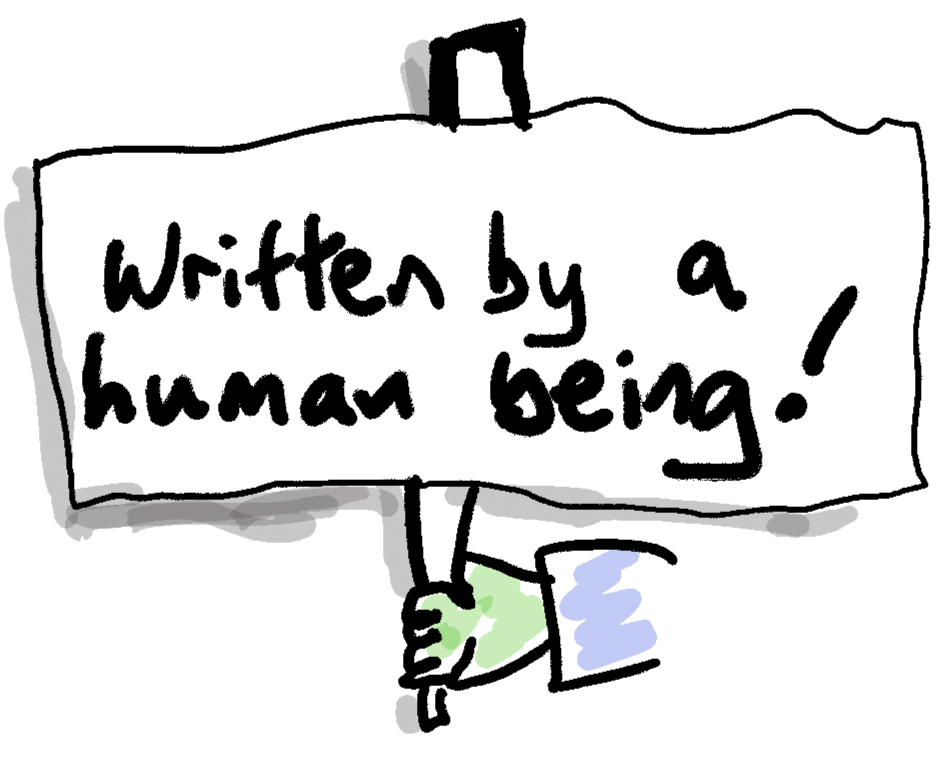
AI for bloggers?
In my recent blogging course, I abandoned my carefully-prepared lesson, or part pf it, threw caution to the winds, and suggested to the class that we experiment with using AI for writing blog posts. Here’s a partial blog post it came up with, which you will agree is utter rubbish…
Read MoreAh, those were the days -- not
Here at Freedman Towers I have been trawling through the archives, hoping to salvage something of my legacy to donate to the nation, or indeed the world. Anyways, all joking aside, I came upon this email I wrote…
Read More#Flashback Friday: Sexism in computer stores
In 1994 I set out with my wife to discover the best place to buy a computer system -- and discovered a lot of sexism along the way.
Read MoreResources, copyright, useful tips for using education technology in the classroom
This issue of my Computers in Classrooms newsletter, dates from 2001. I am reproducing these newsletters partly in order to make sure that some of the history of using education technology is preserved, and partly because some of it is still relevant. That applies especially to the Tips section.
Read MoreOfsted, National Curriculum and other edtech stuff
This newsletter, from 2001, demonstrates four main things….
Read MoreReview: Teaching Machines
There seems to be no end of attempts to improve education by people who have either never worked in it, or not understood what they were looking at.
Read MoreReview: Teaching Machines (for SchoolsWeek)
Here is a very strange paradox. On the one hand, everyone agrees that a key ingredient for success in life is having great teachers. On the other, there’s a relentless narrative that education is somehow broken and that fixing it entails replacing teachers or transforming some or all of what they do.
Read MoreBack through the time tunnel: techno-romanticsm
Having to wait a week for computer results may have been fine at the time, because we knew no better. But who in their right mind would look back on all that as some kind of golden age?
Read More
Planning, by Terry Freedman
Implementing a whole-school IT policy
Here is the very first article of mine that was published in an education magazine. Not all of it is relevant today, but perhaps surprisingly much of it is.
Read MoreBroadband in schools -- circa 2003
If you look up broadband in schools, the story these days is that the provision is deemed “inadequate”. I think that’s a lot to do with how aspirations have risen over the past couple of decades, and is therefore a good thing.
Read More
Archives, by Terry Freedman
The Key Stage 3 ICT Scheme of Work, NOF Training, and other issues in 2000
“There are people around now who are 17 years old. They started formal schooling when they were 5 years old -- in 1988. And some of them have come out of school not knowing one end of a computer from the other!” I hope this still isn’t the case today, but then I tend to be an optimist.
Read More
On this day, by Terry Freedman
On this day #8: You mean this technology is new???
It really is quite an eye-opener when you discover kids’ idea of tech history!
Read More