Two new free publications are now available for subscribers to Digital Education.
Read MorePhoto from www.pixabay.com CC0


Photo from www.pixabay.com CC0
Two new free publications are now available for subscribers to Digital Education.
Read More
Read all about it. Picture from www.pixabay.com CC0
What you may have missed in the pre-Christmas Digital Education newsletter, and what's coming up in the next one.
Read More
From The Thrilling Adventures of Lovelace and Babbage (c) S. Padua
Enter for a really easy competition to win one of three copies of The Thrilling Adventures of Lovelace and Babbage. Entries close on 10th January 2016.
Read More
You could let Grammarly take some of the strain of proofreading. Photo by Pink Sherbert Photography https://www.flickr.com/photos/pinksherbet/
Read about a proofreading tool that works on the web -- and maybe win a free subscription.
Read MoreThis article contains details of 20 websites for creating free cartoons and comics, plus Scratch, educational blogging, creating games, old sounds, and the international space station.
Read MoreNews, reviews, two competitions, free resources, interesting reading, a new Computing scheme of work, and women in computing -- just some of the stuff featured in the new issue of Digital Education. Subscribe for free!
Read MoreThe sign-up buttons for the Digital Education newsletter have been in place for ages. So why was there a sudden drop in subscriptions?
Read MoreDiscussion lists, blog posts, teachers' guides and competitions are all featured in today's article.
Read More I don’t know what the opposite of “bumper” is (as in “stupendous, 200 page bumper edition”), but the latest issue of Digital Education is small – but perfectly formed. Here’s what it contains:
 I’ve been trawling through the archives again (I don’t get out much). The following appeared in the very first edition of my newsletter, which was originally called Computers in Classrooms (but is now called Digital Education), on 3rd April 2000:
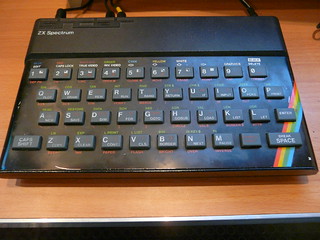 In this, the last of a three-part series on girls and women in computing, PhD student and Further Education lecturer Amanda Wilson describes how an early interest in computing followed by picking up everything she could while working led to a dream job.
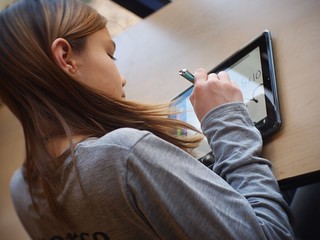 In this, the second of a three-part series about girls and women in Computing, school student Ellie Gregson suggests why girls tend not to choose STEM subjects.
Young people love to use technology. In school, we jump at the opportunity to use the iPads for research, or to use laptops for typing up essays or creating PowerPoints in class. In my school, when an iPad trolley is dragged into the classroom at the start of a lesson, there is always a race between the students to the front of the classroom, desperate not to have to share it with others, or be stuck with a tablet with a 10% battery life remaining.
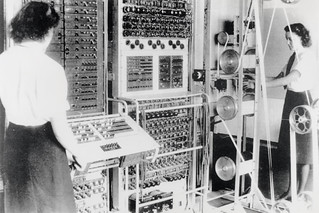 This is the first of three articles about girls and women in Computing.
On March 8th it was International Women's Day.
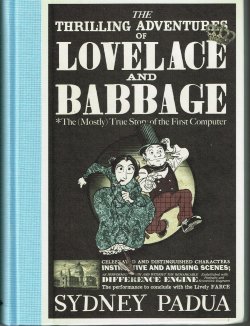 Ada Lovelace died young, at the age of 36, and Charles Babbage never built his Analytical Engine. Had Lovelace lived, and had Babbage actually built his invention, the computer would have been invented a hundred years before it was.
Isn't that an astonishing thought?!
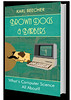 Have you ever studied Computer Science? If not, teacher Roger Davies, who teaches at Queen Elizabeth School, Kirkby Lonsdale, Cumbria urges you to read a wonderful new book.
 By Ben Davies
The trip to the Bett Show has always stirred feelings of both excitement and anxiety and this year's trip was no different. The excitement stems from the chance to spend the day immersed in education technology
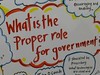 At last! Or, to use the vernacular, woo hoo! The latest edition of the Digital Education ezine is now out. It contains a round-up of products seen at Bett, articles on girls and women in technology, loads of links and book reviews. Here’s a detailed list of the contents:
(c) Terry Freedman All Rights Reserved