Here are three competitions in which you may be interested. I have not added any of my own comments or editorial, in the interests of posting this information as quickly as possible.
There are some exciting opportunities here: don’t miss them!

Here are three competitions in which you may be interested. I have not added any of my own comments or editorial, in the interests of posting this information as quickly as possible.
There are some exciting opportunities here: don’t miss them!
 With the new Computing Programme of Study looming on the horizon, there are a number of conferences and other events coming up in the near future. Here’s a list of some of them. The Education Show isn’t specifically about ICT or Computing, but there are seminars in those areas so it’s definitely worth looking at.
 I had the pleasure of attending a summit at the Royal Society of Arts last week. Entitled Skills for the 21st Century Summit, the event was designed to launch the “Year of Code” with as much razzmatazz as could be mustered.
And it worked. There was a great buzz throughout the day, and I came away buzzing and full of enthusiasm – though I suspect not for reasons that the organisers had in mind.
 I have a problem: the numbers don’t stack up. According to Lottie Dexter, Director of the Year of Code, teachers can learn how to code in a day.
 One of the justifications for teaching computing and coding is that “computational thinking” is a useful skill for pupils to have, in order to apply it in wide variety of situations. A worthy aim, but I’ve heard very few convincing examples given. Actually, I don’t think I’ve come across any examples of how pupils might use computational thinking in a broader context, or how it applies beyond the relatively narrow confines of computer science.
However, Anna Shipman, a software developer, currently working for the Government Digital Service, believes that a software development approach can and should be taken in other areas of life. In particular, she relates how it proved useful in the context of fixing a leaky roof.
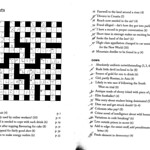 Would it be possible to create a self-referential puzzle or challenge? And if so, could it be helpful in the teaching of computing?
 So, there you are, basking in your new-found freedom to report to parents what their children can actually do in Computing and ICT, when the data impresario in your school says they want you to supply the school office with a “Level” for each child. And for good measure, they want you to do that four times a term in order to monitor progress. How should you respond?
With that in mind, have you ever researched your own area
 John Donne wrote that no man is an island; he might have said the same thing about schools. Many schools have a mindset perhaps best described as “splendid isolation” – except that there is nothing splendid about it. In fact, in many cases it is just plain daft. Here are my reasons for saying so.
 This article considers the need for computing and ICT to be taught by experts in those subjects. Anything less simply will not do.
 Preparing for the new curriculum doesn’t have to be as difficult as it might look. Here’s a suggestion that you may like to consider, although it won’t be appropriate if you teach very young children.
 I am a member of Computing At School, and every day someone uploads a new scheme of work for the new programme of study. IT’s fantastic to have so much good stuff to choose from. It’s also a bit overwhelming if you’re not sure where to start in the first place.I believe a lot of people are worried by the forthcoming Computing Programme of Study, judging by the number of people I’ve spoken to who say they have not yet begun to think about it. And that is quite understandable. Although looked at from one point of view it is more of a change in emphasis from the old one, there is also a lot more required in terms of computer programming and related matters. Schemes of work will need to be modified – I don’t think they should need to be completely rewritten if you have been teaching to the old ICT programme of study properly. This is the first in a series of posts that aim to encourage you to think about the new programme of study, perhaps in a new way. It is based around a keynote talk I gave a short while ago.
On this date 4 years ago I published an article that I think is still relevant today.
It strikes me that, what with a new Computing Programme of Study coming into effect in September 2014, ie under a year’s time, Getting permission to go on an ICT course or to a conference is rather timely. Teachers of ICT having to become

Hi, Richard Smith here from Igloo in Education. I am delighted to have been asked by Terry to do a guest blog post on the 3D print show that took place in London from 7-9th November.
The venue of the event, the Business Design Centre in Islington, sent out a clear message out to visitors: 3D printing should be about innovative design and the encouragement of original business ideas. Of
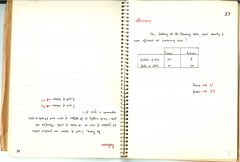 When, on my teacher training course, I was told I had create a resource to be used in school, I thought it would be fun to devise a programmed learning guide to the economic concepts of absolute and comparative advantages. Unfortunately, that was in 1974. Word processors were not yet ubiquitous, and home computers had not yet been invented. That came a year or two later. In any case, when I finally did get my hands on a word processor, courtesy of a friend of mine on my MA course, it was slo-o-o-o-o-w.
I once mentioned to the kids I was teaching how useful I found having CD-ROMs to store stuff on. “What?!”, they said. “You had CDs back then?”
Young people always seem to have a working assumption in life that the technology they use only came into existence when they did. Anything else is ancient history. With that in mind, perhaps your pupils will find the infographic below useful and interesting. It charts the development of data storage and recovery from the time of Babbage, in 1834. Along the way there are interesting articles, photos and videos.
 One way you can “get into” computational thinking is through spreadsheets. Taking a practical view of what “computational thinking” means (see What is Computational Thinking?), I’d say that spreadsheets definitely fit the bill. In order to try to solve a problem using a spreadsheet, which is a tool for modelling or simulation, you have to do the following things:
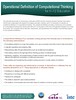 There is quite a bit of information on the web about computational thinking. Some very deep and learned stuff too. But I am very much a “one side of A4” kind of guy, so I was very pleased to discover this one page flyer about it.
(c) Terry Freedman All Rights Reserved