
The authors spent a year sending each other postcards on a different theme each week, with pictorial representations of the data they had collected.
Read MoreReview: Blueprints: How mathematics shapes creativity
What place might Blueprints merit on a teacher’s bookshelves?
Read MoreReview: Renaturing: Small Ways to Wild the World
This book could prove useful to schools keen to cultivate their own dedicated ‘back to nature’ area.
Read MoreReview: Listen In: How Radio Changed the Home
A couple of generations before the first internet cafés were opened, someone attempted pretty much the same thing by opening a ‘radio café’.
Read MoreReview: Level Up Your Lesson Plans: Ignite the Joy of Learning with Fun and Educational Materials
This book is awash with ideas.
Read MoreReview: Conversations With Third Reich Contemporaries: : From Luke Holland’s Final Account
This may be useful for the Hiostory department in your school.
Read More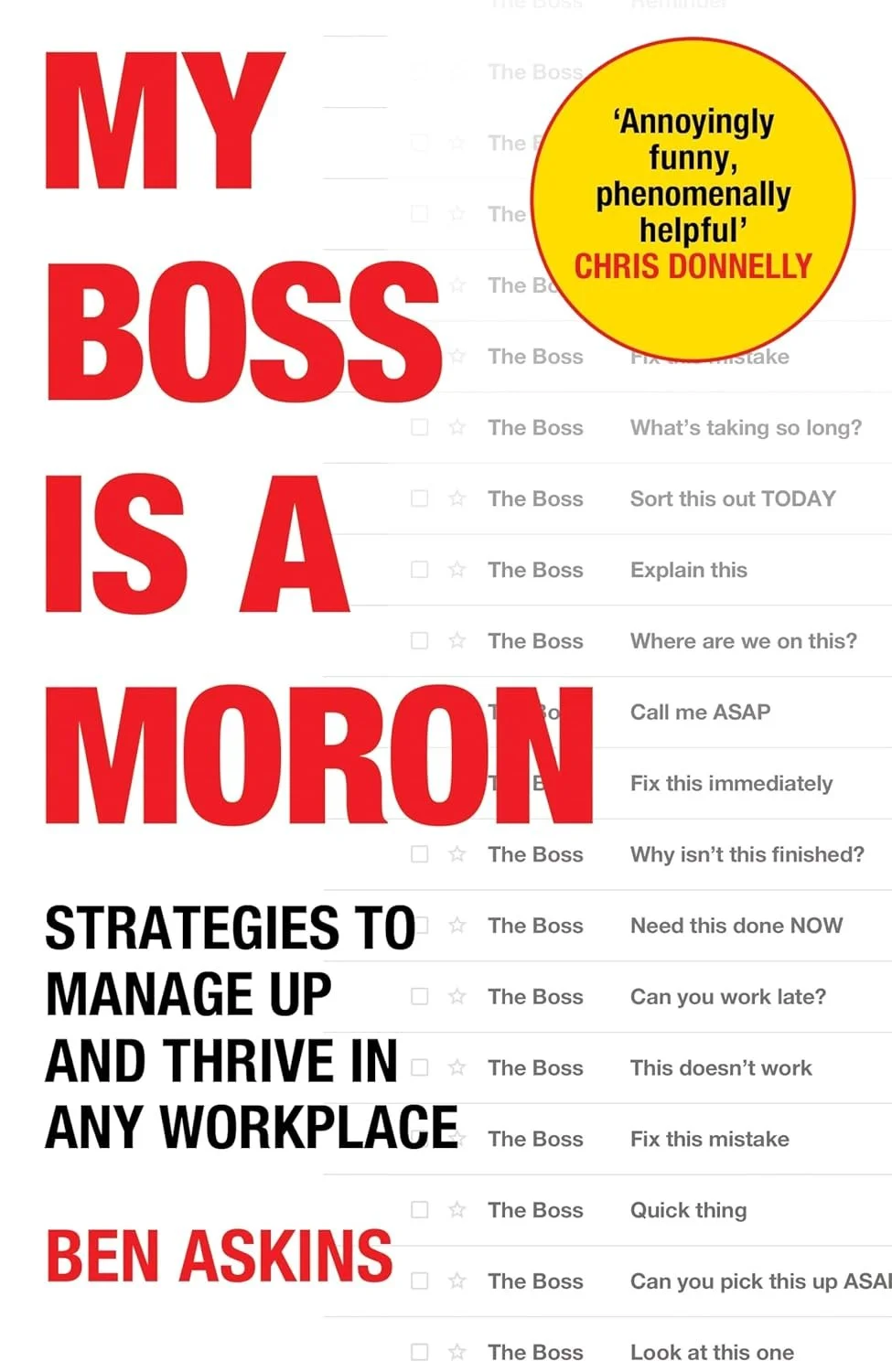
Click to see this on Amazon (affiliate link)
Quick look: My boss is a moron
I borrowed this book from the library yesterday and have had to stop reading it.
Read More
Review: The Illusionist Brain: The Neuroscience of Magic
I was surprised to read some of the clearest explanations of neuroscience I've yet come across.
Read More
Review: The Great Exchange: Making the News in Early Modern Europe
In Wren's telling, the real history of the news isn't just a chronology of technological inventions.
Read More
Review: Nature's Memory
One would think that the stories told by the exhibits in natural history museums are reasonably objective and factual, but apparently not.
Read MoreQuick looks: Listen in: How radio changed the home
Back in the 1930s, radio was the cutting edge technology in the home.
Read More
Backlist: What I'm reading: Bounce
What does it take to become an expert? And what can the Computing teacher do about it?
Read More


A book review for your English department colleagues perhaps
Some of these stories are so richly told, it can almost seem as though you’re right there with him.
Read More
Review: Pen Names
OK, so this has nothing to do with education technology, but we all read (I hope!). A very interesting examination of the pen names some authors have adopted, and why.
Read MoreReview: The Library of Ancient Wisdom: Mesopotamia and the Making of History
There's a really interesting section in this book about how ceramic storage of data and information is probably the most likely medium to stand the test of time.
Read More
A book review for your biology colleagues perhaps
The subject under discussion here is how human physiology has developed in different ways, in response to different conditions around the world.
Read More
The history of news is not simply the history of printing inventions
A few hundred years ago editors were more like collators. They would gather together bnits and pieces of news from various sources and writers and produce a pamphlet.
Read More
Review: Social Media for Academics
This book is very readable, and if I sound surprised that is because it’s not always true of academics!
Read More
Review: The Game Changers: How Playing Games Changed the World and Can Change You Too
Despite the relative paucity of immediately obvious National Curriculum links, teachers will find several of sections of this book to be highly engaging.
Read More
Review: The Dictators: 64 Dictators, 64 Authors, 64 Warnings from History
In some respects one could view this book as a single warning repeated 64 times.
Read More