
7 Ways to make IT real

I've always been a great advocate of what I call "authentic" learning, ie giving pupils a reason to actually do something. (I think that stems from my time at school, when I was forced to do mathematical exercises ad nauseum with no perceptible point to them!)

A couple of years ago I wrote a short series of articles called "7 ways to make IT real". As it happens, there were 8 articles in that series, thereby proving that all those years of my being made to do maths exercises were a complete waste of time....

Read More

Professional judgement in assessing Computing

idea

“OK, then. What do you think about this?”

I was talking to the delegates on a course I was running entitled Assessing Computing. We were discussing sources of evidence of pupils having learnt stuff.

“What if you took the view: I’m a professional, and I’ll know it when I see it?”

The reactions of the class were very interesting.

Read More

Flash fiction and computing

Flash!I’ve been trawling through the archives, and came across the following article. If you missed it the first time around, here’s a chance to read it. If you read it when it was first published, well here’s your chance to enjoy it again!

It’s about flash fiction, and how it can help teach ICT – don’t be put off by the old-fashioned terminology: it all still applies to the new computing curriculum.

Read More

7 Expectations for Computing lessons

signI don’t think rules, as commonly formulated, are very useful in the context of Computing lessons. Rules are usually framed in the negative. For example, in a computer lab I went into a few years ago on one of my school visits, there was a poster on the door listing all the things that people shouldn’t do:

Do not leave the computers on.

Do not leave printing next to the computers.

Do not just switch the computers off.

and so on.

There are two main problems with this sort of thing.

Read More

6 routines for Computing lessons

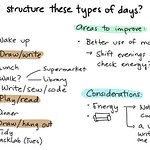
2015-03-11d How can I structure these types of days -- index card #limbo #routinesI mentioned recently that in his book The Craft of the Classroom) , Michael Marland provided very useful advice on very practical issues in the classroom, and good routines to ensure a smooth lesson. Routines are good, because pupils know what to expect. They are able to predict what is going to happen, and when. Some pupils, whose home lives are chaotic and unpredictable, may even feel safe because of routines.  Here are some routines that I think are useful for Computing lessons.

Read More

Blasts from our ICT Past

CSUDH ArchiveI’ve been trawling through the archives again (I don’t get out much). The following appeared in the very first edition of my newsletter, which was originally called Computers in Classrooms (but is now called Digital Education), on 3rd April 2000:

Read More

Digital Education Ezine April 2015

Bett 2015 Board 3At last! Or, to use the vernacular, woo hoo! The latest edition of the Digital Education ezine is now out. It contains a round-up of products seen at Bett, articles on girls and women in technology, loads of links and book reviews. Here’s a detailed list of the contents:
Read More

Articles you may have missed

Although I slowed down over the Easter break – at least in terms of writing blog posts – I did write a few articles. Here is a selection that you may find interesting and useful. While you’re reading those, I shall be working on the next edition of the newsletter Digital Education.
Read More

Spreadsheets: vindicated at last!

I Love SpreadsheetsI’ve long been an ardent advocate of spreadsheets. They can be an invaluable tool in business, education or any other field in which planning, cost or both are paramount. As far as Computing and ICT is concerned, they can be used for teaching  modelling and computational thinking. However, they have been denigrated as being “just” an office tool, far removed from the exciting world of coding or robotics.
Read More