[When I was a teacher,] as with many of my blog posts these days, my own handouts and lesson summaries were festooned with drawings, diagrams and arrows.
Read MoreClick the pic to see this on Amazon (affiliate link)


Click the pic to see this on Amazon (affiliate link)
[When I was a teacher,] as with many of my blog posts these days, my own handouts and lesson summaries were festooned with drawings, diagrams and arrows.
Read MoreIt’s really rather annoying when a non-fiction book received for review is not only useful, but readable. And not merely readable, but enjoyable, even entertaining.
Read MoreA quick look at this guide, which at the time of writing was free.
Read More
We like to believe that meritocracy is a good thing, in that it rewards effort, and acts as a great leveller. Is that actually the case?
Read More
A page from Cool Coding.
A few initial thoughts on a book about programming and how computers work.
Read More
Trust Me, I’m Lying
This book lifts the lid on the practices that various media use to promulgate fake news even while appearing to be squeaky clean.
Read More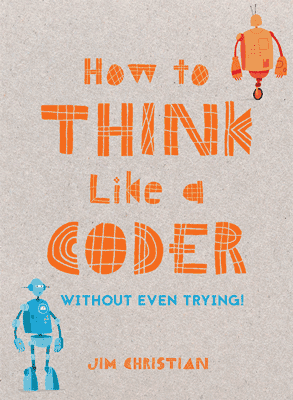
Click the cover to see the book on Amazon. Please note that this is an affiliate link.
Here’s a quick look at How to think like a coder, by Jim Christian.
Read More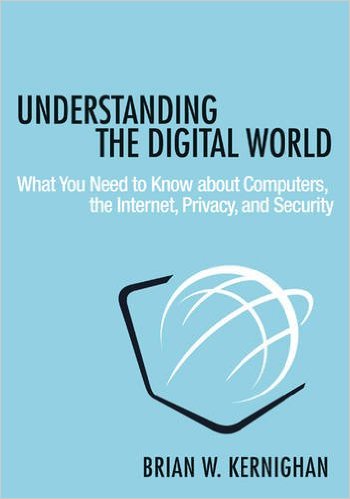
A very readable book.
My first impressions of a new book about computers, networks and data.
Read MoreHere's a link to a post containing a comprehensive list of Twitter educational chats, compiled by Simon Johnson.
Read More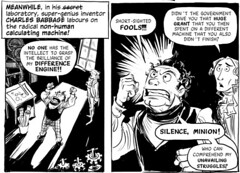 If, like me, you enjoy reading comics and graphic novels, and are interested in Computing, you may already be familiar with the blog called 2D Goggles Or The Thrilling Adventures of Lovelace and Babbage. This relates the story of the development of the Difference Engine and other aspects of the lives of Ada Lovelace and Charles Babbage. Their adventures are based on (mostly) real events and episodes, with a lot of poetic licence thrown in! I thoroughly recommend reading the adventures, and I suggest encouraging your students to do so too. It will help them learn about the development of computing and computer programming in an enjoyable way.
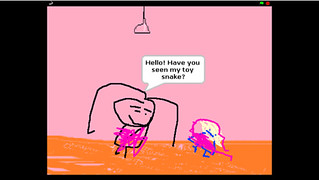 If you’re concerned that young children won’t be able to grasp computing concepts, or are worried about how you’re going to teach it, have a look around the Literacy from Scratch website.
Managed – and, I think, written by – Lawrence Williams, the website contains examples of pupils’ work in Scratch, cross-curricular ideas and examples, and notes on pedagogy.
 Have you ever been in a situation where you are trying to explain to someone over the phone what you are seeing on your computer? Or trying to explain to them what they should be seeing on theirs? I’ve come across a neat little application which enables you to share your screen with anyone you like – and without installing anything, downloading anything or even paying a penny!
 One of the things I like about the ICT in Education site (he says modestly) is that you can listen to the articles as well as read them. It means that the articles are accessible to sight-impaired people. But when I upload presentations, that is no longer true. At least, not until now.
 How do you encourage pupils and students to think critically in the context of educational technology? Although we can devote a lot of time and energy to setting up the "right environment", I can't help thinking that really it all comes down to some pretty simple questions, and very straightforward approaches.
 Here are a few good reads you may have missed in the last week or so, including an invitation to enter an article for a blog carnival, the deadline for which is this Sunday!
(c) Terry Freedman All Rights Reserved